
Europe’s EN 14535-2: New Standard for Wheel-Mounted Brake Discs
EN 14535-2 defines critical standards for railway wheel-mounted brake discs, ensuring safety, reliability, and interoperability through stringent technical, material, and testing requirements.
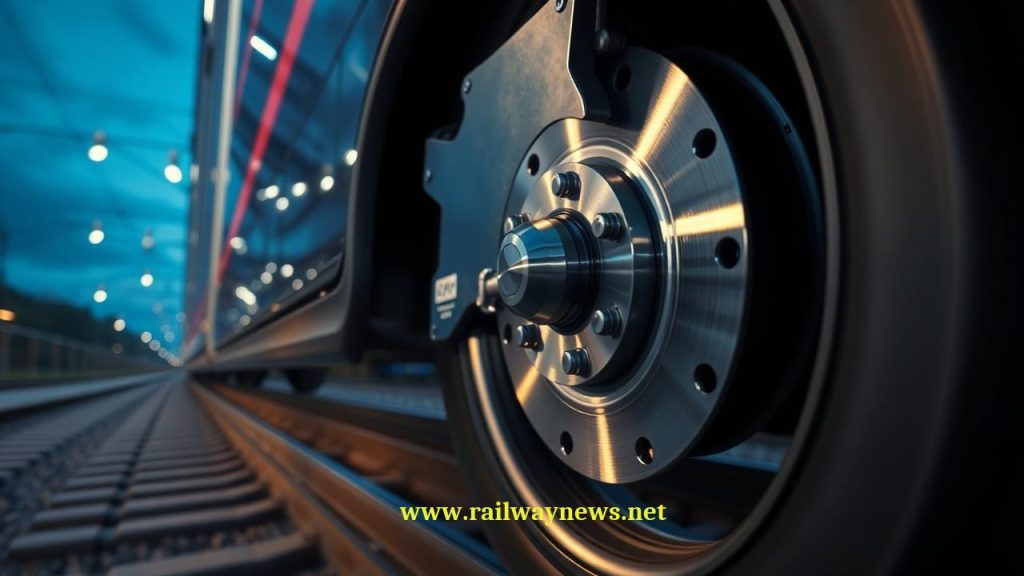
An In-Depth Technical Guide to EN 14535-2: Brake Discs Mounted on Wheels
EN 14535-2 is a European Standard that specifies the dimensional, quality, and testing requirements for brake discs that are mounted directly onto the wheels of railway rolling stock. This standard is a critical component in ensuring the safety, reliability, and interoperability of braking systems across the European railway network.
As a part of the broader EN 14535 series, Part 2 specifically addresses the unique challenges and design considerations of integrating a brake disc with the wheel itself. This configuration is common in various types of rolling stock, including high-speed trains, regional trains, and freight wagons, where it offers distinct advantages in terms of space and unsprung mass management.
Core Technical Requirements of EN 14535-2
The standard is meticulously detailed, covering every aspect from raw material selection to final product verification. Its primary goal is to guarantee that brake discs can withstand the extreme thermal and mechanical stresses experienced during service without failure.
H3>Scope and Application
The scope of EN 14535-2 is precisely defined to cover only brake discs intended for mounting on the wheel. It establishes a clear distinction from axle-mounted discs, which are covered by EN 14535-1. The standard applies to:
- All types of railway rolling stock where wheel-mounted brake discs are used.
- The design and manufacturing of new brake discs.
- The criteria for acceptance and quality control during production.
- The information to be provided by the supplier to the customer.
H3>Dimensional and Geometrical Requirements
To ensure interchangeability and correct fitment, EN 14535-2 outlines strict tolerances for all critical dimensions. These are essential for proper function and to prevent stress concentrations that could lead to premature failure.
- Friction Ring Dimensions: Specifies the nominal diameter, thickness, and width of the braking surface, along with permissible wear limits.
- Mounting Interface: Defines the geometry and tolerances for the mounting holes, bolts, and contact surfaces between the disc and the wheel. This is critical for ensuring uniform load transfer.
- Run-out and Parallelism: Sets tight limits on the axial run-out of the braking surfaces and their parallelism to ensure smooth, vibration-free braking and even pad wear.
- Balance: Mandates requirements for static and/or dynamic balancing to prevent vibrations at high rotational speeds, which could impact ride comfort and component longevity.
H3>Material and Manufacturing Quality
The performance of a brake disc is fundamentally linked to its material composition and the integrity of its manufacturing process. EN 14535-2 places significant emphasis on these aspects.
- Material Grades: The standard typically specifies low-alloy cast steel or specialized grey cast iron grades known for their excellent thermal conductivity, high-temperature strength, and resistance to thermal cracking and wear. The chemical composition and microstructure are tightly controlled.
- Manufacturing Process: The discs are usually produced through casting or forging. The standard requires that the manufacturing process is well-documented and controlled to ensure material homogeneity and freedom from internal defects.
- Heat Treatment: Post-manufacturing heat treatment processes, such as stress relieving, are often required to minimize internal stresses and ensure dimensional stability throughout the disc’s service life.
- Non-Destructive Testing (NDT): To guarantee structural integrity, the standard mandates rigorous NDT. This includes 100% volumetric inspection using Ultrasonic Testing (UT) to detect internal flaws like porosity or inclusions, and surface inspection using Magnetic Particle Inspection (MPI) to identify any surface-breaking cracks.
Comparison: Wheel-Mounted (EN 14535-2) vs. Axle-Mounted (EN 14535-1) Discs
Understanding the differences between wheel-mounted and axle-mounted brake discs is crucial for railway engineers. The choice between them involves trade-offs in thermal management, maintenance, and vehicle dynamics.
| Feature | EN 14535-2 (Wheel-Mounted) | EN 14535-1 (Axle-Mounted) |
|---|---|---|
| Mounting Location | Mounted directly onto the wheel web or a specially designed wheel plate. | Mounted on the axle between the wheels. |
| Thermal Load Distribution | Heat is partially transferred to the wheel, requiring careful thermal analysis of the entire wheelset. | Heat is dissipated primarily by the disc itself, isolating the wheel from direct thermal input. |
| Unsprung Mass | Contributes directly to the unsprung mass of the wheelset, potentially impacting track-vehicle interaction. | Also contributes to unsprung mass, but design can be optimized independently of the wheel. |
| Ventilation and Cooling | Cooling can be more challenging due to proximity to the wheel; often uses ventilated designs. | Generally allows for larger, more efficiently ventilated designs due to more available space. |
| Maintenance and Replacement | Replacement may require pressing the wheel off the axle, making it a more complex workshop operation. | Can often be replaced without disturbing the wheel on the axle, simplifying maintenance. |
| Typical Application | High-speed trains, EMUs, and DMUs where bogie space is limited. | Locomotives, freight wagons, and passenger coaches where space and thermal capacity are primary concerns. |
The Importance of EN 14535-2 for Railway Safety and Interoperability
Adherence to EN 14535-2 is not merely a matter of compliance; it is fundamental to the operational safety of modern railways.
- Ensuring Braking Performance: By standardizing dimensions, materials, and quality, the standard guarantees that brake discs will perform predictably under the most demanding conditions, providing consistent deceleration rates.
- Preventing Catastrophic Failures: The stringent requirements for material integrity and NDT are designed to prevent failures such as disc fracture or major cracking, which could lead to derailment.
- Facilitating Interoperability: In the trans-European rail network, standardized components are essential. EN 14535-2 ensures that brake discs from different manufacturers are interchangeable, simplifying maintenance and logistics for operators running cross-border services.
- Improving Life Cycle Cost (LCC): While the initial quality requirements are high, they result in a more durable and reliable product. This reduces the frequency of replacements, minimizes downtime, and lowers the overall life cycle cost of the braking system.
Conclusion
EN 14535-2 is a highly technical and detailed standard that forms the bedrock of safety and reliability for wheel-mounted brake discs in the railway industry. It provides a robust framework that governs every stage of the disc’s life, from design and material selection to manufacturing and final inspection. For railway engineers, manufacturers, and operators, a thorough understanding and strict application of this standard are indispensable for ensuring the safe and efficient operation of rolling stock.
Frequently Asked Questions (FAQ) about EN 14535-2
What is the primary purpose of EN 14535-2?
The primary purpose of EN 14535-2 is to specify the technical requirements for brake discs that are mounted onto the wheels of railway vehicles. It covers dimensions, materials, manufacturing quality, and testing procedures to ensure safety, performance, and interchangeability.
How does EN 14535-2 differ from EN 14535-1?
EN 14535-2 exclusively covers brake discs mounted directly on the wheel. In contrast, EN 14535-1 addresses brake discs that are mounted on the vehicle’s axle. The two standards cater to different design philosophies, thermal management strategies, and maintenance procedures.
What are the key quality checks required by this standard?
The standard mandates several critical quality checks. These include dimensional and geometrical verification, material composition analysis, mechanical property tests (like hardness and tensile strength), and extensive Non-Destructive Testing (NDT), such as Ultrasonic Testing (UT) for internal defects and Magnetic Particle Inspection (MPI) for surface cracks.
Is compliance with EN 14535-2 mandatory?
While EN standards are technically voluntary, compliance with EN 14535-2 is often a contractual requirement between manufacturers and railway operators. Additionally, it is considered a state-of-the-art document, and adherence is essential for demonstrating due diligence and compliance with broader European railway safety directives and Technical Specifications for Interoperability (TSIs).

Railway infrastructure, rolling stock and transport technologies specialist focused on global rail industry developments, high-speed rail systems, signaling technologies and freight transportation. Covering railway investments, public transport modernization, rail operations and international mobility projects across Europe, Asia and North America.