
Europe’s EN 14067-4: The Key to Safer, Greener Trains
Unlock railway safety and efficiency with EN 14067-4. This standard governs open track aerodynamics, addressing drag, slipstream, crosswinds, and pressure pulses.
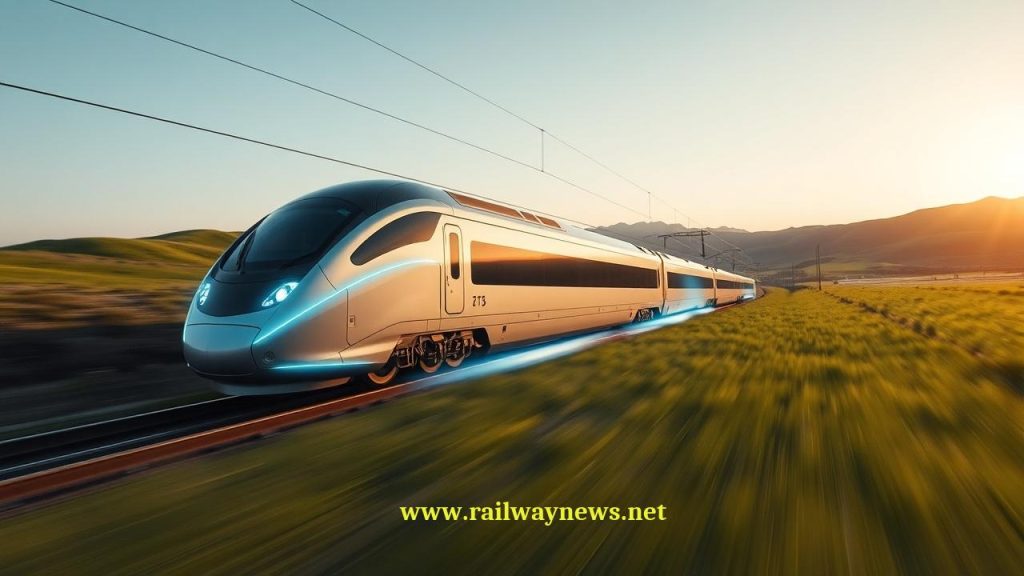
Understanding EN 14067-4: Aerodynamics on Open Track
EN 14067-4 is a key European standard within the railway sector that specifies the requirements and test procedures for assessing the aerodynamic performance of rolling stock on open tracks. It forms a critical part of the EN 14067 series, which detailedly covers various aspects of railway aerodynamics.
This particular standard focuses exclusively on the aerodynamic effects generated by a single train or vehicle operating in an open-air environment, excluding interactions with tunnels, other trains, or complex infrastructure. Its primary goal is to ensure safety, operational efficiency, and interoperability across the European railway network by defining a common methodology for evaluating aerodynamic forces and phenomena.
Why is Aerodynamics on Open Track Important?
The interaction between a moving train and the surrounding air generates significant forces and effects that have direct consequences on the railway system. The EN 14067-4 standard provides a framework for managing these effects, which are critical for several reasons:
- Safety: Uncontrolled aerodynamic forces, such as strong slipstreams, can pose a danger to passengers on platforms and trackside workers. Likewise, the vehicle’s reaction to strong crosswinds is a fundamental safety concern related to derailment risk.
- Energy Efficiency: Aerodynamic drag is a primary component of train resistance, especially at higher speeds. By standardizing how drag is measured and evaluated, manufacturers can optimize vehicle designs to reduce energy consumption and operational costs.
- Stability and Ride Comfort: Crosswinds can induce moments and forces on a vehicle, affecting its stability and the comfort of passengers. The standard outlines procedures to assess a vehicle’s stability under various wind conditions.
- Infrastructure Integrity: The pressure pulses generated by a moving train can exert loads on nearby structures, such as noise barriers and signaling equipment. EN 14067-4 helps quantify these loads to ensure infrastructure resilience.
Key Aerodynamic Phenomena Covered by EN 14067-4
The standard details methodologies for assessing several distinct aerodynamic phenomena. Each has unique implications for vehicle design and railway operation.
Train Drag and Air Resistance
Train drag is the resistive force exerted by the air on the moving train. It increases exponentially with speed and is a major factor in determining the energy required for traction. The standard defines procedures to determine the characteristic area of a train, which is used in calculations to quantify this resistance. The assessment ensures that energy consumption predictions are accurate and allows for the comparison of different rolling stock designs.
Slipstream Effects (Air Wake)
As a train moves, it displaces the air around it, creating a turbulent wake known as a slipstream. This flow of air can be powerful enough to affect the stability of people or objects near the track. EN 14067-4 specifies requirements for maximum allowable air speeds at defined locations, such as on a station platform or at trackside, to ensure the safety of the public and railway personnel.
Crosswind Stability
Crosswinds exert lateral (side) forces and rolling moments on a railway vehicle, which can, in extreme cases, lead to overturning. This is one of the most critical safety aspects addressed by the standard. It provides a detailed methodology for evaluating a vehicle’s response to crosswinds, culminating in the creation of a Characteristic Wind Curve (CWC). The CWC defines the maximum wind speed a vehicle can safely withstand at different operating speeds and is a fundamental input for operational rules on wind-prone routes.
Head Pressure Pulse
The front, or “head,” of the train creates a sudden compression of air as it passes, resulting in a positive pressure pulse, followed by a negative suction phase. This pulse can exert significant loads on trackside objects and can startle trackside workers. The standard outlines procedures for measuring the magnitude of this pressure pulse to ensure it remains within acceptable limits for infrastructure and personnel safety.
Testing and Assessment Methods
EN 14067-4 is not prescriptive about using a single assessment method. Instead, it validates several different approaches, allowing manufacturers and operators to choose the most suitable one based on cost, accuracy, and project phase. The results from these methods must be comparable.
| Method | Description | Advantages | Disadvantages |
|---|---|---|---|
| Full-Scale Tests | Measurements are taken on an actual train operating on a test track, using trackside and on-board instrumentation. | Highest realism and accuracy; directly measures the final product’s performance. | Very high cost; complex logistics; results are dependent on uncontrollable weather conditions. |
| Moving Model Tests | Scaled models of the train are propelled along a track in a controlled indoor environment. | Excellent simulation of relative ground/train motion; controlled conditions. | Scaling effects can be difficult to manage; requires large, specialized facilities. |
| Wind Tunnel Tests | A stationary, scaled model of the train is placed in a wind tunnel where air is blown over it to simulate movement and crosswinds. | Highly controlled environment; excellent for component testing and design optimization (e.g., bogies, pantographs). | Fails to simulate the relative motion of the ground, which can affect underbody airflow and boundary layers. |
| Computational Fluid Dynamics (CFD) | A virtual simulation where the laws of fluid dynamics are solved numerically on a computer to model the airflow around the train. | Cost-effective; allows for rapid iteration of designs; provides detailed insight into the entire flow field. | Requires significant computational power; results are highly dependent on the accuracy of the model and validation against physical tests. |
Scope and Applicability
The standard is applicable to all types of rolling stock, including high-speed trains, conventional intercity and regional trains, and freight vehicles intended for operation on the trans-European rail network. It is a vital tool for rolling stock manufacturers seeking certification, infrastructure managers assessing the impact of new trains on their network, and railway undertakings defining safe operating procedures.
Conclusion
EN 14067-4 is a cornerstone standard for the modern railway industry. By providing a unified and robust framework for assessing open-track aerodynamics, it directly contributes to creating a safer, more energy-efficient, and interoperable railway system. Its detailed approach, which validates multiple testing methods from full-scale trials to advanced CFD simulations, enables continuous innovation in vehicle design while upholding the highest standards of safety and performance.

Railway infrastructure, rolling stock and transport technologies specialist focused on global rail industry developments, high-speed rail systems, signaling technologies and freight transportation. Covering railway investments, public transport modernization, rail operations and international mobility projects across Europe, Asia and North America.