
Why EN ISO 3381 Changes Global Rail Comfort & Safety
EN ISO 3381 establishes a comprehensive method for measuring and reporting noise levels inside rail-bound vehicles, ensuring uniformity, repeatability, and comparability of acoustic environments across different types of trains, locomotives, and vehicle configurations.
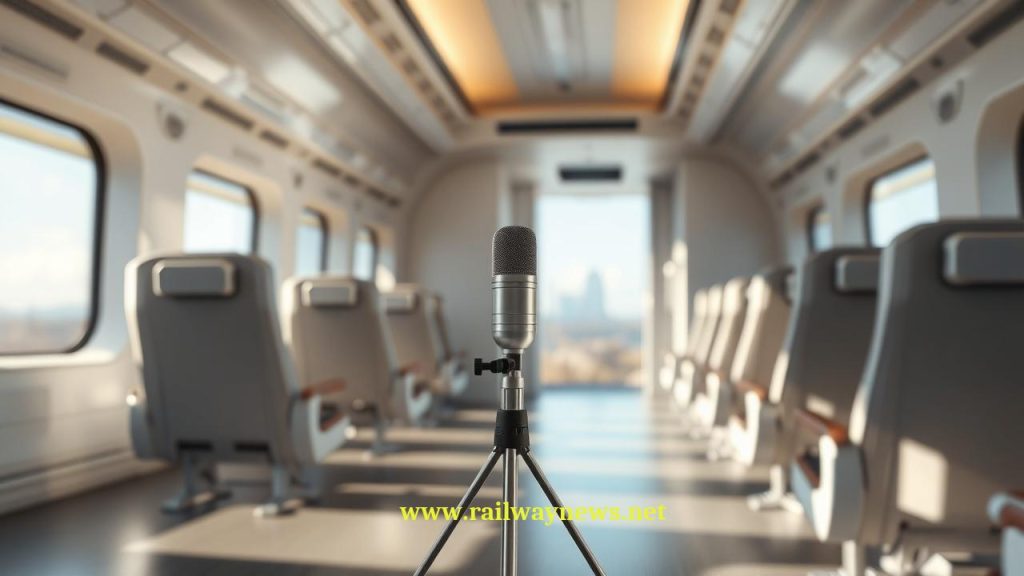
Understanding EN ISO 3381: A Detailed Guide to Interior Noise Measurement in Rail Vehicles
EN ISO 3381 is the international standard that specifies the methods for measuring and reporting noise levels inside all types of rail-bound vehicles. Its primary purpose is to provide a uniform, repeatable, and comparable procedure for assessing the acoustic environment experienced by passengers and crew, ensuring both comfort and occupational safety.
This standard is a cornerstone for the railway industry, used by vehicle manufacturers, operators, and regulatory bodies during type testing, homologation, quality control, and for diagnosing specific acoustic issues. It defines the necessary conditions, equipment, and procedures to obtain reliable interior noise data.
Scope and Key Objectives of the Standard
The scope of EN ISO 3381 is extensive, covering a wide range of rail vehicles operating on a dedicated track system. This includes:
- High-speed trains
- Inter-city and regional trains
- Urban and suburban vehicles (metros, trams)
- Freight locomotives and their cabs
The core objectives of performing measurements according to this standard are:
- Type Testing: To verify that a new vehicle model meets its acoustic design specifications and regulatory limits.
- Acoustic Comfort Assessment: To quantify the noise environment for passengers, which is a key factor in travel experience.
- Occupational Health: To measure noise exposure in the driver’s cab and other crew areas to ensure compliance with workplace safety regulations.
- Benchmarking: To allow for objective acoustic comparisons between different vehicle types or before and after modifications.
- Source Identification: To help engineers diagnose and mitigate specific noise problems, such as from bogies, HVAC systems, or aerodynamic sources.
Key Measurement Procedures and Conditions
To ensure consistency and comparability, EN ISO 3381 meticulously defines every aspect of the test procedure. This includes where to measure, how the vehicle must operate during the test, and what acoustic data to collect.
Measurement Positions
The standard specifies precise locations for placing microphones to capture a representative sample of the interior acoustic field:
- Passenger Areas: Measurements are typically taken in the center of the vehicle, at a height of 1.2 m (seated ear height) and 1.6 m (standing ear height). Additional points near windows and in vestibules may also be required.
- Driver’s Cab: The primary position is at the driver’s ear location while seated in the normal operating position. This is crucial for assessing occupational noise exposure.
- Sleeping Cars/Berths: Specific positions are defined for berths to measure noise during simulated night-time conditions.
Operating Conditions
Noise inside a rail vehicle varies dramatically with its operational state. The standard mandates measurements under several distinct conditions to build a complete acoustic profile:
- Stationary: The vehicle is stopped with all auxiliary systems running (e.g., HVAC, converters, compressors). This test isolates noise from on-board equipment.
- Constant Speed: This is the most common test, performed at a range of specified speeds on a defined track quality. It captures the combined noise from wheel/rail interaction, propulsion systems, and aerodynamics.
- Acceleration: Measurement is taken from a standstill up to a specified speed to evaluate the noise from the traction system under high load.
- Deceleration: Measurement is performed during braking to assess noise from the braking systems (e.g., regenerative or friction brakes).
- Special Conditions: Additional tests may include passing other trains or traveling through tunnels to assess the impact of these specific events on interior noise levels.
Acoustic Quantities Measured
The primary acoustic metric required by EN ISO 3381 is the Equivalent continuous A-weighted sound pressure level (L_pAeq,T). This value represents the time-averaged sound level, filtered to mimic the response of the human ear, over a specific measurement period (T). It provides a single, representative value for the noise level during a particular operating condition. Other metrics, such as the maximum sound pressure level (L_pAFmax), are also recorded to capture peak noise events.
Test Environment and Reporting
The standard also places requirements on the external environment to prevent contamination of results. For instance, tests should be conducted in dry conditions with low wind speeds. The test report must be detailed, detailing not only the noise results but also the full context, including vehicle type, operating conditions, track characteristics, measurement positions, and the instrumentation used.
Comparison of Key Test Conditions
The following table outlines the purpose and typical noise sources associated with the main operating conditions defined in EN ISO 3381.
| Test Condition | Primary Objective | Key Noise Sources Measured |
|---|---|---|
| Stationary | Isolate and measure noise from on-board auxiliary systems. | HVAC (Heating, Ventilation, Air Conditioning), air compressors, power converters, cooling fans. |
| Constant Speed | Assess the overall acoustic performance and passenger comfort during travel. | Rolling noise (wheel/rail contact), aerodynamic noise, traction system noise, structural vibrations. |
| Acceleration | Evaluate the maximum noise impact from the propulsion system. | Traction motors, gearboxes, inverters under high torque. |
| Deceleration (Braking) | Measure noise generated by the braking systems. | Brake squeal, regenerative brake whine, pneumatic system sounds. |
Conclusion: The Importance of Standardization
EN ISO 3381 serves as a critical framework for the global railway industry. By standardizing the complex process of measuring interior noise, it allows for fair and accurate assessment of vehicle quality, ensures passenger comfort is a quantifiable metric, and helps protect the health and safety of train crews. Adherence to this standard is fundamental for any manufacturer or operator committed to delivering high-performance, comfortable, and safe rail transportation.
Frequently Asked Questions (FAQ) about EN ISO 3381

Railway infrastructure, rolling stock and transport technologies specialist focused on global rail industry developments, high-speed rail systems, signaling technologies and freight transportation. Covering railway investments, public transport modernization, rail operations and international mobility projects across Europe, Asia and North America.