
Burning the Energy: Rheostatic Braking Systems Explained
Understand how trains stop without friction. Rheostatic Braking converts kinetic energy into heat via resistor grids, providing reliable braking for diesel locomotives.
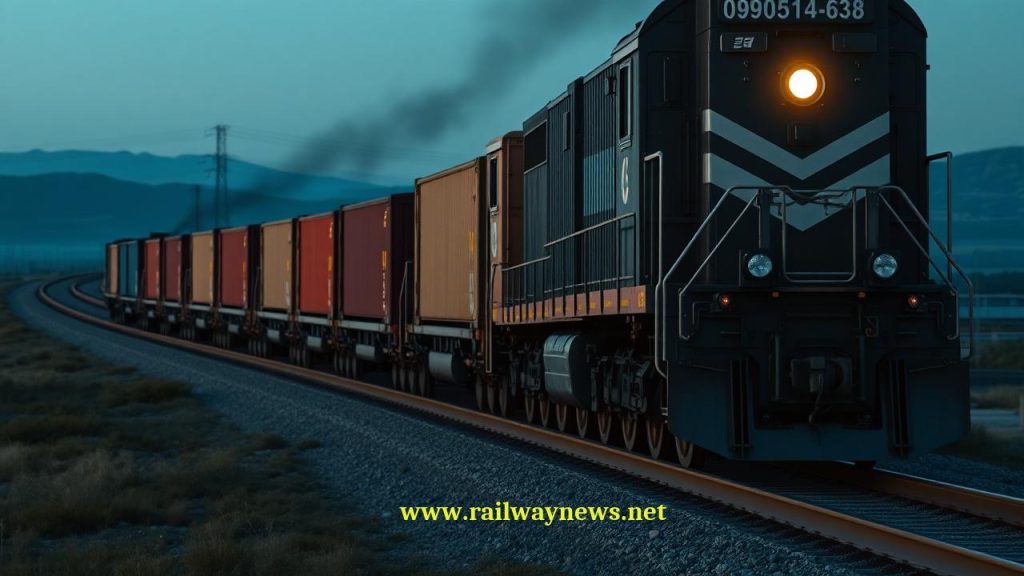
⚡ In Brief
- Rheostatic braking converts kinetic energy to heat — deliberately: The traction motors are reconfigured as generators, producing electrical current that is routed through resistor banks (grids) mounted on the vehicle roof or underframe. The resistors convert this current to heat, which is carried away by forced-air cooling fans. The result is braking torque at the axles without applying friction pads to disc or wheel, reducing mechanical brake wear while providing smooth, controllable retardation.
- It differs from regenerative braking in one critical way: Regenerative braking returns the generated current to the supply network (OCS, third rail, or battery) for use by other trains or for energy storage. Rheostatic braking dissipates the same current as waste heat in resistors. Both use traction motors as generators; only the destination of the electrical energy differs. On a diesel-electric locomotive or a DC metro with a non-receptive network, regeneration is impossible — rheostatic braking is the only form of electrical retardation available.
- The resistor grid is sized by the peak thermal duty, not average power: A Class 66 freight locomotive applying full dynamic braking descending a 1 in 100 grade at 60 mph continuously dissipates approximately 1.8–2.2 MW in its resistor grids. The grids must sustain this for the full length of the grade — potentially 30–40 minutes on a long mountain descent — without the resistance value drifting (due to thermal expansion of the resistance wire) to the point that motor current exceeds safe limits. Grid element material (typically nichrome or stainless steel ribbon) and cooling fan duty cycle are both sized for this worst-case sustained thermal scenario.
- Dynamic braking “notching” on diesel-electric locomotives replaces air brakes for most of the descent: On a 1% grade descent with a 10,000-tonne coal train, using air brakes alone to control speed would require repeated applications that heat disc pads and wheel treads to damaging temperatures within the first 10–15 km. Dynamic braking — using the traction motors as generators — provides continuous speed control through the full descent with essentially no mechanical brake consumption, reserving the friction brakes for the final stop. The AAR estimates that widespread adoption of dynamic braking in North American heavy-haul operations reduced wheel reprofiling intervals by 60–75% compared to friction-brake-only operations.
- Chopper-controlled rheostatic braking replaced fixed-resistance switching in the 1970s: Early dynamic brake systems used mechanical contactors to switch resistance steps in and out of the motor circuit — producing jerky, stepped braking force. Thyristor and later IGBT chopper circuits allowed continuous, smooth resistance variation by rapidly switching a single fixed resistor in and out of circuit at variable duty cycle (pulse-width modulation). The effective resistance seen by the motor equals R_grid × (1 − duty cycle), allowing infinitely variable braking force from zero to maximum within the motor’s thermal rating.
The engineering problem that defeated the Union Pacific Railroad’s operations department through the summer of 1942 was deceptively simple in its statement: the Sherman Hill grade in Wyoming — 1.55% for 28 miles between Cheyenne and Laramie — was destroying locomotive wheel treads. The wartime coal and munitions traffic demanded trains three times heavier than peacetime norms, and the sustained descents required brake applications that left wheel treads glazed, grooved, and thermally cracked within a single crossing. Wheel exchange intervals had fallen from the standard 150,000 miles to under 20,000 miles, and the wheel shop at Cheyenne was working three shifts. The UP’s chief mechanical engineer proposed a solution that had been demonstrated in electric locomotives since the 1890s but had never been successfully engineered into a diesel-electric unit at the power levels involved: route the generator output through a bank of resistors during descent, using the traction motors in reverse as generators and burning the excess energy as heat. The prototype installation on a pair of EMD SD7 test locomotives was completed in September 1944. On the first instrumented descent of Sherman Hill, the wheel tread temperature — which had peaked at 380°C under air-brake-only operation — reached a maximum of 42°C. The wheel shop closed for three weeks while it caught up on a backlog that had stopped being generated. The dynamic brake had arrived in North American heavy-haul freight operation, and within a decade it was standard equipment on every new diesel-electric locomotive ordered by every Class I railroad. The technology that Westinghouse had demonstrated in electric locomotives in the 1890s had simply required the right economic crisis — and the right grade — to reach its true operational home.
What Is Rheostatic Braking?
Rheostatic braking — also called dynamic braking, particularly in North American usage — is a form of electrical retardation in which the traction motors of a locomotive or multiple unit are electrically reconfigured to operate as generators during deceleration. The mechanical energy of the moving train drives the motor armatures (or, in AC induction motor systems, the rotors) to produce electrical current. This current is routed through banks of high-power resistors where it is converted to heat, which is dissipated to the atmosphere. The resistance of the electrical circuit — set by the resistor bank — determines the braking torque: higher resistance means lower current but the same counter-EMF, reducing braking force; lower resistance increases current, increases braking force, and increases heat dissipation rate.
Rheostatic braking is distinct from regenerative braking in energy destination only. Both use traction motors as generators; regenerative braking routes the generated current to an external receptive load (OCS, battery, capacitor); rheostatic braking routes it to internal resistors. The applicable standards in Europe are EN 14531-1 (Railway applications — Methods for calculation of stopping and slowing distances) for braking performance calculations, with resistor thermal design governed by IEC 60322 (Railway applications — Electric equipment for rolling stock — Rules for the specification of resistors). In North America, AAR Standard S-580 governs dynamic brake performance requirements on Class I railroad rolling stock.
Motor-to-Generator Transition: The Electrical Reconfiguration
DC Series Motor in Dynamic Brake Mode
The DC series-wound motor — still used in many diesel-electric locomotives globally — has its field winding connected in series with the armature winding during traction. In dynamic brake mode, a contactor sequence disconnects the armature from the supply and reconnects it to the resistor bank, while the field winding is supplied from a separate small DC source (the companion alternator or a dedicated exciter) to maintain the magnetic field. The armature, driven by the wheels through the gearbox, now generates EMF proportional to its speed and field strength — and the generated current through the resistor bank provides the braking torque. The critical relationship is:
DC dynamic brake circuit:
Generated EMF: E = k × Φ × n (V; same as traction back-EMF)
Braking current: I = E / R_grid (A)
Braking torque: T = k × Φ × I (N·m)
Power dissipated in grid: P = I² × R_grid = E² / R_grid (W)
At constant field excitation (Φ = constant):
E ∝ n (speed) → I ∝ n / R_grid → T ∝ n / R_grid
To maintain constant braking force as speed falls:
R_grid must decrease proportionally with n
→ Steps of grid resistance are switched out as speed decreases
(traditional) or chopper duty cycle adjusted (modern)
Example: Class 66 loco, 6 motors, each motor E = 600V at 60 mph
R_grid = 0.4 Ω per motor circuit
I = 600 / 0.4 = 1,500 A per motor
T per motor = k × Φ × 1,500 → total braking force ≈ 320 kN (6 motors)
P dissipated = 6 × 1,500² × 0.4 = 5.4 MW total
AC Induction Motor in Dynamic Brake Mode
Modern diesel-electric and electric locomotives with AC induction traction motors use a fundamentally different approach to dynamic braking. The AC motor’s speed is controlled by the VVVF inverter — there is no separate field excitation to maintain. In dynamic brake mode, the inverter reconfigures its PWM output to produce a braking torque: it controls the motor as a generator feeding the DC intermediate bus. The DC bus voltage rises as the generator pushes current into it. This voltage must be dissipated through the braking resistor, which is connected across the DC bus through a braking chopper IGBT switch. The braking chopper switches the resistor in and out of the DC bus circuit at a duty cycle that maintains the bus voltage within safe limits and controls the dissipated power. This arrangement gives much finer, faster control of braking force than the mechanical contactor-switched resistance grid of DC traction, and eliminates the complex motor field excitation circuitry entirely.
The Resistor Grid: Design, Materials, and Thermal Management
The resistor grid — the bank of resistive elements that converts electrical energy to heat — is the defining physical feature of a rheostatic braking system. On a modern diesel-electric locomotive, the resistor grids are typically housed in a large grille structure on the locomotive roof, with forced-air cooling fans below them. On electric multiple units equipped with rheostatic braking as an energy-dump fallback, the resistors may be mounted on the bogie frame or on the vehicle underframe with overhead exhaust vents.
Resistor Element Materials
The resistor elements must: maintain a stable resistance value across a wide temperature range (50°C ambient to 700–900°C element temperature during peak dissipation); withstand repeated thermal cycling without fatigue cracking; resist oxidation at high temperatures in a moist, contaminated railway environment; and present a specific resistance per unit length that allows a practical grid design. Three materials are used in practice:
| Material | Composition | Resistivity (μΩ·cm) | Max Service Temp. | Temp. Coeff. of Resistance | Primary Application |
|---|---|---|---|---|---|
| Nichrome (NiCr) | 80% Ni, 20% Cr | 108–112 | 900–1,100 °C | Very low (+0.004%/°C) | High-precision, low-drift resistors |
| Stainless steel (Fe-Cr-Ni) | ~18% Cr, 8% Ni, remainder Fe | 70–90 | 700–850 °C | Low (+0.05%/°C) | Heavy-duty grid elements; cost-effective |
| Kanthal (FeCrAl) | ~22% Cr, 5% Al, remainder Fe | 130–140 | 1,200–1,400 °C | Very low (+0.004%/°C) | Extreme-duty applications; long life at high T |
Grid Thermal Design: The Critical Calculation
Resistor grid thermal sizing for sustained mountain descent:
Scenario: Class 66 loco, 10,000-tonne coal train
Grade: 1.0% (1 in 100), length 25 km, speed held at 60 km/h
Gravitational power input (grade × weight × speed):
P_gravity = m × g × sin(θ) × v
= 10,000,000 × 9.81 × 0.01 × (60/3.6)
= 10,000,000 × 9.81 × 0.01 × 16.67
= 1,635,000 W ≈ 1.64 MW
Train rolling resistance at 60 km/h (≈ 1.5 N/kN for freight):
P_rolling = 1.5 × 10,000 × 16.67 / 1000 = 250 kW
Net dynamic brake power required to maintain speed:
P_grid = P_gravity − P_rolling = 1,640 − 250 = 1,390 kW ≈ 1.4 MW
Descent time at 60 km/h over 25 km:
t = 25 / 60 × 60 = 25 minutes
Total energy dissipated: E = 1,400 × 25 × 60 = 2,100,000 kJ = 2.1 GJ
Class 66 grid rating: 2.24 MW continuous (from manufacturer data)
Required: 1.4 MW → within rating ✓
Grid element temperature at 1.4 MW (estimated):
With 4 grid banks, each 0.35 MW, cooling fan at rated flow:
T_element ≈ ambient + ΔT_cooling ≈ 20 + 550 = 570°C (within Kanthal limits)
The Cooling Fan — Powered by the Braking Current Itself
One of the most elegant features of many classic dynamic brake designs is the self-powering of the cooling fan. On most diesel-electric dynamic brake systems, the cooling fan motor is powered directly from the braking current flowing through the resistor grid — wired in parallel with a section of the grid. As braking current rises, fan speed rises proportionally, delivering more airflow precisely when more cooling is needed. This self-regulation requires no active controls, no sensors, and no auxiliary power supply: the physics of the circuit automatically match cooling capacity to thermal demand. The arrangement was standard on EMD and GE diesel-electric dynamic brake designs from the 1950s through the 1990s and remains in use on legacy fleets worldwide. Modern designs tend to use separately powered variable-speed electric fans controlled by the locomotive’s computer management system, allowing more precise thermal management but losing the elegant self-regulating simplicity of the classic arrangement.
Diesel-Electric Locomotives: Dynamic Braking in Practice
The diesel-electric locomotive is the dominant application of rheostatic braking in contemporary railway operation. A diesel-electric locomotive (Class 66, EMD SD70, GE ES44AC) uses its diesel engine to drive an AC or DC generator, which in turn powers traction motors at the axles. During dynamic braking, the engine continues to idle (providing power for cooling fans and auxiliaries) while the traction motors are switched to generator mode, connecting their output to the braking resistors. The diesel engine contributes no braking force directly — it is simply idling.
Dynamic Brake “Notches” on North American Locomotives
North American locomotive cab controls use a distinct handle — the dynamic brake handle — separate from the throttle, with typically 8 “notches” each representing a defined braking force level. Notch 1 is minimum dynamic braking (resistors fully inserted; lowest current); Notch 8 is maximum (minimum resistance; maximum current and braking torque). The driver selects the appropriate notch to maintain a target speed on a descending grade, adjusting as speed changes and as the braking characteristic shifts with falling speed. At very low speeds (below approximately 10–15 km/h), dynamic braking force becomes insufficient for speed control — the generator EMF is too low to drive useful current through the resistors — and the driver transitions to air brakes for the final speed control and stop. The transition from dynamic to air braking at low speed is a skilled operation on heavy trains: a sudden shift from dynamic to air can cause a jerk event as the coupler forces change direction from tension (dynamic braking in pushing mode on down grade) to compression (air braking pushes train forward against locomotive).
Rheostatic Braking as Regeneration Fallback on Electric Stock
On modern electric multiple units designed primarily for regenerative braking, a rheostatic braking capability is frequently provided as a fallback for scenarios where regeneration is not possible. This fallback is essential for safe operation and for maintaining reliable stopping distances under all network conditions.
When Regeneration Fails
Regenerative braking on a DC metro system requires a receptive load on the OCS or third rail — another train accelerating in the same feeding section — to absorb the returned current. If no receptive train is present, the returned current would raise the DC bus voltage above the maximum permissible level (typically 900 V on a 750 V DC system, per EN 50163). The train’s own control system detects this overvoltage and curtails regeneration to protect the OCS equipment. Without a fallback, this braking force reduction would extend stopping distances — potentially dangerously on systems with tight headways and platform overrun protection. The rheostatic resistor — a relatively small bank by diesel-loco standards, since it only needs to handle the brief moments when no receptive load is available — provides the fallback dissipation that maintains constant braking force regardless of network conditions. On the London Underground, where DC third-rail sections have variable receptive load depending on traffic density, the Bombardier Aventra and Siemens Inspiro designs incorporate rheostatic resistors of approximately 400–600 kW peak capacity per vehicle for exactly this overvoltage protection function.
AC System Regeneration Inhibit
On 25 kV AC systems, regeneration is inhibited when the contact wire voltage rises above 27.5 kV (per EN 50163 maximum permanent voltage for 25 kV systems). This can occur when a braking train is the only train in its feeding section and the autotransformer or traction substation cannot accept the returned energy. The train’s VCB remains closed but the regeneration is suppressed by the traction inverter control algorithm, which redirects motor-generated current to the braking resistors instead of attempting to push it back through the main transformer. The resistors in an HSR EMU are typically smaller than in a locomotive (the scenario is brief — one train in a section is unusual at peak traffic) but must handle the full braking power — up to 8–9 MW for a TGV Duplex — for the duration of the inhibit event, which may last 10–60 seconds.
Rheostatic, Regenerative, and Mechanical Braking: Full Technical Comparison
| Parameter | Rheostatic (Dynamic) | Regenerative | Friction (Disc/Tread) |
|---|---|---|---|
| Energy destination | Resistor banks → atmosphere (heat) | OCS / third rail / battery (reused) | Disc/pad → atmosphere (heat) |
| Energy efficiency | 0% — all kinetic energy wasted | 70–85% of kinetic energy recovered | 0% — all kinetic energy wasted |
| Mechanical brake wear | Minimal (friction brakes only for final stop) | Minimal (same as rheostatic) | High — primary wear item |
| Infrastructure dependency | None — self-contained | Requires receptive grid or storage | None — self-contained |
| Force modulation | Excellent — chopper control ±1% | Excellent — inverter control ±1% | Good — cylinder pressure control |
| Wheel adhesion dependency | Yes — force transmitted through wheel-rail | Yes — force transmitted through wheel-rail | Yes — friction through wheel-rail |
| Suitable for sustained grade descent? | Yes — continuous dissipation capability | Marginal — battery fills rapidly; regeneration inhibits when voltage high | No — disc/pad overheat in minutes on long grade |
| Applicable vehicle types | Diesel-electric loco; DC metro fallback; EMU overvoltage protection | All electric traction with suitable grid | All vehicle types (always present as backup) |
| Disc/pad wear saving vs friction only | 60–75% reduction (North American heavy-haul data) | 60–75% reduction (same mechanism) | Baseline |
| Low-speed braking force | Degrades below 10–15 km/h | Degrades below 5–10 km/h | Full force to standstill |
| Thermal emission location | Vehicle roof/underframe (hot air exhaust) | None (energy removed from system) | Disc / wheel tread / ambient |
Rheostatic Braking in Service: Key Applications
| Application | Vehicle Type | Peak Grid Power | Configuration | Key Use Case |
|---|---|---|---|---|
| EMD SD70ACe (BNSF, UP) | Diesel-electric freight loco (AC traction) | 3.35 MW continuous | 8 notches; chopper-controlled; roof-mounted grids | Sustained mountain descents (Tehachapi, Cajon Pass); coal train grade control |
| GE ES44AC / GE GEVO | Diesel-electric freight loco | 3.2 MW continuous | AC traction + IGBT braking chopper; 8-notch handle | Primary retardation on grades; extends wheel life 3–4× vs friction-only |
| Class 66 (DB Cargo / Freightliner UK) | Diesel-electric freight loco | 2.24 MW continuous | DC traction; resistance-step switching; roof grid | Grade control on Welsh valleys mineral routes; Settle–Carlisle descents |
| London Underground (S Stock, 2009–) | 750 V DC EMU | ~400 kW per car (fallback) | Regenerative primary; rheostatic resistors for overvoltage protection | Prevents OCS overvoltage when no receptive train; maintains constant deceleration |
| TGV Duplex (SNCF) | 25 kV AC HSR | ~800 kW total (transient fallback) | Regenerative primary; resistors activated during OCS overvoltage inhibit | Emergency stop in lightly loaded section where regeneration inhibited by high OCS voltage |
| WAM4 / WAP4 (Indian Railways) | 25 kV AC electric loco | ~2.0 MW (older DC traction) | Resistance step switching; no regeneration capability | Primary electrical retardation on Ghats sections (Western and Eastern Ghats grades) |
| New York City Subway (R160) | 750 V DC EMU | ~500 kW per car (fallback) | Regenerative primary; rheostatic overvoltage dump; third-rail return | Network-wide regeneration recovery reported at ~28% since R160 introduction vs R46 predecessor |
Energy Waste and the Modern Case for Rheostatic Braking
Rheostatic braking’s fundamental inefficiency — 100% of the recovered kinetic energy is wasted as heat — seems an obvious candidate for elimination as railways pursue decarbonisation targets. On paper, replacing rheostatic with regenerative braking on a heavy-haul freight locomotive would recover enormous energy: a 10,000-tonne coal train descending Sherman Hill at 1.55% grade loses approximately 42 GJ of potential energy per descent — enough to power a medium-sized American town for several hours. At 80% regeneration efficiency, this would be worth approximately 9,400 kWh per descent, or roughly 3,380 descent cycles to equal the annual output of a 1 MW solar installation.
The fundamental barrier is not technical but infrastructure. Returning 3+ MW of regenerated power from a locomotive descending Sherman Hill to the grid would require the adjacent Class I freight railroad infrastructure — built for diesel traction — to have an electrified OCS capable of accepting regenerated current at that location and routing it to a receptive load or grid-connected wayside energy storage unit. For North American freight railways, none of which are electrified, the infrastructure investment required dwarfs any realistic energy cost saving, particularly when diesel fuel costs approximately $0.08–0.12/kWh equivalent versus the $0.05–0.08/kWh value of recovered electricity. Rheostatic braking on diesel-electric locomotives is therefore not a failed technology awaiting replacement — it is the optimal solution given the infrastructure reality, delivering its primary value (friction brake wear reduction and mechanical brake heat avoidance) irrespective of the waste heat problem, and will remain so for as long as North American freight railways remain non-electrified.
Editor’s Analysis
Rheostatic braking occupies an unusual position in railway technology’s sustainability narrative: it is both genuinely wasteful and genuinely irreplaceable for a specific class of operations. The waste is real and quantifiable — a heavy-haul freight locomotive descending a 1% grade burns the equivalent of a substantial electric vehicle charge in its resistors with every run. The irreplaceability is equally real: no other braking technology can provide 3+ MW of continuous, controlled retardation from a self-contained vehicle on a non-electrified line without destroying friction brakes or leaving wheel flat spots in the process. The decarbonisation pressure on freight railways is rightly driving interest in electrification and battery-electric freight technology — and where electrification is economically viable, regenerative braking should and will replace rheostatic systems. But the narrative that rheostatic braking is simply an inefficient legacy to be eliminated misses the engineering reality of the applications where it is used. The Sherman Hill freight corridor, the Ghats sections of Indian Railways, the Welsh valley mineral routes — these are environments where the choice is not between rheostatic and regenerative braking but between rheostatic braking and destroying mechanical brakes, overheating wheels, and running trains at half the speed to manage the thermal load. Within those specific constraints, rheostatic braking is exactly what the problem demands. The industry’s task is not to apologise for it but to electrify the routes where the economics support it — at which point rheostatic braking will naturally give way to regenerative systems as a byproduct of the infrastructure investment, not as a separate technology decision.
— Railway News Editorial
Frequently Asked Questions
1. Why does rheostatic braking force drop off at low speeds — and what exactly causes this characteristic?
The declining braking force at low speeds is a direct consequence of the generator physics underlying rheostatic braking. The traction motor, when operating as a generator, produces an EMF (electromotive force) proportional to the product of the magnetic field strength and the rotational speed: E = k × Φ × n. At high speed (high n), the generated EMF is high, driving a large current through the resistor bank and producing a substantial braking torque. As speed falls, n decreases, the generated EMF decreases, the current falls proportionally (I = E / R_grid), and the braking torque falls with it. At speeds below approximately 10–15 km/h for a typical locomotive, the generated EMF is too small to drive useful current through the circuit, and dynamic braking force becomes negligible. This low-speed limitation is not a design flaw; it reflects the fundamental relationship between generator speed and output voltage. In practice, it is not problematic because the momentum of a heavy train at 15 km/h is modest and easily arrested by friction brakes, and because the heat generated in friction brakes during a final stop from 15 km/h is trivially small compared to the heat that would have been generated stopping from 60 km/h without dynamic braking. The dynamic brake’s value is in the high-speed phase, where its force is large, its heat dissipation capacity is high, and friction brakes would be most thermally stressed — which is exactly where its output is greatest.
2. What is “compounding” in the context of dynamic braking on diesel-electric locomotives, and why does it improve performance?
Compounding — also called load regulation or field forcing — is a technique in which the diesel engine’s output is used to actively strengthen the magnetic field in the traction motors while they operate as generators during dynamic braking. In a standard rheostatic brake configuration, the motor field is excited by a fixed or lightly regulated current from the exciter. As braking current flows through the motor armature, it produces a cross-magnetisation effect that partially demagnetises the main field (armature reaction) — reducing the effective flux and thus the braking force. Compounding counteracts this by increasing the field excitation current above its nominal value to offset the armature reaction, maintaining a stronger and more stable field and sustaining higher braking torque at any given speed. The diesel engine provides the power for this increased excitation. Compounded dynamic braking systems — introduced by EMD on its SD40 and later models — achieve approximately 15–20% higher sustained braking force at medium speeds (30–50 km/h) compared to non-compounded designs of equivalent power. On a heavily loaded train descending a 2% grade, this improvement can mean the difference between maintaining target speed with dynamic braking alone and needing supplementary air brake applications that accelerate brake wear.
3. How does the track signal system interact with a locomotive in dynamic brake mode — does the high resistor current affect track circuit detection?
This question is less about the resistors themselves and more about the current flowing through the traction motors and their connection to the wheels and rails. In dynamic brake mode, the traction motors generate current that flows through the resistors — not through the wheels and rails. The wheels still contact the rails in the normal way, providing the mechanical shunt that operates track circuits (the wheel-axle-rail circuit shunts the track circuit current, indicating “occupied” to the signalling system). What changes electrically in dynamic brake mode is the motor circuit: the armature is connected to the resistors rather than to the supply network. There is therefore no significant change in the electrical path between wheel and rail that would affect track circuit operation. The one scenario requiring attention is the induced electromagnetic field from the dynamic brake resistors themselves: at 5+ MW of dissipation, the current flowing through the roof-mounted grid elements creates a magnetic field that theoretically could induce voltages in nearby lineside circuits. In practice, the resistors are AC-coupled to the DC motor current (the only AC component is the ripple from PWM chopper control) and the induced EMF in typical lineside track circuits at normal clearances (≥3 m from loco centre to trackside equipment) is negligibly small — below the EN 50121-2 emission limits for rolling stock. No documented case of rheostatic braking current causing track circuit maloperation has been identified in UK, European, or North American accident investigation databases.
4. Can a modern BEMU (battery-electric multiple unit) use rheostatic braking to extend its range — by converting braking energy to heat rather than pushing it back into an already-full battery?
This is technically possible and is actually a required function of BEMU design. A BEMU’s battery cannot accept regenerated braking energy when it is at or near full state of charge (≥98% SoC). If a BEMU with a full battery encounters a braking event — for example, on a downhill approach to a terminus at the end of a charging run — it must have some means of dissipating the braking energy rather than forcing current into an already-full battery (which would overvoltage the cells and potentially trigger thermal runaway). The solution is a braking resistor connected across the battery bus through a braking chopper — structurally identical to the overvoltage protection resistor used in DC EMUs. The BEMU’s battery management system monitors SoC and, when SoC exceeds the regeneration acceptance threshold, directs motor-generated braking current to the resistors instead of the battery. This resistor “dump” mode is not desirable from an energy perspective — it wastes energy that the battery cannot currently accept — but it maintains controlled, smooth deceleration that is otherwise unavailable if the battery cannot absorb regenerated current. On a BEMU route designed carefully to manage the charge-discharge cycle, the battery state at any given point in the journey should be managed to avoid full-battery braking scenarios as much as possible. But on unexpected service alterations, extended dwell times under the OCS that result in a fuller-than-planned battery at descent approach, or fault-induced OCS overvoltage periods, the rheostatic dump function is the safety net that prevents the braking system from becoming unavailable at the worst possible moment.
5. How is the resistor grid protected against overheating during an unexpectedly long dynamic braking event — for example, if a locomotive stalls on a descending grade with all brakes applied continuously?
Resistor grid thermal protection is a multi-layered system, because the consequence of a grid overtemperature failure — resistance values shifting outside design limits, causing motor overcurrent; or grid element burnout, causing open circuit in the brake circuit — are operationally severe. The protection architecture typically includes three independent layers. The first is a temperature monitoring system: thermocouple or thermistor sensors embedded in the grid assemblies, typically one per grid bank, feed temperature readings to the locomotive management computer. If element temperature exceeds a warning threshold (typically 750°C for Kanthal elements), the computer issues an advisory to the driver to reduce dynamic brake demand. If temperature exceeds an alarm threshold (typically 850–900°C), the system automatically reduces dynamic brake current by inserting additional resistance or reducing field excitation — accepting higher speed rather than risking grid damage. The second layer is the thermal mass of the grid itself: the resistor elements and their structural housing represent a substantial heat sink (typically 200–500 kg of metal per locomotive) that can absorb a brief overload event without immediate element failure. A locomotive that enters full dynamic braking with cold grids can sustain above-rated power for 3–5 minutes before reaching critical element temperatures — long enough for the driver to recognise and correct the condition. The third layer is the fail-safe of the cooling fan system: if the fan fails (bearing seizure, contamination blockage), the grid temperature rises rapidly and the first layer protection activates within seconds. Several locomotive designs additionally include a grid dump function: if temperature exceeds the absolute maximum regardless of fan and current reduction, a contactor disconnects the grid from the motor circuit entirely, forcing the driver to use air brakes exclusively. This is a “brakes degraded” state but not a “no brakes” state — which satisfies the EN 50126 RAMS requirement that failure of a supplementary brake system shall not remove the primary brake system’s capability.

Railway infrastructure, rolling stock and transport technologies specialist focused on global rail industry developments, high-speed rail systems, signaling technologies and freight transportation. Covering railway investments, public transport modernization, rail operations and international mobility projects across Europe, Asia and North America.
RELATED POSTS
August 4, 2026 1:11 pm
Hitachi Rail Canada secured a $407.7M contract to install CBTC...
August 1, 2026 7:56 am
BMZ delivered two new TEM18DM diesel shunting locos to RZD...
August 1, 2026 7:14 pm
€205 billion funding shortfall threatens the TEN-T rail network's completion...

August 4, 2026 11:12 am
MBTA confirmed a $150.8 million overhaul of the 85-year-old Green...
August 1, 2026 7:11 pm
An Ipsos survey across 29 countries found that 33% of...
August 1, 2026 8:06 pm
European Commission approved a regulation on 9 July 2026 requiring...