
ÖBB Launches 162 km Franz-Josefs Line Modernization by 2027
ÖBB launched modernization of the 162 km Franz-Josefs Line in Austria, upgrading infrastructure and signaling systems by 2027.
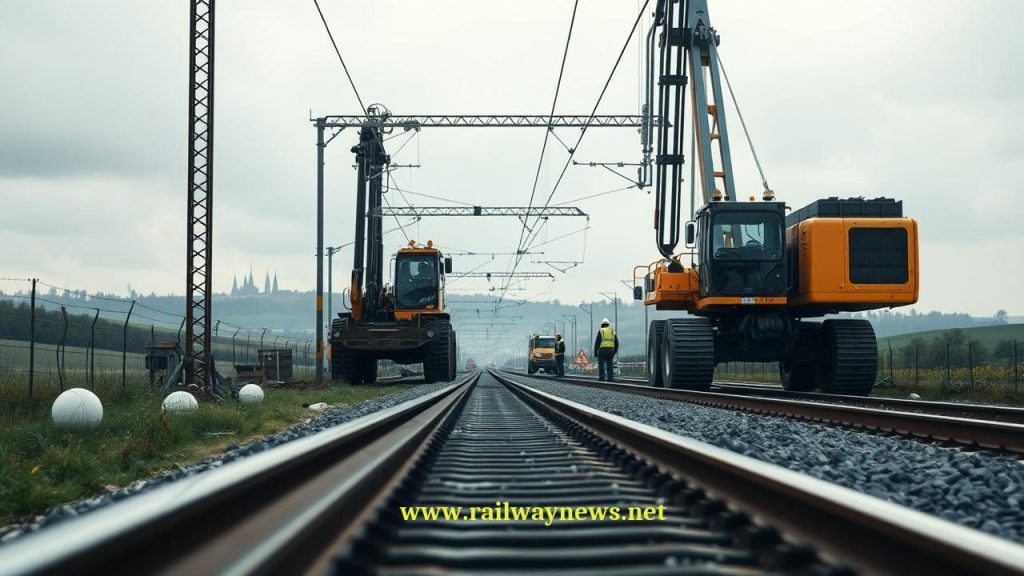
⚡ In Brief: Austrian Federal Railways (ÖBB) has commenced a multi-year modernization of the 162 km historic Franz-Josefs Line, involving phased closures until 2027 and future track doubling to increase capacity and speed between Vienna and the Czech border.
VIENNA, AUSTRIA – Austrian Federal Railways (ÖBB) is implementing a phased modernization of the 162 km Franz-Josefs Line connecting Vienna with Gmünd. The project, which started this month, involves extensive infrastructure renewals including 21 km of new overhead lines and the installation of modern electronic signaling at five key stations by 2027. Further capacity enhancements, including 6.5 km of track doubling, are planned for the 2030s.
What Is the Full Scope of This Project?
The project encompasses a detailed renewal of the line’s infrastructure, delivered in phases to minimize total disruption. The initial works include reinforcing embankments, modernizing track beds, and replacing rails, switches, and approximately 400 contact wire poles along a 21 km section. In a later phase, five stations—Großweikersdorf, Ziersdorf, Limberg-Maissau, Eggenburg, and Sigmundsherberg—will be equipped with modern electronic interlocking systems by 2027, enabling centralized traffic control. Long-term plans for the 2030s involve doubling a total of 6.5 km of track in two separate sections to reduce delays on the predominantly single-track route.
Key Project Data
| Parameter | Value |
|---|---|
| Project / Contract Name | Franz-Josefs Line Modernisation |
| Total Value | Not disclosed |
| Parties Involved | Austrian Federal Railways (ÖBB), Lower Austrian authorities |
| Timeline / Completion | Phased work until 2027; further expansion in the 2030s |
| Country / Corridor | Austria / Vienna – Gmünd – Czech Border |
How Does This Compare to Similar Projects?
The scope of the Franz-Josefs Line upgrade is characteristic of ongoing efforts to modernize Austria’s secondary rail network, but it is smaller in scale than concurrent mainline capacity-expansion projects. For comparison, the modernization of the Pottendorfer Line south of Vienna involves a more extensive upgrade, including the doubling of over 50 km of track, the elimination of dozens of level crossings, and raising line speeds to 200 km/h. While the types of work (station modernization, track renewal) are similar, the Pottendorfer project’s multi-billion Euro investment reflects its role as a primary corridor, whereas the Franz-Josefs Line upgrade is a more targeted renewal of a regional and cross-border route. (Source: ÖBB-Infrastruktur, 2024).
Editor’s Analysis
This modernization signals ÖBB’s strategic focus on upgrading secondary and cross-border routes, not just its primary high-speed corridors. By improving connectivity to the Czech Republic and enhancing regional services in Lower Austria, the project aligns with the EU’s broader goal of strengthening rail for shorter international journeys. The phased approach, with major capacity upgrades deferred to the 2030s, reflects a pragmatic, long-term investment strategy consistent with Austria’s national “Zielnetz 2040” (Target Network 2040) rail plan. (Source: Austrian Federal Ministry for Climate Action, 2023).
FAQ
Q: What is the main goal of the Franz-Josefs Line modernization?
A: The primary goal is to enhance reliability, increase efficiency, and prepare the 162 km line for future capacity demands. This includes modernizing track, stations, and signaling systems, with plans for future track doubling to reduce delays.
Q: How much is ÖBB investing in this project?
A: The total financial value for the entire modernization program has not been officially disclosed by ÖBB. The project is being delivered in multiple phases over several years, with costs allocated within ÖBB’s broader infrastructure budget.
Q: Will this upgrade allow for high-speed trains?
A: No, this project is not designed to convert the route into a high-speed corridor. While the maximum operating speed will be increased on some sections, the upgrades will primarily benefit the reliability and efficiency of regional passenger and cross-border services operated by ÖBB.

Railway infrastructure, rolling stock and transport technologies specialist focused on global rail industry developments, high-speed rail systems, signaling technologies and freight transportation. Covering railway investments, public transport modernization, rail operations and international mobility projects across Europe, Asia and North America.
RELATED POSTS

October 8, 2026 1:15 pm
Alstom secured a €1bn contract to build 13 automated trains,...

October 1, 2026 7:09 am
United States regulators confirmed a September 30 deadline for the...

October 4, 2026 5:14 pm
Alstom secured a CA$4.7 billion order from VIA Rail Canada...

October 5, 2026 6:12 pm
AECOM and Jacobs secured a contract in September 2026 to...

October 1, 2026 12:13 am
Illinois approved $1.5 billion annually for the Northern Illinois Transit...

October 4, 2026 11:08 pm
Sound Transit confirmed the September 30 opening of Seattle Pinehurst...