
Melbourne Metro Tunnel Opens: CBTC Boosts Capacity & Frequency
Melbourne’s Metro Tunnel officially opens! Cutting-edge CBTC technology boosts **rail** capacity, significantly improving train frequency for the **railway** network.
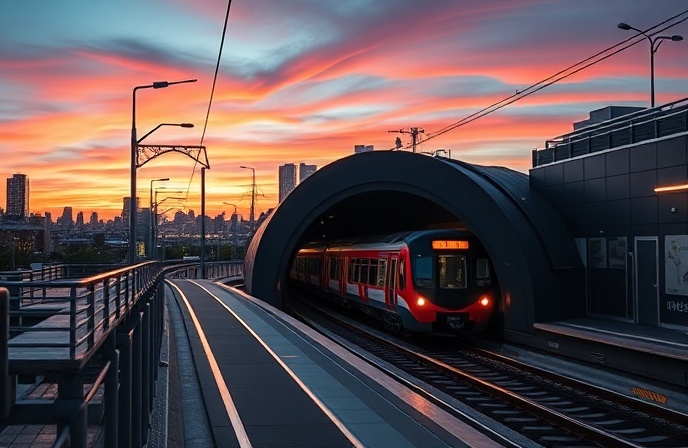
Melbourne Metro Tunnel officially operational, ushering in a new era of urban rail efficiency with advanced CBTC technology. The landmark project, integrating a high-capacity Communications Based Train Control (CBTC) system, significantly boosts train frequency and network capacity, marking the most substantial transformation of Melbourne’s rail infrastructure in over four decades.
| Key Entity | Critical Detail |
|---|---|
| Location | Melbourne, Australia |
| Project | Melbourne Metro Tunnel |
| Core Technology | Communications Based Train Control (CBTC) system; Automatic Train Operation (ATO) |
| Impact | Doubles underground rail network capacity, increases train frequency, reduces headways. |
| Status | Officially entered commercial operation. |
| Testing | Over 4,000 hours and 70,000 kilometers of dynamic testing conducted. |
| Global Collaboration | Teams from Australia, Thailand, US, Sweden, Finland, Germany, Poland, UK, India, Canada, Spain. |
| Timeline | Completed on schedule. |
Main Body:
The Melbourne Metro Tunnel project has officially transitioned into commercial operation, a monumental achievement driven by the successful implementation of a state-of-the-art Communications Based Train Control (CBTC) system. This advanced technology is pivotal in enabling an unprecedented increase in train frequency, reduction in headways, and a substantial boost in weekly trips across the metropolitan rail network. Melbourne stands as the first city in Australia to integrate such a high-capacity CBTC system into an existing, operational rail network, signifying a profound transformation in its urban mobility landscape.
Strategic Impact and Network Expansion
The integration of CBTC technology, working in synchrony with existing conventional signaling systems, is set to optimize rail traffic flow and significantly enhance passenger experience. The opening of the five new underground stations represents the most significant evolution of Melbourne’s urban rail transport since the inauguration of the City Loop more than 40 years ago. This expansion effectively doubles the capacity of the underground rail network, a critical step in addressing the growing demands of a burgeoning metropolis.
Operational Enhancements and Safety Features
Beyond the core CBTC system, the project incorporates platform screen doors specifically designed for the new stations. These additions facilitate more precise train stopping and are instrumental in enhancing passenger safety and the overall fluidity of passenger movements. Additionally, the implementation includes Automatic Train Operation (ATO) functionality with drivers on board, ensuring precise speed control, smooth station approaches, and optimized turnaround times at line termini. Prior to its launch, the system underwent rigorous testing, accumulating over 4,000 hours and 70,000 kilometers of dynamic trials to ensure reliability and performance.
Last June 2025, we published an article about Renfe’s cutting-edge Aranjuez maintenance hub. Click here to read – Future of Rail: Renfe’s Railway Technology Hub, Aranjuez: Essential Guide
Global Collaboration and Industry Leadership
The successful completion of the Melbourne Metro Tunnel project is a testament to extensive international collaboration, involving specialized teams from Australia, Thailand, the United States, Sweden, Finland, Germany, Poland, the United Kingdom, India, Canada, and Spain. Delivered on schedule and in accordance with commitments to the State of Victoria, the project positions Melbourne as a leader in adopting advanced rail technologies. This makes Melbourne the second Australian city to boast operational urban CBTC, following Sydney. The supplier of this high-capacity signaling system also has a notable presence in the Australian market, currently being the sole provider of urban CBTC technology delivered across the nation, with the system also slated for implementation in the Perth network.

Railway infrastructure, rolling stock and transport technologies specialist focused on global rail industry developments, high-speed rail systems, signaling technologies and freight transportation. Covering railway investments, public transport modernization, rail operations and international mobility projects across Europe, Asia and North America.
RELATED POSTS

September 5, 2026 4:19 pm
CPK launched formal tender talks with four consortia to design...

September 6, 2026 4:12 am
Alstom delivered the first of 100 new G Class trams...
September 6, 2026 8:17 am
DB InfraGO reopened the Nuremberg-Regensburg line in Bavaria on 31...
September 5, 2026 6:17 pm
Universal Signalling won a deal to install its U-Cross system...
September 6, 2026 12:20 pm
Indian Railways ordered a probe after a fire destroyed 2...
September 6, 2026 7:12 am
Renfe invests €1bn by 2030 to fix its rail depots...