
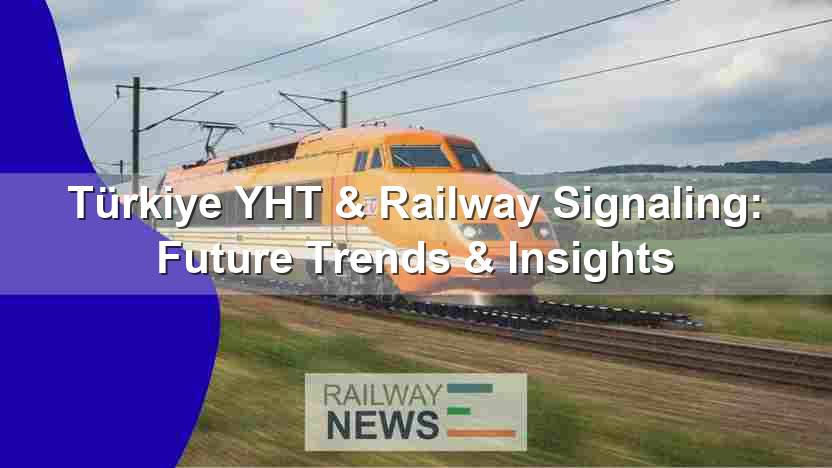
Türkiye YHT & Railway Signaling: Future Trends & Insights
Here are a few options for a voiceover-friendly excerpt, keeping the guidelines in mind:
**Option 1 (Focus on Safety):**
> Railway professionals, explore how advanced **railway signaling systems** are the backbone of safety, preventing collisions and optimizing train movements.
**Option 2 (Focus on Efficiency):**
> Learn how sophisticated **railway signaling systems** boost efficiency with real-time control and smart traffic management, keeping railways running smoothly.
**Option 3 (More General, with a CTA):**
> From mechanical to digital, discover the evolution of **railway signaling systems** and their crucial role in today’s rail network.
Here’s the rewritten article in HTML format:
Understanding Railway Signaling Systems and Their Vital Role in Modern Transportation
Railway signaling systems are the nervous system of modern rail networks, orchestrating the safe and efficient movement of trains. They encompass a complex array of technologies and procedures designed to prevent collisions, manage train speeds, and optimize track utilization. This article explores the critical aspects of these systems, exploring their evolution, core components, and the significant impact they have on the reliability and safety of rail travel. We will examine the progression from mechanical systems to sophisticated electronic and computerized solutions, highlighting the advancements that have revolutionized railway operations. Additionally, we will discuss the challenges and considerations involved in maintaining and upgrading these vital systems to meet the ever-increasing demands of modern transportation.
The Evolution of Railway Signaling
From their inception, railway signaling systems have undergone a remarkable transformation. Early systems relied on simple mechanical devices, such as semaphore signals and manual block systems, where human operators visually communicated and coordinated train movements. These systems, while rudimentary, provided a crucial first step in preventing collisions and organizing traffic flow. However, they were inherently limited by human reaction time and visual range, making them vulnerable to errors and delays.
_The development of electrical and electronic technologies marked a pivotal moment._ The introduction of electrical track circuits enabled automatic train detection, providing real-time information on train positions and allowing for the automatic operation of signals. Interlocking systems were developed, which ensured that signals and points (switches) were aligned in a safe configuration, preventing conflicting movements. These innovations significantly improved safety and efficiency, allowing for increased train frequency and reduced human error.
_The digital age has brought about even more significant advancements._ Computer-based interlocking systems (CBIs) and centralized traffic control (CTC) systems have become increasingly prevalent, enabling centralized control of vast rail networks. These systems utilize sophisticated algorithms and real-time data processing to optimize train movements, manage traffic flow, and provide detailed monitoring and control capabilities. They also enable advanced safety features, such as automatic train protection (ATP) and automatic train operation (ATO), which further enhance safety and operational efficiency.
Core Components and Technologies
Railway signaling systems are composed of several key components, each playing a critical role in the overall functionality. _Track circuits_ are fundamental, using electrical currents to detect the presence of trains on a particular section of track. These circuits provide vital information about train occupancy, allowing the signaling system to set signals and routes accordingly. _Signals_ are the visual indicators that convey information to train drivers, displaying aspects such as speed restrictions, route ahead, and track occupancy. Signals can be of various types, including color-light signals, position-light signals, and LED signals.
_Interlocking systems_ are the brains of the signaling system, responsible for controlling the movement of trains by ensuring that signals and points are aligned in a safe and logical manner. They prevent conflicting movements and ensure that routes are correctly set before a train is allowed to proceed. _Points_ (also known as switches or turnouts) are the mechanisms that allow trains to be directed from one track to another. Their correct operation is critical for efficient routing and avoiding derailments. _Communication systems_ are essential for transmitting information between the various components of the signaling system and the central control center. This includes the transmission of data regarding train location, signal aspects, and equipment status.
_Finally, Automatic Train Protection (ATP)_ is a safety system that monitors train speed and automatically enforces speed restrictions. ATP systems use various methods, such as track-based transmitters or in-cab signaling, to communicate speed limits to the train. If the train exceeds the permissible speed, the ATP system will automatically apply the brakes. This feature is critical in preventing accidents caused by excessive speed or driver error.
Safety and Efficiency Enhancements
The primary goal of railway signaling systems is to ensure the safe and efficient operation of trains. This is achieved through a combination of advanced technologies, rigorous safety protocols, and continuous monitoring. Signaling systems prevent collisions by controlling train movements and ensuring that trains are adequately separated on the track. They also enhance efficiency by optimizing train speeds, managing traffic flow, and reducing delays.
_Modern signaling systems incorporate several safety-critical features._ Automatic Train Protection (ATP) is a crucial element, preventing accidents caused by overspeeding or driver error. Automatic Train Operation (ATO) systems automate train control, further enhancing efficiency and safety. These systems control the train’s speed and braking, allowing for precise and consistent operation. Advanced interlocking systems prevent conflicting movements and ensure that routes are safely established before a train is allowed to proceed.
_Efficiency is improved by real-time monitoring and control capabilities._ Centralized Traffic Control (CTC) systems provide operators with a detailed overview of the rail network, allowing them to manage traffic flow and respond to disruptions quickly. Optimized train scheduling and routing reduce delays and increase track utilization. Digital communication systems enable rapid data exchange and improve the overall responsiveness of the signaling system. These features enhance the overall performance and reliability of the railway network, leading to improved passenger experience.
Challenges and Future Trends
Maintaining and upgrading railway signaling systems presents ongoing challenges. The complexity of these systems requires skilled technicians and specialized equipment for maintenance and repair. Regular inspections and testing are essential to ensure the reliability of all components. Compatibility between legacy systems and new technologies can also be a challenge, as railway operators must often integrate new systems with existing infrastructure.
_The industry is constantly evolving, and advancements continue._ One significant trend is the adoption of the European Train Control System (ETCS), a standardized signaling system that improves interoperability and safety across different European railway networks. Digitalization and automation are key drivers of innovation, with increasing use of artificial intelligence (AI) and machine learning to optimize train operations and enhance predictive maintenance. The development of autonomous train control systems is also a major focus, with the potential to further improve safety and efficiency. Another area of advancement is the deployment of advanced sensors and data analytics to monitor the health of signaling equipment and predict potential failures.
You might be interested in:
Last October 2018, we published an article about managing mega-infrastructure projects. Click here to read – Rail Baltica Audit: Insights into High-Speed Rail
_Railway signaling systems face a multitude of challenges, including the constant pressure to modernize existing infrastructure._ This involves integrating advanced technology while simultaneously ensuring the safety and reliability of ongoing operations. Additionally, railway companies must invest in training programs to equip their workforce with the skills needed to maintain and operate these sophisticated systems. The development of standardized systems and the implementation of interoperability standards, such as ETCS (European Train Control System), are also crucial for enhancing safety and efficiency across diverse railway networks. Thorough testing is a crucial aspect to ensure the correct functionality of a signaling system, especially during _G Line testing_.
Conclusion
To summarize, railway signaling systems are a critical component of modern railway infrastructure, responsible for ensuring the safe, efficient, and reliable operation of trains. From the early mechanical systems to the advanced digital and computerized solutions of today, these systems have continuously evolved to meet the growing demands of the rail industry. The core components, including track circuits, signals, interlocking systems, and communication networks, work together to control train movements, prevent collisions, and optimize traffic flow.
The benefits of these systems are evident in the improved safety, efficiency, and overall reliability of rail transport. The ongoing advancements in technology, such as the integration of ATP and ATO systems, are further enhancing safety and streamlining operations. However, the challenges remain, including the complexities of maintaining and upgrading legacy systems, as well as the need for skilled personnel and investments in modernizing infrastructure. The future of railway signaling holds exciting possibilities, with advancements such as AI-powered optimization and autonomous train control systems poised to further transform the industry. Continuous innovation, rigorous testing, and adherence to safety standards will remain paramount in ensuring the continued safe and efficient operation of rail networks worldwide.

Railway infrastructure, rolling stock and transport technologies specialist focused on global rail industry developments, high-speed rail systems, signaling technologies and freight transportation. Covering railway investments, public transport modernization, rail operations and international mobility projects across Europe, Asia and North America.
RELATED POSTS
September 6, 2026 5:19 am
Hitachi delivered Taiwan's first N700ST high-speed train from Japan in...
September 6, 2026 6:17 am
Hungary ordered a national ban on most freight trains from...
September 6, 2026 1:17 am
Hitachi Toshiba Supreme Consortium confirmed the first of 12 N700ST...

September 5, 2026 4:19 pm
CPK launched formal tender talks with four consortia to design...
September 7, 2026 8:16 am
Midea, Gree and TCL shipped air conditioners via China Railway...

September 5, 2026 7:14 pm
HS2 Ltd signed renegotiated civils contracts with EKFB and Align...