
Modern Rail Design & Operation: Future Trends & Tech Guide
Here are a few options for a voiceover-friendly excerpt, keeping the guidelines in mind:
**Option 1 (Focus on the holistic approach):**
> Explore the complexities of modern railway design and operation, from infrastructure to signaling – ensuring safe, efficient, and sustainable transport.
**Option 2 (Highlighting innovation):**
> From advanced signaling to energy-efficient rolling stock, discover how the railway industry is innovating for a smarter future.
**Option 3 (Focus on the future and efficiency):**
> Modernize your railway expertise: Learn how railway systems are being reimagined for peak performance and a sustainable future.
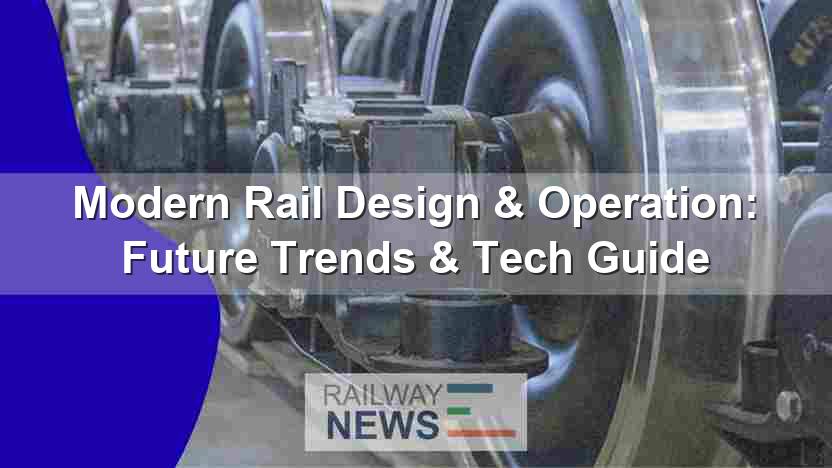
Unveiling the Complexities of Modern Railway Design and Operation
The evolution of railway systems is a continuous process, driven by advancements in technology, increasing demands for efficiency, and the imperative for sustainable transportation solutions. This article explores the multifaceted aspects of contemporary railway design and operation, exploring the key considerations that shape the industry. We will examine the intricate interplay of infrastructure, rolling stock, signaling systems, and operational strategies that are crucial for delivering safe, reliable, and cost-effective railway services. From the initial planning stages to the daily management of train movements, each element plays a vital role in the overall performance of a railway network. This exploration will illuminate the challenges and opportunities that define the railway landscape today, as well as provide insights into future trends.
Railway Infrastructure: The Foundation of Efficient Transportation
The foundation of any successful railway operation lies in its infrastructure. This encompasses a broad range of elements, including the track itself (rails, sleepers, ballast), bridges, tunnels, and stations. Modern railway infrastructure design prioritizes durability, minimal maintenance requirements, and the ability to accommodate high-speed and heavy-haul operations. The choice of track gauge, rail profile, and ballast material is critical, as these factors directly influence the track’s load-bearing capacity and its ability to withstand the stresses imposed by moving trains. The strategic placement of switches and crossings is also vital, as they determine the flexibility and capacity of the network. Additionally, the integration of advanced monitoring systems, such as those employing sensors to detect track defects, is becoming increasingly important for proactive maintenance and the prevention of disruptions. The design of stations must cater to passenger comfort and accessibility, while also ensuring efficient passenger flow and integration with other modes of transportation. The lifespan of the infrastructure, and the necessary requirements for maintenance and renewal must be considered during the planning phase.
Rolling Stock and Propulsion Systems: Powering the Future
The selection and design of rolling stock (trains) are paramount to operational efficiency and passenger experience. Factors such as the train’s capacity, speed, acceleration, and braking performance are all vital considerations. In recent years, there has been a marked shift towards more energy-efficient and environmentally friendly trains. Electric multiple units (EMUs) are becoming increasingly common, particularly on electrified lines, as they offer high performance and reduced emissions compared to diesel-powered trains. Diesel multiple units (DMUs) are still used on non-electrified lines, but even here, efforts are being made to improve fuel efficiency and reduce emissions. Additionally, the use of lightweight materials, such as aluminum and composite materials, can reduce the overall weight of trains, leading to lower energy consumption and improved acceleration. The interior design of the rolling stock must also meet the needs of the users. Comfort, accessibility, and safety for passengers have become central, while also allowing for the integration of modern passenger information systems (PIS) and on-board connectivity.
You might be interested in:
Last November 2021, we published an article about Union Pacific’s job cuts signaling shifts in rail industry cost-cutting. Click here to read – Union Pacific’s Cost Cuts: Rail Industry Trends
Signaling and Control Systems: Orchestrating Safe and Efficient Operations
Sophisticated signaling and control systems are essential for ensuring the safe and efficient operation of railway networks. These systems manage train movements, prevent collisions, and optimize train spacing. Traditional signaling systems used mechanical signals and track circuits to detect the presence of trains. Modern systems, however, rely on advanced technologies, such as:
- Automatic Train Protection (ATP): This system automatically stops a train if it exceeds the permitted speed or if it passes a signal at danger.
- Automatic Train Operation (ATO): This system automates train operations, including speed control and stopping at stations.
- European Rail Traffic Management System (ERTMS): This is a unified signaling system that allows for interoperability between different railway networks.
The implementation of these systems increases the capacity of the railway lines, and improve the efficiency of the services, while also increasing the overall safety. The ongoing shift towards digital signaling is enabling more precise control and optimization of train movements. This leads to improved punctuality, reduced delays, and increased capacity, particularly in high-density areas. The security of these systems is also of key importance, as a cyber attack can cause major disruptions to the railway service.
Operational Strategies and Optimization: Achieving Peak Performance
Effective operational strategies are crucial to maximizing the efficiency of a railway network. This includes careful planning of timetables, optimal routing of trains, and efficient management of resources. Timetable planning must balance the need to provide adequate capacity with the desire to offer frequent and reliable services. The routing of trains must take into account factors such as track capacity, train speeds, and the need to avoid conflicts with other trains. The management of resources, such as locomotives, rolling stock, and personnel, is also essential for ensuring that trains run on time and that resources are used efficiently. Advanced operations planning systems are being used to optimize train schedules and the allocation of resources. Real-time monitoring of train movements and the use of predictive analytics can help to identify and address potential problems before they cause disruptions. Effective communication between train operators, control centers, and maintenance crews is also essential for ensuring the smooth operation of the railway network. The integration of technology is facilitating new and more efficient methods of train operation.
Conclusion: Navigating the Future of Railways
To summarize, the modern railway industry is a dynamic and complex sector. The effective design and operation of railway systems necessitate a holistic approach, integrating cutting-edge infrastructure, advanced rolling stock, sophisticated signaling systems, and robust operational strategies. The continuous evolution of technology, along with rising concerns about environmental sustainability, is driving the industry towards innovative solutions. Investments in infrastructure, such as those supporting the deployment of the Regio 2N trains, and the implementation of advanced signaling and control systems, are vital for enhancing the efficiency, safety, and capacity of railway networks. Additionally, the pursuit of energy-efficient rolling stock and sustainable operational practices is paramount to meeting the demands of modern transportation and reducing the environmental footprint. The future of railways hinges on adaptability, innovation, and a commitment to providing passengers with dependable, cost-effective, and eco-friendly transportation options. The challenges are considerable, from upgrading aging infrastructure to integrating emerging technologies, but the potential benefits for both society and the environment are undeniable. As the demand for sustainable transport grows, the railway sector will play a pivotal role in shaping a more efficient and interconnected future.

Railway infrastructure, rolling stock and transport technologies specialist focused on global rail industry developments, high-speed rail systems, signaling technologies and freight transportation. Covering railway investments, public transport modernization, rail operations and international mobility projects across Europe, Asia and North America.
RELATED POSTS

October 8, 2026 1:15 pm
Alstom secured a €1bn contract to build 13 automated trains,...

October 1, 2026 7:09 am
United States regulators confirmed a September 30 deadline for the...

October 8, 2026 12:18 pm
Siemens Mobility signed an agreement with VinSpeed to supply 350...

October 4, 2026 5:14 pm
Alstom secured a CA$4.7 billion order from VIA Rail Canada...

October 5, 2026 6:12 pm
AECOM and Jacobs secured a contract in September 2026 to...

October 1, 2026 12:13 am
Illinois approved $1.5 billion annually for the Northern Illinois Transit...