
Baltic Hub Secures 30-Year Lease for Gdańsk Rail Expansion
Baltic Hub secured a 30-year lease on 27 hectares at the Port of Gdańsk to build a 750-metre rail siding next to its T2 deepwater container terminal.
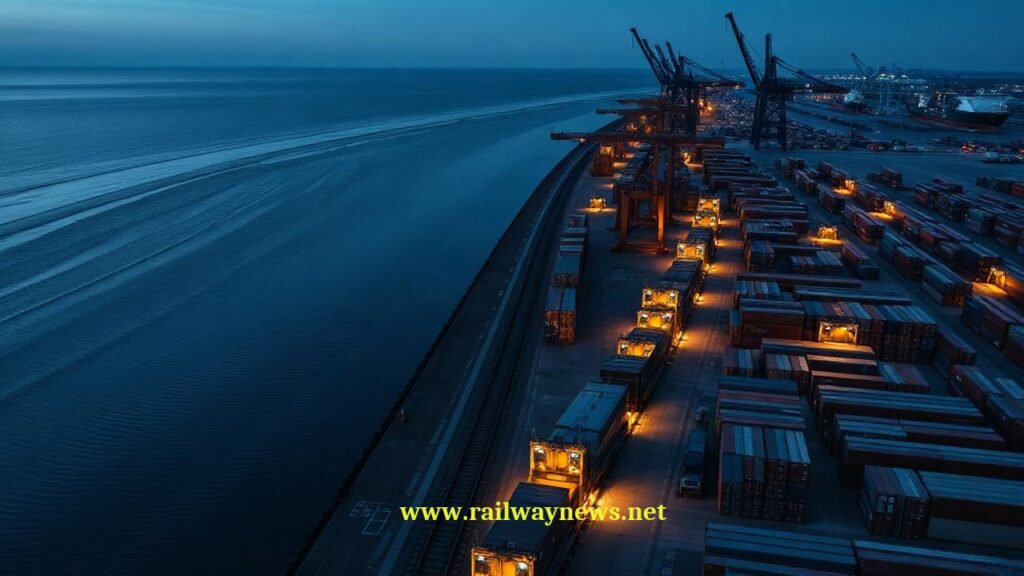
⚡ In Brief: Baltic Hub has secured a 30-year lease on 27 hectares at the Port of Gdańsk to build a 750-metre rail siding and expanded container storage next to its T2 terminal, enabling a larger share of Asia-Europe imports to move inland by rail.
GDANSK, Poland – Baltic Hub Container Terminal signed a 30-year lease with the Port of Gdańsk Authority on 4 August 2026 for a 27-hectare site adjacent to its T2 deepwater terminal, clearing the way for a new intermodal rail and container handling area. Following a competitive tender, Baltic Hub will construct a rail siding designed for 750-metre freight trains, build additional container storage yards, and procure new handling equipment in phases. The location is already designated for port use and has existing rail access, making it the closest available site for a second rail facility serving the T2 terminal.
What Is the Full Scope of This Project?
The agreement covers a landside and quayside capacity expansion of Baltic Hub’s T2 deepwater terminal, not a standalone logistics park: it adds a second rail-served container yard, new stacking capacity and an equipment package to the existing terminal operation. The phased investment is intended to strengthen connections between Gdańsk and inland markets in Poland, the Czech Republic, Slovakia and Ukraine, with a stated objective of shifting a larger share of container traffic from road to rail.
The company has not disclosed the total project value, the cost of the handling equipment package, or a detailed phase-by-phase completion calendar.
Key Project Data
| Parameter | Value |
|---|---|
| Project / Contract Name | Baltic Hub second rail and container handling area – 27-hectare lease, Port of Gdańsk |
| Total Value | Not disclosed |
| Parties Involved | Baltic Hub (PSA International, Polish Development Fund, IFM Global Infrastructure Fund); Port of Gdańsk Authority |
| Timeline / Completion | Phased delivery; no detailed schedule disclosed |
| Country / Corridor | Poland – Baltic-Adriatic hinterland corridor via Baltic Hub T2, Port of Gdańsk |
| Lease Term | 30 years |
| Site Area | 27 hectares |
| Rail Capability | New siding for trains up to 750 metres |
How Does This Compare to Similar Projects?
The new siding follows Baltic Hub’s award of €51m in EU funding in 2025 for modernisation and electrification of the existing Gdańsk deepwater terminal, making the 27-hectare lease the landside second stage of the same investment cycle (Source: World Cargo News, 2025).
The expansion is running against Poland’s aggregate freight trend: rail freight volumes fell 7.4% year-on-year in H1 2025, even as intermodal’s share of freight mass rose to 12.77% and its share of transport work increased to 16.69% through Q3 2025 (Source: railmarket.com, 2025). Rail-freight incumbents PCC Intermodal, PKP CARGO and DB Cargo operate in the same lane, so the new terminal is not entering an under-served market — it is competing for a share of already intermodalised cargo while aiming to pull additional volume off trucks.
By Northern European benchmarks, Gdańsk is catching up: the Port of Hamburg transfers more than half of its hinterland container traffic by rail, a level Baltic Hub has not publicly claimed for its existing rail operation (Source: Port of Hamburg, 2025). Ports reaching that standard typically operate two or more rail yards with 740–750-metre tracks and direct shuttles to inland terminals; this lease gives Baltic Hub the land and rail envelope to build that second-yard structure.
Direct project comparison is limited because Baltic Hub has not published the expected incremental container capacity, rail modal-share target, or cost per TEU of the expanded facility.
Editor’s Analysis
The 30-year lease term moves this project out of the standard port equipment cycle and into the category of long-lived rail infrastructure: Baltic Hub can amortise track, yard electrification and cargo-handling systems over a generation, matching the financial horizon used by PSA International’s Node to Network strategy for inland and gateway integration.
Strategically, the project treats rail density as the defensive moat around the T2/T3 deepwater complex: any competing Baltic port seeking the same Czech, Slovak and Ukrainian volume must assemble a comparable 27-hectare site with existing rail access adjacent to its quay, which is scarce along the Polish coast. The unresolved variable is external: Polish network train-path availability and inland terminal capacity — not the terminal itself — will decide whether the new 750-metre siding achieves the road-to-rail shift the port authority has prioritised.
FAQ
Q: Will this expansion raise the share of container traffic moving by rail from Gdańsk?
A: Yes, that is the declared purpose. Baltic Hub says the second rail facility will allow a greater share of containers to move by rail into Poland, the Czech Republic, Slovakia and Ukraine; no target rail-share percentage has been published.
Q: How much will Baltic Hub’s 27-hectare Gdańsk expansion cost and when will it open?
A: The total investment value and detailed completion timetable were not disclosed by Baltic Hub, which has only stated that delivery will be phased. The separately announced €51m EU grant for modernisation of the existing terminal was awarded in 2025 and is not part of the lease agreement.
Q: What difference does a 750-metre rail siding make to terminal operations?
A: A single 750-metre single-stack intermodal train can carry roughly 90–110 TEU, giving Baltic Hub a longer train slot that reduces locomotive path requirements and terminal shunting compared to shorter unit trains. The site’s existing rail connection means the new siding will not require a full new rail corridor to reach Poland’s national network.

Railway infrastructure, rolling stock and transport technologies specialist focused on global rail industry developments, high-speed rail systems, signaling technologies and freight transportation. Covering railway investments, public transport modernization, rail operations and international mobility projects across Europe, Asia and North America.
RELATED POSTS

October 8, 2026 1:15 pm
Alstom secured a €1bn contract to build 13 automated trains,...

October 1, 2026 7:09 am
United States regulators confirmed a September 30 deadline for the...

October 8, 2026 12:18 pm
Siemens Mobility signed an agreement with VinSpeed to supply 350...

October 4, 2026 5:14 pm
Alstom secured a CA$4.7 billion order from VIA Rail Canada...

October 5, 2026 6:12 pm
AECOM and Jacobs secured a contract in September 2026 to...

October 1, 2026 12:13 am
Illinois approved $1.5 billion annually for the Northern Illinois Transit...