
European Rail Modernization: Financing & Sustainability Trends
Modernizing European rail? Innovative financing and sustainability are key to the future of the European rail network. Discover how!
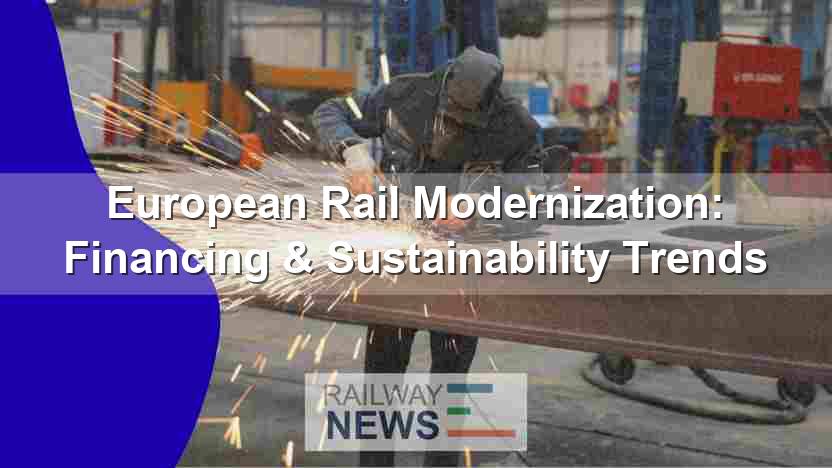
The European rail network, a vital artery of commerce and travel, is undergoing a period of significant transformation. This evolution is driven by a confluence of factors, including the need for increased efficiency, improved passenger experience, and a commitment to environmentally sustainable practices. This article explores the challenges and opportunities facing European rail, examining modernization efforts, innovative financing models, and the crucial role of sustainability in shaping the future of rail travel. From high-speed rail expansion to the integration of new technologies, the European rail landscape is in constant flux. Understanding these developments is essential for appreciating the economic and societal impacts of these changes. This analysis will explore the specific case of ÖBB-PV loan as an example of how innovative financing can support the modern rail sector.
Modernizing European Rail Infrastructure
European rail infrastructure faces the challenge of adapting to the demands of modern travel. This involves upgrading track, signaling systems, and stations to accommodate higher speeds, increased ridership, and enhanced safety measures. High-speed rail lines are central to this modernization effort, not only enhancing travel times but also facilitating economic connectivity across nations. The implementation of advanced signaling technologies, such as CBTC (Communication-Based Train Control), plays a crucial role in increasing train capacity and efficiency while bolstering safety.
Innovative Financing Strategies for Rail Projects
Funding large-scale rail projects requires sophisticated financing strategies. Traditional approaches often fall short of meeting the substantial capital requirements. Innovative financing mechanisms, such as public-private partnerships (PPPs), are gaining traction. These models leverage private investment while ensuring public oversight, balancing risks and rewards. Examining the ÖBB-PV loan is crucial to understanding this approach. By structuring loans specifically for investments in sustainable initiatives, like renewable energy projects, governments and companies can significantly improve the environmental impact of rail operations.
Sustainability and the Future of Rail Travel
Sustainability is paramount in the future of European rail. The industry must adopt environmentally friendly practices across all facets of operations. Electrification of rail lines is critical in reducing reliance on fossil fuels and minimizing emissions. Investing in renewable energy sources for train operations further enhances the sustainability profile of the rail sector. Implementing stricter environmental standards will be key to mitigating the sector’s carbon footprint and aligning with international sustainability goals.
Conclusion: Shaping the Future of European Rail
The future of European rail hinges on a multifaceted approach encompassing modernization, innovative financing, and unwavering commitment to sustainability. Modernizing infrastructure through upgraded track, signaling, and station facilities is essential to optimize performance and enhance the passenger experience. Innovative financing mechanisms, like PPPs and specialized loans (such as the ÖBB-PV loan), will be crucial in securing the necessary funding for large-scale projects. A strong emphasis on sustainability, including the electrification of rail lines and the integration of renewable energy sources, will not only minimize environmental impact but also contribute to a more resilient and adaptable transportation system. Ultimately, the success of European rail depends on a collaborative effort between governments, rail operators, and private investors. By integrating these key elements, the European rail system can evolve into a more efficient, sustainable, and appealing mode of transport for the future. The strategic implementation of these elements, alongside a keen focus on safety and the optimization of existing infrastructure, will be fundamental to ensuring the long-term viability and success of European rail in the years to come.
The ÖBB-PV loan, for instance, demonstrates the viability of using targeted financing to support environmentally conscious initiatives within the rail sector. This specific example serves as an example of how innovative approaches to financing can facilitate sustainable infrastructure investments. These efforts will be critical in ensuring that European rail continues to play a vital role in the continent’s economic and social fabric, fostering connectivity and contributing to a more sustainable future.
You might be interested in:
Last April 2019, we covered a major security upgrade for the Chicago CTA Red and Blue Lines. Click here to read – Chicago CTA: 1000 HD Cameras Boost Red & Blue Line Safety

Railway infrastructure, rolling stock and transport technologies specialist focused on global rail industry developments, high-speed rail systems, signaling technologies and freight transportation. Covering railway investments, public transport modernization, rail operations and international mobility projects across Europe, Asia and North America.
RELATED POSTS
September 6, 2026 5:19 am
Hitachi delivered Taiwan's first N700ST high-speed train from Japan in...

September 5, 2026 4:19 pm
CPK launched formal tender talks with four consortia to design...

September 6, 2026 4:12 am
Alstom delivered the first of 100 new G Class trams...

September 5, 2026 7:14 pm
HS2 Ltd signed renegotiated civils contracts with EKFB and Align...
September 6, 2026 1:17 am
Hitachi Toshiba Supreme Consortium confirmed the first of 12 N700ST...
September 6, 2026 6:17 am
Hungary ordered a national ban on most freight trains from...