
ICE L: DB’s High-Speed Rail Innovation Shaping Long-Distance Travel
DB’s new ICE L train boosts long-distance rail, enhancing passenger comfort and operational efficiency.
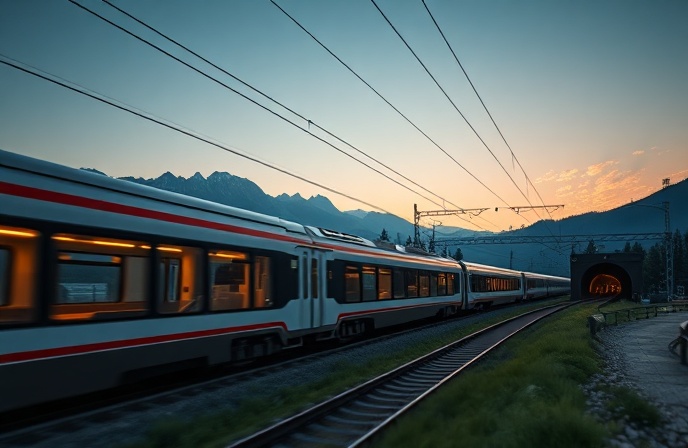
Deutsche Bahn’s ICE L: Shaping the Future of Long-Distance Rail Travel
The railway industry is undergoing constant evolution, and the introduction of new rolling stock is a critical part of this process. Deutsche Bahn (DB), Germany’s national railway operator, is leading this charge with the ICE L train, the latest addition to its high-speed fleet. But what exactly is the ICE L? When will it be operational? Where will it run, and why is it a significant development for railway professionals and passengers alike? The ICE L, or “Intercity Express Langstrecke” (Long-Distance), promises to modernize DB’s long-distance services, focusing on enhanced passenger comfort, increased capacity, and improved operational efficiency. This article explores the key features, technological advancements, and operational implications of the ICE L train, providing valuable insights for industry stakeholders.
Enhanced Passenger Experience: The Interior Design and Comfort Features
One of the primary goals of the ICE L is to significantly enhance the passenger experience. This is achieved through a modern interior design and a range of new comfort features. The train offers three classes of service: First Class, Second Class, and a dedicated family area. The seating arrangements are more spacious, with increased legroom and wider seats. Each seat is equipped with individual power outlets, USB charging ports, and enhanced Wi-Fi connectivity. Additionally, the ICE L train is designed to be barrier-free, providing accessible seating and facilities for passengers with reduced mobility. Large panoramic windows offer expansive views, and the trains incorporate advanced lighting systems to create a comfortable and welcoming atmosphere for long-distance journeys. The implementation of these features aims to attract more passengers to rail travel by providing a superior alternative to air and road transport. The enhanced passenger experience also includes on-board catering services designed to meet various dietary needs and preferences.
Technological Innovations: Signaling, Propulsion, and Rolling Stock Enhancements
Beyond the passenger experience, the ICE L train incorporates significant technological advancements. The train is equipped with the European Train Control System (ETCS), a standardized signaling system that enhances safety and allows for higher operating speeds. The ETCS is gradually replacing the traditional German signaling system, increasing network capacity and improving operational efficiency across Europe. The ICE L utilizes a distributed traction system, providing improved acceleration and braking performance. The train is also designed for energy efficiency, with optimized aerodynamics and regenerative braking, contributing to a reduced carbon footprint. Additionally, the ICE L train is designed with modularity in mind, simplifying maintenance and allowing for easier upgrades in the future. The train can be easily coupled or uncoupled with other trains, improving operational flexibility and optimizing train formations depending on route demand. This modular design also contributes to a longer service life and improved asset utilization.
Operational Deployment: Routes, Schedules, and Infrastructure Requirements
The deployment of the ICE L trains is a complex undertaking, involving route planning, infrastructure upgrades, and staff training. The trains are initially being deployed on major domestic routes, including connections between Berlin, Cologne, and Munich, and international routes to Amsterdam and Switzerland. The ICE L operates on the high-speed network and compatible conventional lines. This operational flexibility is achieved through the use of universal gauge bogies. The ICE L is designed to operate at speeds up to 230 km/h (143 mph), making it a high-speed capable train. The implementation of the ICE L requires the upgrading of infrastructure, specifically platform heights, electrification, and signaling systems, at numerous stations along the planned routes. DB is investing heavily in these infrastructure improvements to accommodate the new trains and ensure smooth and efficient operation. Detailed scheduling and route planning are essential to maximizing the capacity and efficiency of the new rolling stock.
Impact and Implications for the Railway Industry
The introduction of the ICE L train has significant implications for the railway industry. It underscores Deutsche Bahn’s commitment to investing in modern rolling stock and improving passenger services. The new trains are designed to enhance comfort and capacity, attracting more passengers to rail and reducing reliance on other transport modes. By incorporating advanced technologies like ETCS and modular design, the ICE L improves operational efficiency and contributes to a more sustainable and environmentally friendly transport system. The success of the ICE L rollout will also influence future investment decisions in railway infrastructure and rolling stock. These initiatives, including the increased adoption of standardized systems like ETCS, are setting the stage for a more interconnected and efficient European rail network. Moreover, the lessons learned from the ICE L deployment will provide valuable insights for other railway operators worldwide considering similar upgrades. The ICE L is not just a new train; it is a catalyst for innovation, collaboration, and sustainable growth within the railway industry.
Conclusion
The ICE L train represents a significant advancement in railway technology and passenger experience. By focusing on passenger comfort, technological innovation, and operational efficiency, the DB is setting a new standard for long-distance rail travel. The introduction of the ICE L train will attract more passengers and promote a shift towards sustainable transportation. The investments in infrastructure and signaling systems accompanying this rollout will have positive ripple effects, enhancing the overall rail network. As the ICE L continues to expand its service, it will play an increasingly important role in connecting communities and driving economic growth. This is a pivotal moment for the railway industry, and the ICE L will be at the forefront of this transformation, further cementing the importance of the ICE L train in the future of railway infrastructure and passenger services.

Railway infrastructure, rolling stock and transport technologies specialist focused on global rail industry developments, high-speed rail systems, signaling technologies and freight transportation. Covering railway investments, public transport modernization, rail operations and international mobility projects across Europe, Asia and North America.
RELATED POSTS

September 6, 2026 5:19 am
Hitachi delivered Taiwan's first N700ST high-speed train from Japan in...

September 5, 2026 4:19 pm
CPK launched formal tender talks with four consortia to design...

September 6, 2026 4:12 am
Alstom delivered the first of 100 new G Class trams...

September 6, 2026 1:17 am
Hitachi Toshiba Supreme Consortium confirmed the first of 12 N700ST...

September 6, 2026 6:17 am
Hungary ordered a national ban on most freight trains from...
September 6, 2026 8:17 am
DB InfraGO reopened the Nuremberg-Regensburg line in Bavaria on 31...