
Inland Rail: Revolutionizing Australian Freight
Inland Rail: A $12.33 billion game-changer for Australian freight, slashing transit times and boosting the economy. Discover how it’s reshaping our logistical landscape!
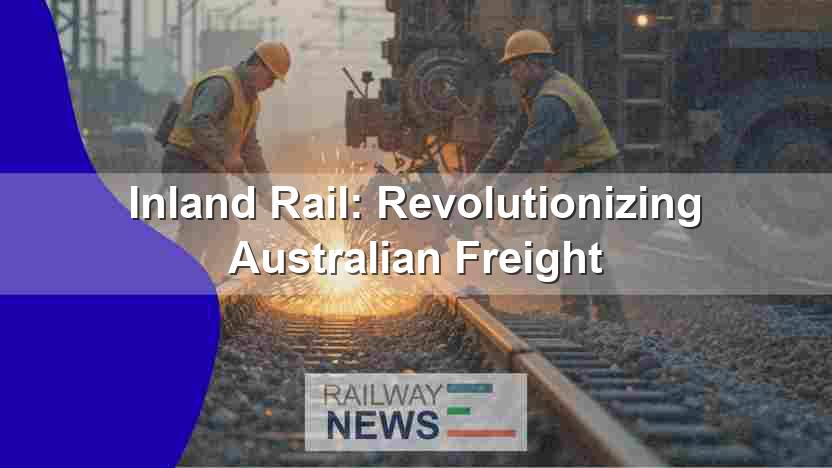
This article examines the significant Inland Rail project in Australia, focusing on the pivotal agreement signed between the Victorian state government and the federal government. This agreement marks a crucial step in the construction of a 1,700km freight rail line connecting Melbourne and Brisbane, traversing Victoria, New South Wales, and Queensland. The project’s impact extends far beyond infrastructure development; it promises to revolutionize freight transport, boost economic activity, and create numerous jobs across the states involved. We will delve into the financial aspects of the agreement, the infrastructure improvements planned, the anticipated economic benefits, and the long-term strategic implications for Australia’s transportation network. The analysis will explore the challenges and opportunities associated with such a large-scale undertaking and assess its potential to reshape the nation’s logistical landscape, enhancing efficiency and competitiveness in the global market.
Financial Investment and Infrastructure Upgrades
The Victorian government’s commitment to the Inland Rail project involves a substantial A$1.7 billion ($1.3 billion USD) investment under the Regional Rail Revival Programme. This funding is earmarked for upgrades to regional passenger rail lines, complementing the main Inland Rail freight line. This integrated approach emphasizes the broader economic benefits of the project, extending beyond freight transportation to improve passenger services in regional areas. The agreement also necessitates negotiations for a new long-term lease with the Australian Rail Track Corporation (ARTC), the entity responsible for the Inland Rail infrastructure’s development and management, with involvement from private sector partners. This highlights the complex interplay between public and private investment in major infrastructure projects.
Economic Impact and Job Creation
The Inland Rail project is projected to generate approximately A$16 billion ($12.33 billion USD) in economic benefits for the Australian economy throughout its construction and over the subsequent 50 years of operation. This substantial economic injection is anticipated to stimulate growth across various sectors, from construction and manufacturing to logistics and agriculture. Additionally, the project is expected to create an estimated 2,800 jobs in Victoria alone, underscoring its significant contribution to employment opportunities. The reduced transit time between Melbourne and Brisbane, down to less than 24 hours, will significantly benefit local farmers and producers, facilitating more efficient and cost-effective transportation of agricultural goods to domestic and international markets. The capacity to transport 1,800m double-stacked freight containers also speaks to significant increases in freight capacity.
Improved Freight Efficiency and Transportation Times
A core objective of the Inland Rail project is to significantly improve freight transport efficiency. The current road-based freight system often experiences congestion and delays, leading to increased costs and reduced competitiveness. The new 1,700km rail line will provide a faster, more reliable, and higher-capacity alternative, dramatically reducing transit times between major population centers. This will benefit not only businesses but also consumers, leading to potentially lower prices for goods. The improved efficiency will also reduce the environmental impact of freight transportation by shifting from road to rail, lowering greenhouse gas emissions and reducing congestion on Australia’s highways. The ability to move double-stacked containers substantially increases the efficiency of freight movement.
Strategic Implications and Future Development
The Inland Rail project is more than just a transportation initiative; it represents a strategic investment in Australia’s future economic growth and competitiveness. The project’s success will depend on effective collaboration between state and federal governments, private sector partners, and other stakeholders. A committee composed of Victorian and federal officials has been formed to address necessary improvements to the existing North East Line, emphasizing the need for coordinated planning and execution. The commitment to purchasing new trains for the corridor after track completion underscores a long-term view of infrastructure maintenance and modernization, crucial for ensuring the sustained effectiveness of the project. The ongoing monitoring and evaluation of the project’s performance will be vital for adapting to any unforeseen challenges and maximizing its long-term impact.
Conclusions
The Inland Rail project represents a transformative undertaking for Australia’s freight transportation system. The agreement between the Victorian state government and the federal government, with its A$1.7 billion ($1.3 billion USD) investment, signifies a strong commitment to upgrading regional rail infrastructure and enhancing national connectivity. The projected economic benefits, job creation, and improved freight efficiency highlight the project’s substantial contribution to Australia’s economic growth. The reduction in transit times between Melbourne and Brisbane to less than 24 hours and the increased capacity to transport 1,800m double-stacked freight containers will revolutionize the movement of goods, significantly benefiting farmers, producers, and businesses across the country. The project’s success relies heavily on the effective collaboration between various stakeholders, including the Australian Rail Track Corporation (ARTC), and the ongoing investment in infrastructure maintenance and modernization. While challenges are inherent in such a large-scale project, its potential to reshape Australia’s logistical landscape and enhance its competitiveness on the global stage is undeniable. The ongoing commitment to improvements on the existing North East Line and the procurement of new trains demonstrate the long-term vision and sustainability of this crucial infrastructure initiative, signifying a positive step toward a more efficient and interconnected Australia. The long-term economic benefits, estimated at A$16 billion ($12.33 billion USD) over 50 years, reinforces its strategic importance and its potential to significantly boost the Australian economy. The project serves as a model for future large-scale infrastructure projects, highlighting the importance of collaborative planning, effective resource management, and a strong commitment to long-term sustainability.

Railway infrastructure, rolling stock and transport technologies specialist focused on global rail industry developments, high-speed rail systems, signaling technologies and freight transportation. Covering railway investments, public transport modernization, rail operations and international mobility projects across Europe, Asia and North America.
RELATED POSTS

September 6, 2026 5:19 am
Hitachi delivered Taiwan's first N700ST high-speed train from Japan in...

September 6, 2026 1:17 am
Hitachi Toshiba Supreme Consortium confirmed the first of 12 N700ST...
September 6, 2026 6:17 am
Hungary ordered a national ban on most freight trains from...

September 5, 2026 4:19 pm
CPK launched formal tender talks with four consortia to design...

September 6, 2026 4:12 am
Alstom delivered the first of 100 new G Class trams...

September 5, 2026 7:14 pm
HS2 Ltd signed renegotiated civils contracts with EKFB and Align...