
Yonge North Subway Extension: GTA Rail Infrastructure Boost & Benefits
Toronto’s Yonge North Subway Extension gets $1.4B contract, boosting GTA transit.
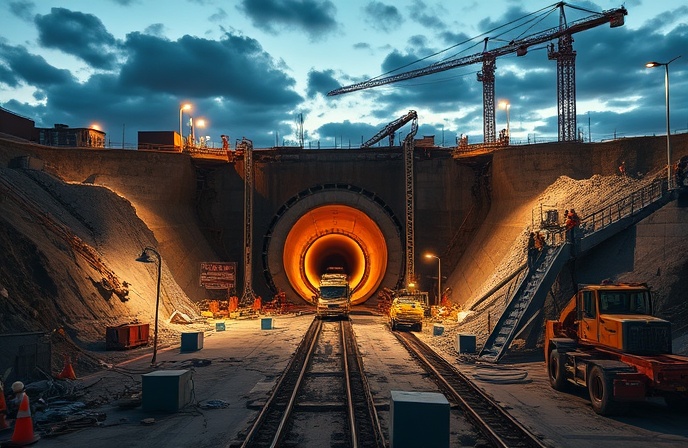
North End Connectors Awarded $1.4 Billion Contract for Yonge North Subway Extension
The future of public transit in the Greater Toronto Area (GTA) is taking a significant leap forward. On August 7, 2025, the North End Connectors consortium secured a fixed-price contract valued at C$1.4 billion (approximately $1.01 billion USD) from Infrastructure Ontario (IO) and Metrolinx. This landmark deal encompasses the construction of twin 6.3-kilometer tunnels for the Yonge North Subway Extension. This vital infrastructure project, funded by the Government of Canada with C$2.24 billion, will extend the existing TTC Line 1 subway service north from Finch Station in Toronto to a location south of Langstaff Road in Markham. The project’s core objective is to dramatically enhance the region’s transportation network, reducing commute times and connecting communities. This article explores the intricacies of this project, exploring its scope, the consortium involved, and the transformative impact it promises to deliver to the GTA’s transit landscape.
Project Scope and Consortium Composition
The Yonge North Subway Extension project is a significant undertaking, representing a critical expansion of the existing Toronto Transit Commission (TTC) Line 1. The contract awarded to North End Connectors specifically addresses the tunneling phase, which includes the construction of twin 6.3-kilometer tunnels. These tunnels will originate from Finch Station and extend northward under Yonge Street, curving east along Bay Thorn Drive, eventually transitioning to a surface-level segment south of Langstaff Road. The North End Connectors consortium is comprised of key players in the construction industry. Aecon Infrastructure Management, Fomento de Construcciones y Contratas Canada, and Ghella Canada are the primary entities, bringing their expertise in both construction and project leadership to the table. Design responsibilities are managed by EXP Services and TYPSA, ensuring the project’s technical integrity. Financial advisory services are provided by National Bank Financial, Aecon Concessions, Fomento de Construcciones y Contratas Canada, and Ghella Investments & Partnerships. The entire project is being executed under a design-build-finance (DBF) model, leveraging IO’s public-private partnership (P3) framework, a strategy designed to optimize cost-effectiveness and risk allocation.
Economic and Social Benefits of the Yonge North Extension
The Yonge North Subway Extension promises to deliver substantial economic and social benefits to the region. Projections estimate that the extension will facilitate over 90,000 daily trips, dramatically easing congestion on existing roadways and offering a more sustainable mode of transport for commuters. This enhanced accessibility will also place an additional 26,000 people within a 10-minute walking distance of public transit, fostering greater connectivity and supporting urban densification efforts. Additionally, the extension is anticipated to reduce travel times from Markham to downtown Toronto by as much as 22 minutes, offering significant time savings for commuters. The project is also expected to contribute to environmental sustainability by reducing personal vehicle travel by an estimated 7,700 kilometers during rush hour. Economically, the project is forecasted to generate over C$3.6 billion in economic benefits and support approximately 4,300 jobs annually during the construction phase, representing a substantial boost to the local economy.
Construction and Implementation Details
While early works are already underway, major construction activities are slated to commence following the completion of the design phase. The scope of work undertaken by North End Connectors is detailed, encompassing the design and construction of critical infrastructure components. This includes the development of launch and extraction shafts, the construction of the twin tunnels themselves, emergency exit buildings for passenger safety, and the procurement and installation of advanced tunnel boring machines (TBMs). The project also incorporates the use of precast concrete tunnel liners to ensure the structural integrity and durability of the tunnels. The selection and management of TBMs and tunnel lining systems are critical decisions for ensuring project success, requiring meticulous planning and execution.
Stakeholder Perspectives and Future Outlook
Ontario Transportation Minister Prabmeet Sarkaria emphasized the significance of the project. “Today, we’re taking a major step forward as we build the Yonge North Subway Extension, revolutionising travel across the region and extending subway access to Vaughan, Markham and Richmond Hill for the first time,” he stated. The project is a cornerstone of the province’s commitment to enhancing transit infrastructure and boosting economic growth. Metrolinx President and CEO Michael Lindsay echoed this sentiment, stating, “With this contract award, we are setting the stage for major construction on the Yonge North Subway Extension. This project will extend TTC Line 1 subway service further north into York Region and create connections to the GO and Viva transit networks.” The Yonge North Subway Extension is a clear indication of the region’s dedication to sustainable urban development. This project will drive economic growth, increase the quality of life for residents, and serve as a benchmark for future infrastructure ventures in the GTA and beyond.
Conclusion
The award of the C$1.4 billion contract to North End Connectors for the Yonge North Subway Extension marks a pivotal moment in the evolution of the GTA’s public transit system. The project’s scope is detailed, from the construction of twin tunnels to the integration of innovative technologies. This project will enhance accessibility, reduce travel times, stimulate economic growth, and significantly contribute to the region’s long-term sustainability. This project underscores the growing significance of public-private partnerships in tackling complex infrastructure projects. The utilization of a design-build-finance (DBF) model will streamline the project’s execution, ensuring optimal cost control and efficient project delivery. As construction progresses, industry professionals will closely watch the project’s milestones, and the technologies deployed. This project serves as an example of commitment to modernizing public transit. With early works underway and major construction imminent, the Yonge North Subway Extension is poised to transform the way residents experience transportation, and the potential to influence transit infrastructure projects across the country.
Company Summary (Optional)
Aecon Group Inc. is a leading Canadian construction and infrastructure development company, with a significant presence in railway projects, and is involved in a multitude of infrastructure projects across North America, delivering expertise in civil, mechanical, electrical and industrial infrastructure. Ghella S.p.A. is an international company, which has worked on many tunnelling and rail projects, offering advanced expertise in underground construction. Fomento de Construcciones y Contratas (FCC) is a multinational infrastructure and environmental services company, with a global presence in the railway and urban transit sectors. Each company brings a wealth of expertise and proven experience in their respective fields, making the North End Connectors consortium well-positioned for success.

Railway infrastructure, rolling stock and transport technologies specialist focused on global rail industry developments, high-speed rail systems, signaling technologies and freight transportation. Covering railway investments, public transport modernization, rail operations and international mobility projects across Europe, Asia and North America.
RELATED POSTS
August 4, 2026 1:11 pm
Hitachi Rail Canada secured a $407.7M contract to install CBTC...
August 4, 2026 11:12 am
MBTA confirmed a $150.8 million overhaul of the 85-year-old Green...
August 11, 2026 11:13 am
Hungary confirmed the €2.5B Hungarian rail upgrade will not see...
August 1, 2026 7:14 pm
€205 billion funding shortfall threatens the TEN-T rail network's completion...
August 1, 2026 7:56 am
BMZ delivered two new TEM18DM diesel shunting locos to RZD...
August 2, 2026 5:10 am
ZIM and MSC launched a weekly Asia-Jacksonville container service on...