
Australia & Japan Rail: High-Speed & Public Transport Insights
Australian and Japanese rail systems compared, highlighting efficiency and passenger experience differences. Shinkansen speed, Melbourne’s trams, and China’s high-speed growth are discussed.
Global Rail: A Journey Through Public Transport Excellence in Australia and Japan
From the bustling tram lines of Melbourne to the hyper-efficient Shinkansen of Japan, the world of rail transport offers a fascinating study in contrasts and innovation. This article explores the experiences of a rail enthusiast, exploring the key differences between public transport in Australia and Japan, highlighting the strengths of each system, and the implications for the future of global rail networks. The “who” is an individual with experience in both Australia and Japan. The “what” is a comparison of rail systems, focusing on their efficiency, passenger experience, and technological advancements. The “when” is primarily the time of the author’s travels in Japan and Australia. The “where” is Melbourne, Tokyo, and other locations in Japan. The “why” is to provide a comparative analysis of two contrasting rail systems. The “how” is via the author’s first-hand experience and observations.
Melbourne’s Public Transport: Efficiency and Ease of Use
Melbourne’s public transport network, boasting the world’s largest tram network, offers a straightforward and convenient experience for passengers. The Metro train system provides frequent and reliable services, facilitating easy transit across the city. Fare capping on V/Line trains makes regional Victoria accessible for a reasonable cost, encouraging exploration beyond the city limits. While the Myki smartcard system facilitates a smooth journey for Melbourne passengers, it’s distinct from the Opal cards used in Sydney, a stark difference from the integrated system found in Japan.
Navigating Tokyo’s Rail: A Lesson in Efficiency and Etiquette
Tokyo’s rail network, a marvel of engineering and operational efficiency, presents a more complex experience. The Suica card, a rechargeable travel card, simplifies journeys across multiple lines and even supports purchases at vending machines. The efficiency of the system is underscored by its punctuality. If trains are delayed beyond a few minutes, station staff issue “lateness slips,” recognizing that the delay may impact commuters. However, the sheer volume of passengers can be daunting. The Shibuya Station, one of the world’s busiest stations, handles millions of passengers daily, demanding strict adherence to established etiquette – orderly queueing, directional following, and quiet conduct within carriages – to ensure smooth operations. The infamous “pushers” at rush hour are a testament to the relentless demand on this crucial infrastructure.
The Shinkansen: Japan’s High-Speed Rail Legacy
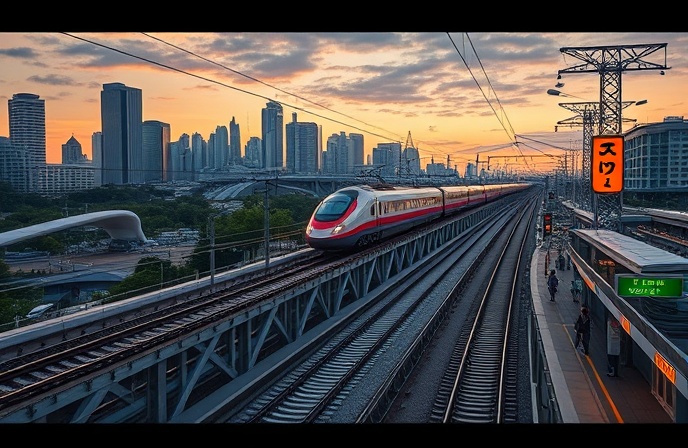
The Shinkansen bullet train exemplifies Japan’s commitment to high-speed rail. This high-speed network offers speeds up to 320 km/h, significantly reducing travel times between major cities. A journey from Tokyo to Kyoto takes a mere two hours and 15 minutes. Cleanliness, quietness, and scenic views characterize the experience, making the train a tourist attraction in its own right. This underscores the crucial role of effective infrastructure and a well-managed public transport system in encouraging and facilitating travel.
China’s High-Speed Rail: A Model for Growth and Development
High-speed rail in China has undergone a period of tremendous growth. The journey between Shenzhen and Guangzhou takes just 29 minutes on express trains. While acquiring train tickets in China was initially challenging, services like Trip.com have modernized the process. Purchasing tickets during peak travel periods, such as Chinese New Year, requires early planning and a degree of luck. The high-speed rail stations are often integrated into city centers, such as Shenzhen North Railway Station, which features multiple metro lines, supporting efficiency.
Conclusion
The contrasting rail systems of Australia and Japan showcase differing approaches to public transport. Melbourne’s system, with its expansive tram network and efficient metro, offers a user-friendly experience. Conversely, Japan’s rail network prioritizes efficiency and high-volume throughput, albeit with the complexity of navigating the world’s busiest stations and adhering to established customs. Japan’s pioneering Shinkansen sets a high standard for speed, comfort, and integration. China has seen rapid expansion and modernization of its rail network, with stations and services improving constantly. The lessons learned from these global examples highlight the importance of efficient infrastructure, passenger-focused design, and robust operational management. As countries worldwide seek to enhance their transport networks, these case studies provide invaluable insights. Investment in high-speed rail, streamlined ticketing systems, and the continuous improvement of the passenger experience are key for the future of rail.

Railway infrastructure, rolling stock and transport technologies specialist focused on global rail industry developments, high-speed rail systems, signaling technologies and freight transportation. Covering railway investments, public transport modernization, rail operations and international mobility projects across Europe, Asia and North America.
RELATED POSTS
September 6, 2026 5:19 am
Hitachi delivered Taiwan's first N700ST high-speed train from Japan in...
September 6, 2026 1:17 am
Hitachi Toshiba Supreme Consortium confirmed the first of 12 N700ST...
September 6, 2026 6:17 am
Hungary ordered a national ban on most freight trains from...

September 5, 2026 4:19 pm
CPK launched formal tender talks with four consortia to design...

September 6, 2026 4:12 am
Alstom delivered the first of 100 new G Class trams...
September 7, 2026 8:16 am
Midea, Gree and TCL shipped air conditioners via China Railway...