
Metrolinx Breaks Ground on Toronto’s East Harbour Transit Hub
Metrolinx breaks ground on Toronto’s East Harbour Transit Hub, easing Union Station congestion and boosting GO Transit service.
Metrolinx Breaks Ground on East Harbour Transit Hub in Toronto, Promising Relief for Commuters
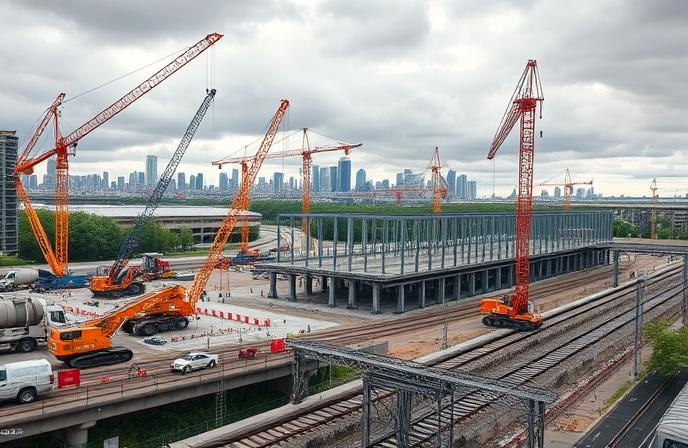
Toronto’s transit landscape is poised for a significant transformation. Metrolinx has officially commenced construction on the East Harbour Transit Hub, a critical new interchange located in the Riverdale neighborhood. This ambitious project, announced last week, aims to alleviate congestion, enhance transit connectivity, and dramatically improve the commuting experience for residents. The project directly addresses critical challenges in the Greater Toronto Area (GTA), aiming to lessen reliance on the already overburdened Union Station and significantly improve service frequency. Construction crews are currently focused on laying the foundational infrastructure for the station and associated railway tracks. This includes the installation of crucial elements such as concrete caissons and retaining walls, marking the beginning of a complex and transformative undertaking.
Foundation for Future Transit
The project’s core objective is to establish a vital transportation node east of the Don Valley Parkway and south of Eastern Avenue. The East Harbour Transit Hub represents a significant investment in the future of public transportation within the GTA. This initiative is designed to streamline passenger flow and reduce travel times by diverting traffic away from Union Station, the city’s primary transit hub. The strategic positioning of the East Harbour Transit Hub aims to decentralize passenger loads and ease congestion across the existing rail network. Crucial to the hub’s functionality is the expansion of the Eastern Avenue bridge. Work to widen the bridge, which began in 2023, is ongoing. The widened bridge will accommodate six tracks in total, including four dedicated to GO Transit commuter trains and two designated for the Ontario Line subway.
Infrastructure Integration: The Ontario Line and GO Transit Alignment
The integration of the Ontario Line subway with the GO Transit network is a key component of this project. The design emphasizes seamless transfers between the two systems, encouraging the use of integrated fare systems. This approach will promote increased accessibility for all users, enhancing the transit experience for existing passengers while attracting new riders. The strategic connection between the Ontario Line and GO Transit at East Harbour will not only provide commuters with additional transit choices but will also improve the network’s overall efficiency. The project, once completed, will drastically reduce the volume of commuters that currently depend on a single transit point.
Capacity and Operational Efficiency
The East Harbour Transit Hub is engineered to handle a significant volume of daily passengers. The hub anticipates serving approximately 100,000 riders daily once operational. The project promises high-frequency train services, with trains arriving as frequently as every five minutes during peak hours. This high frequency will significantly reduce wait times and alleviate crowding. The implementation of this hub is also expected to lessen crowding at Union Station by as much as 14% – a considerable efficiency increase for Toronto’s main transit point.
Construction and Beyond
The initial phases of the project involve extensive groundwork to guarantee the stability and durability of the infrastructure. This includes the installation of critical structural supports designed to withstand the demands of heavy rail traffic. As the project progresses, the focus will shift to the construction of the station itself, integrating advanced technologies to enhance the passenger experience, including real-time information displays and efficient ticketing systems. The aim is to offer a welcoming and efficient transit hub with passenger experience as a key priority.
Conclusion
The East Harbour Transit Hub represents a substantial investment in Toronto’s public transportation network, designed to address critical capacity issues and offer a more efficient and passenger-friendly commuting experience. The successful completion of this hub will be transformative for commuters in the Riverdale and surrounding neighborhoods. The project’s emphasis on network integration, with seamless connections between the Ontario Line and GO Transit, represents a forward-thinking approach to public transit planning. The anticipated reduction in congestion at Union Station and the increased service frequency are expected to greatly benefit commuters. The success of this project serves as a model for sustainable urban transit development, showcasing the importance of thoughtful planning, infrastructure investment, and efficient operational strategies for the future of public transportation in major metropolitan areas. The project’s impact is not only focused on transportation but also on city-wide sustainability and growth, creating a stronger, more connected Toronto.

Railway infrastructure, rolling stock and transport technologies specialist focused on global rail industry developments, high-speed rail systems, signaling technologies and freight transportation. Covering railway investments, public transport modernization, rail operations and international mobility projects across Europe, Asia and North America.
RELATED POSTS
August 4, 2026 1:11 pm
Hitachi Rail Canada secured a $407.7M contract to install CBTC...

August 11, 2026 11:13 am
Hungary confirmed the €2.5B Hungarian rail upgrade will not see...

August 4, 2026 11:12 am
MBTA confirmed a $150.8 million overhaul of the 85-year-old Green...

August 1, 2026 7:14 pm
€205 billion funding shortfall threatens the TEN-T rail network's completion...
August 1, 2026 7:56 am
BMZ delivered two new TEM18DM diesel shunting locos to RZD...

August 5, 2026 7:11 pm
JR Central secured Shizuoka governor approval July 7, 2026 for...