
Rail Baltica Secures EU Funding for Future High-Speed Rail Projects
Baltic states urge EU for stable Rail Baltica funding, crucial for 2030 completion and regional security.
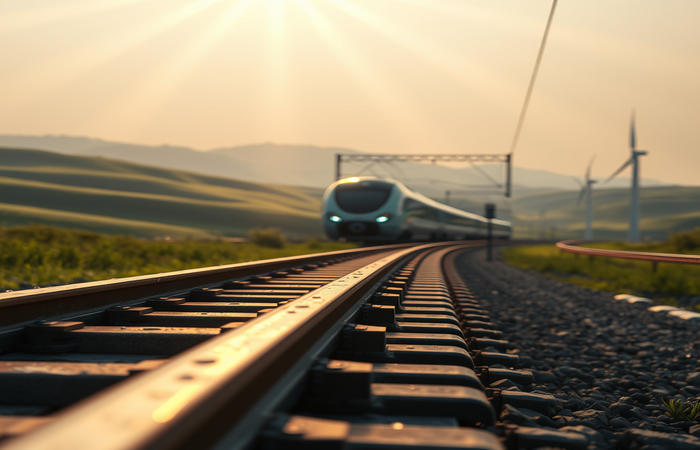
Baltic States Renew Push for Stable EU Funding to Secure Rail Baltica’s Future
In a firm show of unity, Baltic transport ministers have convened to amplify their call for sustained European Union funding to ensure the timely completion of the Rail Baltica project. This crucial infrastructure initiative, designed to connect the Baltic states with the European rail network, is facing pressures from geopolitical realities. Held in Vilnius on May 27, 2025, the meeting saw Estonia’s Kuldar Leis, Latvia’s Atis Švinka, and Lithuania’s Eugenijus Sabutis reiterate their commitment to the project and underscore its essential role in regional defence. The ministers are now jointly appealing to the European Commission and member states to secure funding for the next multi-annual financial framework, stressing the strategic importance of the project for both economic development and, crucially, military mobility. This article will explore the key issues discussed, the challenges faced, and the project’s strategic implications for the Baltic region and the wider European Union.
Shared Vision: Completing Rail Baltica by 2030
The central focus of the Vilnius meeting was to reaffirm the commitment to finalizing the first phase of the Rail Baltica project by the 2030 deadline. The ministers jointly emphasized the need for “timely delivery.” Rail Baltica represents a critical endeavor to integrate the Baltic states into the broader European railway network, facilitating seamless transport connectivity and economic integration. Currently, the project depends on EU co-financing; however, the current funding structures, structured around annual calls for tenders, lack the long-term predictability required for infrastructure planning. The ministers underscored that continuous and sufficient co-financing, combined with a high co-financing rate, is vital for Rail Baltica to meet its ambitious completion timeline.
The Security Imperative: Rail Baltica and Defence
Beyond its economic benefits, the Rail Baltica project is increasingly recognized for its critical role in European defence. The ministers explicitly framed the project within the context of heightened geopolitical tensions, recognizing its potential for ensuring the rapid and efficient movement of military personnel and supplies across NATO’s eastern flank. Estonia’s Kuldar Leis noted the necessity of infrastructure facilitating rapid military mobility within the current security climate. Rail Baltica will be the cornerstone in allowing allied forces and supplies to traverse the Eastern European flank rapidly. This shift from a purely economic project towards a strategically significant one has elevated the project’s importance, particularly in light of the ongoing security challenges facing the Baltic region.
Financial Commitments and Funding Mechanisms
The ministers also addressed the financial aspects of the project, highlighting the substantial national investments already being undertaken to bolster regional security. Latvia’s Atis Švinka mentioned the nation’s significant commitment to security expenditures, including almost 2 billion euros, aiming to reach 5 percent of GDP. The ministers also called on the European Commission and member states to explore more effective mechanisms for supporting “dual-use infrastructure projects,” which are infrastructure projects designed for both civilian and military purposes. The shift underscores the need for more flexible and secure funding mechanisms, particularly within the context of the evolving security landscape.
Challenges and the Path Forward
The meeting highlights the challenges of securing and maintaining predictable funding for complex infrastructure projects. The limited predictability from current annual funding cycles impedes long-term planning and the smooth execution of construction phases. The reliance on EU funding necessitates a coordinated approach by the Baltic states to advocate for the project within the EU’s funding frameworks, including the next multi-annual financial framework. The need for more flexible financing tools like the CEF (Connecting Europe Facility) is apparent.
Conclusion
The meeting of Baltic transport ministers reinforces the critical importance of Rail Baltica, not only as a vital economic project, but also as a strategic necessity for the region’s security. The joint statement underscored the need for stable and adequate EU funding to guarantee the project’s timely completion by 2030. The ministers are also focused on adapting funding strategies to support both civilian and military uses. The commitment of national financial investment reinforces the region’s commitment to the project. The sustained lobbying for predictable funding mechanisms and the recognition of Rail Baltica’s dual-use capabilities are essential steps. Looking forward, the success of this project will not only depend on the financial backing of the EU but on the ability of the Baltic states to coordinate and advocate, ensuring its full realization. The future outlook for Rail Baltica is promising but depends on navigating the complexities of EU funding and the evolving geopolitical environment.

Railway infrastructure, rolling stock and transport technologies specialist focused on global rail industry developments, high-speed rail systems, signaling technologies and freight transportation. Covering railway investments, public transport modernization, rail operations and international mobility projects across Europe, Asia and North America.
RELATED POSTS

October 1, 2026 7:09 am
United States regulators confirmed a September 30 deadline for the...

October 8, 2026 1:15 pm
Alstom secured a €1bn contract to build 13 automated trains,...

October 4, 2026 5:14 pm
Alstom secured a CA$4.7 billion order from VIA Rail Canada...

October 1, 2026 12:13 am
Illinois approved $1.5 billion annually for the Northern Illinois Transit...

October 6, 2026 2:14 am
Union Pacific launched export rail shipments with Ferromex to deliver...

October 1, 2026 6:10 am
Amtrak approved a System Expansion Committee on July 30 to...