
Canada Rail: $4.5B Investment Fuels Record Safety, Jobs Surge
Rail Trends 2025 shows Canadian railways invested $4.5B, achieving record safety and a 24-year employment high, boosting supply chains and the economy.
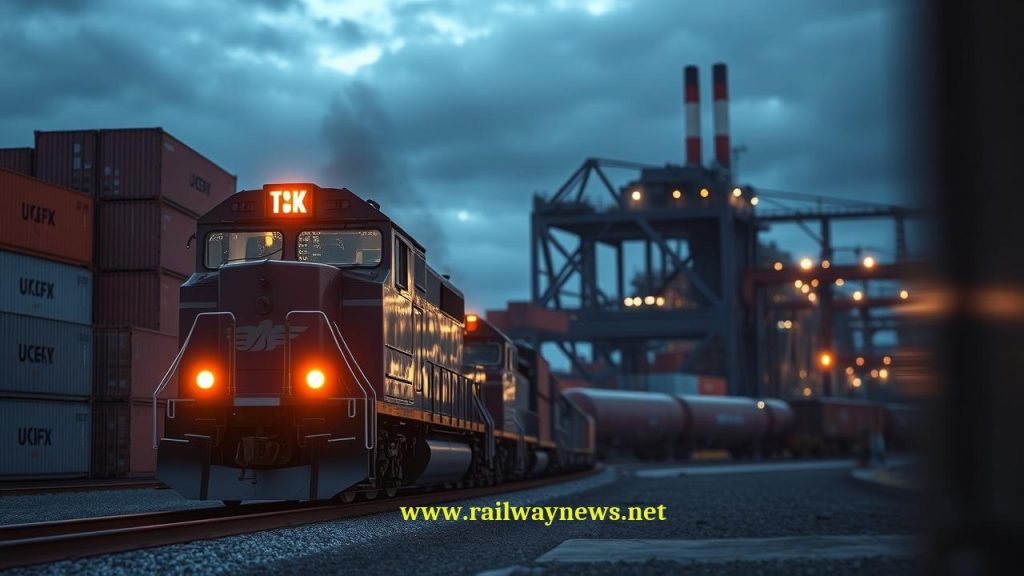
OTTAWA – Canada’s rail sector demonstrated robust health and significant long-term investment in 2024, achieving record safety milestones and a 24-year employment high, according to a new report from the Railway Association of Canada (RAC). This strong operational performance comes amid a complex global market, where major railcar manufacturers like Greenbrier have reported significant revenue declines, highlighting a divergence between railway operators and their equipment suppliers.
| Category | Details |
|---|---|
| Report Name | Rail Trends 2025 (33rd Edition) |
| Publishing Body | Railway Association of Canada (RAC) |
| Total Capital Investment (2024) | $4.5 Billion |
| Key Safety Metric | Lowest freight accident rate on record |
| Employment Milestone | 38,000 employees (Highest level since 2001) |
| Passenger Ridership Growth (Commuter) | +22.7% year-over-year |
The Railway Association of Canada (RAC) today released its Rail Trends 2025 report, a detailed ten-year review showcasing the industry’s performance up to the end of 2024. The report details a sector firing on all cylinders, with Canadian railways investing $4.5 billion into safety, efficiency, and capacity. This investment has yielded tangible results, including the lowest freight accident rate ever recorded and a 12.4% improvement in passenger rail safety. “The data shown in Rail Trends 2025 demonstrate that Canada’s railways are delivering measurable progress for the economy, supply chains, and the communities they serve,” said Eric Harvey, President and CEO of the RAC. The industry’s workforce grew to 38,000 people, with an average compensation of $110,000, approximately 50% higher than the Canadian average.
The operational statistics underscore a period of significant achievement and reliability. Beyond the record-low accident rate, Canadian freight railways safely transported over half a million carloads of dangerous goods, a critical function for the national economy. The massive capital injection is directly linked to enhancing supply chain fluidity and network capacity for Class 1 and shortline operators alike. On the passenger side, the report highlights a strong post-pandemic recovery. Commuter rail ridership surged by 22.7%, while intercity passenger numbers grew by 8.6%, contributing to reduced road congestion and advancing sustainability goals. The sector’s economic contribution was further solidified by over $2.7 billion paid in taxes.
The positive trajectory of Canadian rail operations contrasts with mixed results in the wider transportation and manufacturing sectors. While Canada’s passenger rail growth is a standout success, other modes like maritime transport have seen stabilization or slight declines, with ferry operator Tallink, for example, reporting a 0.3% decrease in passenger numbers for 2025. More pointedly, the rail equipment supply chain is facing headwinds. Major manufacturer Greenbrier Companies Inc. reported a 19.4% revenue decrease in its latest quarter, attributed to a 26.8% drop in railcar deliveries and shifts in product mix. This divergence suggests that while operators like those in Canada and the burgeoning St. Louis freight hub are investing heavily in infrastructure, the market for new rolling stock is experiencing a separate, more challenging cycle.
Key Takeaways
- Massive Capital Reinvestment: Canadian railways poured $4.5 billion into their networks in 2024, directly improving safety, efficiency, and overall supply chain performance.
- Workforce at a 24-Year Peak: The industry now directly employs 38,000 people, the highest number since 2001, with compensation significantly outpacing the national average.
- Strong Passenger Recovery: A significant rebound in passenger traffic, with commuter rail up 22.7%, signals rail’s growing importance in urban and intercity mobility.
Editor’s Analysis
The Rail Trends 2025 report paints a picture of a Canadian rail industry that is a model of stability and strategic, long-term investment. The data clearly shows that sustained capital expenditure translates directly into enhanced safety and efficiency, reinforcing rail’s essential role in national trade and connectivity. However, the juxtaposition with Greenbrier’s challenging financial results is a crucial indicator for the global market. It reveals a potential decoupling between the health of railway operators and their equipment suppliers. While operators benefit from long-term infrastructure assets, manufacturers are more exposed to short-term market demand and cyclical purchasing patterns. This dynamic underscores the resilience of Canada’s integrated rail system but also serves as a caution that prosperity in one part of the ecosystem does not guarantee it for all.
Frequently Asked Questions
- What is the Rail Trends 2025 report?
- It is the 33rd edition of a rolling ten-year statistical and financial review of the Canadian rail industry, published by the Railway Association of Canada (RAC). It covers data from freight, passenger, tourist, and commuter railways up to December 31, 2024.
- What were the main safety achievements highlighted in the report?
- The Canadian rail sector recorded its lowest-ever freight accident rate. Additionally, the passenger rail accident rate improved by 12.4%, and over 500,000 carloads of dangerous goods were transported safely.
- How does the Canadian rail industry’s performance compare to the broader market?
- The Canadian industry shows strong growth in investment, employment, and passenger numbers. This contrasts with some parts of the global market, where railcar manufacturers have reported revenue declines and other transport sectors have seen stagnant or falling passenger volumes.

Railway infrastructure, rolling stock and transport technologies specialist focused on global rail industry developments, high-speed rail systems, signaling technologies and freight transportation. Covering railway investments, public transport modernization, rail operations and international mobility projects across Europe, Asia and North America.
RELATED POSTS

October 1, 2026 7:09 am
United States regulators confirmed a September 30 deadline for the...

October 8, 2026 1:15 pm
Alstom secured a €1bn contract to build 13 automated trains,...

October 4, 2026 5:14 pm
Alstom secured a CA$4.7 billion order from VIA Rail Canada...

October 1, 2026 12:13 am
Illinois approved $1.5 billion annually for the Northern Illinois Transit...

October 6, 2026 2:14 am
Union Pacific launched export rail shipments with Ferromex to deliver...

October 1, 2026 6:10 am
Amtrak approved a System Expansion Committee on July 30 to...