
India’s Railway Supply Chain: Geopolitics & Wheels
The Russo-Ukrainian conflict highlighted vulnerabilities in Indian Railways’ supply chain, leading to a $213 million contract with China for wheel procurement, emphasizing the need for diversified sourcing and strategic planning in national railway procurement.
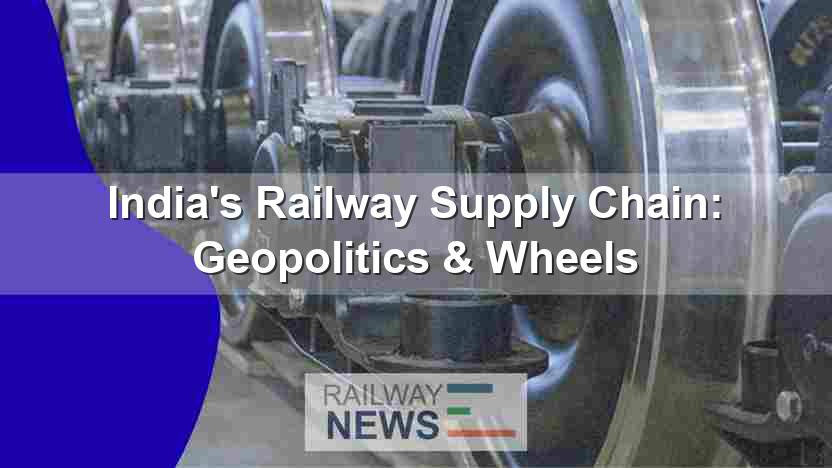
The Geopolitical Impact on Indian Railway Procurement: A Case Study of Wheel Supply
This article examines the significant implications of global geopolitical events on the procurement strategies of national railway systems, using the recent contract awarded by Indian Railways (IR) to a Chinese company for the supply of train wheels as a prime example. The disruption caused by the Russo-Ukrainian conflict highlighted the vulnerability of supply chains and forced IR to seek alternative sources, leading to a contract worth INR 1.7 billion (approximately $213 million USD) with TZ Hong Kong International, the international trading arm of Taiyuan Heavy Machinery Group. This decision, while seemingly pragmatic in the face of immediate needs, raises broader questions regarding supply chain diversification, national security, and long-term strategic planning within the railway sector. The analysis will explore the immediate context of the decision, the potential long-term consequences, and the broader implications for railway procurement strategies globally.
The Immediate Crisis and the Chinese Contract
The invasion of Ukraine by Russia created a significant disruption in the global supply chain for various commodities, including railway components. Traditional suppliers of train wheels to Indian Railways, potentially located in Europe or affected by sanctions, faced delays and production limitations. This shortage created an urgent need for IR to secure alternative sources to maintain its ambitious modernization and expansion plans, particularly for its high-speed Vande Bharat trains. The contract with TZ Hong Kong International, therefore, provided a rapid solution to this immediate crisis, ensuring the timely delivery of 39,000 wheels crucial for ongoing projects. The decision underscored the immediate pressure on IR to prioritize operational continuity over potentially longer-term strategic considerations.
National Security and Supply Chain Diversification
The reliance on a single supplier, particularly one from a nation with complex geopolitical relations with India, presents significant risks to national security. While the immediate need justified the contract, the long-term implications demand a reevaluation of IR’s sourcing strategy. A diversified supplier base, geographically spread and less susceptible to global political instability, is essential for ensuring the resilience of India’s railway infrastructure. This necessitates investment in domestic manufacturing capabilities and the fostering of strong relationships with multiple reliable international partners, mitigating the risk of future supply chain disruptions.
Domestic Manufacturing and Infrastructure Development
In response to the vulnerabilities exposed by the Ukraine crisis, IR is actively pursuing the development of domestic wheel manufacturing capabilities. This initiative is crucial not only for ensuring self-reliance but also for creating domestic jobs and stimulating economic growth within the Indian railway industry. The development of indigenous technologies and manufacturing capacity will reduce dependence on foreign suppliers, strengthening India’s strategic autonomy in railway infrastructure development. This approach, while requiring significant investment in research and development and infrastructure, promises long-term benefits in terms of security and economic self-sufficiency.
Conclusion: Balancing Urgency with Long-Term Strategy
The awarding of the train wheel contract to a Chinese company highlights the complex interplay between immediate operational needs and long-term strategic planning within the railway sector. While the contract with TZ Hong Kong International provided a crucial solution to the immediate supply shortage caused by the Russo-Ukrainian conflict, it also underscores the vulnerability of relying on a single, geographically concentrated supplier base. The incident served as a critical wake-up call for IR, prompting a renewed focus on diversification, domestic manufacturing capabilities, and a more resilient supply chain. Looking ahead, IR’s commitment to developing indigenous manufacturing and fostering strategic partnerships with multiple international suppliers will be crucial in ensuring the long-term security and sustainability of its operations. The parallel investment in large-scale infrastructure projects, such as the planned underwater road-cum-rail tunnels in Assam, further demonstrates a commitment to modernization and resilience. However, continued attention to geopolitical factors and proactive risk management in procurement strategies will be essential for navigating future challenges and ensuring the continued growth and effectiveness of the Indian Railways.

Railway infrastructure, rolling stock and transport technologies specialist focused on global rail industry developments, high-speed rail systems, signaling technologies and freight transportation. Covering railway investments, public transport modernization, rail operations and international mobility projects across Europe, Asia and North America.
RELATED POSTS

October 8, 2026 1:15 pm
Alstom secured a €1bn contract to build 13 automated trains,...

October 1, 2026 7:09 am
United States regulators confirmed a September 30 deadline for the...

October 8, 2026 12:18 pm
Siemens Mobility signed an agreement with VinSpeed to supply 350...

October 4, 2026 5:14 pm
Alstom secured a CA$4.7 billion order from VIA Rail Canada...

October 5, 2026 6:12 pm
AECOM and Jacobs secured a contract in September 2026 to...

October 4, 2026 11:08 pm
Sound Transit confirmed the September 30 opening of Seattle Pinehurst...