
Metra vs. Union Pacific: Rail Access & Financial Disputes
Chicago’s commuter rail operator Metra is facing a legal battle with Union Pacific Railroad over an increase in fees for track access, highlighting the complex issues of financial compensation and public service obligations in maintaining affordable commuter rail services amidst rising operational costs.
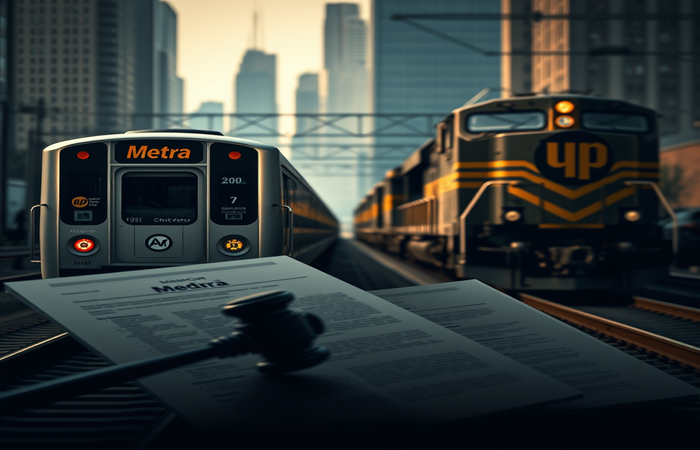
Chicago, USA – October 26, 2023
The intricate relationship between commuter rail operators and freight railroads, particularly in the context of track access and compensation, is often a complex and contentious issue within the rail industry. This news piece explores a recent legal dispute involving Chicago’s Metra (Metropolitan Rail) and Union Pacific Railroad (UP), highlighting the critical issues of track access, financial obligations, and the public interest. The lawsuit underscores the challenges faced by commuter rail systems in maintaining service and negotiating fair agreements with freight operators who control vital infrastructure. This case serves as a microcosm of the broader struggles within the North American rail landscape, where the balance between public transportation needs and the economic interests of freight carriers is constantly being negotiated.
Track Access and Financial Disputes
The core of the amended lawsuit filed by Metra revolves around the issue of compensation paid to UP. Metra is contesting a significant increase in the fees demanded by UP for utilizing its tracks. This type of dispute is common, as commuter lines often rely on freight railroads for access to critical infrastructure. The terms of these agreements, including the financial compensation, are crucial for the financial viability of commuter rail services. This is particularly important in the face of rising operational costs and the need to maintain affordable fares for commuters. The lawsuit alleges that the compensation increase is being unilaterally imposed by UP, which Metra argues is not only financially unsustainable but also contrary to established industry standards.
Exclusion and Public Service Obligations
Beyond the immediate financial implications, the lawsuit also addresses the potential for UP to exclude Metra from its lines altogether. Metra claims that UP is attempting to impose commercially unreasonable pricing and terms, effectively forcing Metra out of using the lines. This exclusion would have significant ramifications, disrupting commuter service and potentially impacting the efficiency of the entire transportation network in the Chicago area. Additionally, Metra argues that such an action by UP would breach the railroad’s obligations to maintain and provide access to infrastructure that has been improved with public funds. These taxpayer-funded improvements are intended to benefit both freight and passenger rail operations, and excluding Metra would undermine that purpose.
Negotiation and Industry Standards
Metra’s primary objective throughout its negotiations with UP has been to reach an agreement based on objective industry standards. This includes adhering to fair pricing mechanisms and ensuring the long-term sustainability of commuter rail services. This stance is crucial for upholding the public interest and ensuring that commuters continue to have access to reliable and affordable transportation options. The lack of standardized protocols and transparent pricing methodologies in these agreements is a recurring problem in many regions, often leading to protracted negotiations and legal battles.
Conclusion
The legal battle between Metra and Union Pacific Railroad highlights the inherent tensions within the rail industry between the needs of commuter services and the economic interests of freight operators. The case underscores the importance of fair track access agreements and the need for transparent and objective pricing mechanisms to ensure the long-term viability of commuter rail. The outcome of this lawsuit will have important implications for other commuter rail systems across the United States, as it sets a precedent for how track access and compensation disputes are resolved. The focus on upholding the public interest, providing reliable commuter services, and ensuring that taxpayer-funded infrastructure is accessible for public use are paramount. This case reveals the intricacies of balancing public transportation needs with the economic imperatives of freight railroads and underscores the need for ongoing dialogue, standardized practices, and a commitment to the efficient functioning of the rail network for the benefit of all stakeholders.
—
**Summary of Companies Mentioned:**
* **Metra (Metropolitan Rail):** Chicago’s commuter rail system, responsible for providing passenger rail service in the Chicago metropolitan area.
* **Union Pacific Railroad (UP):** A Class I freight railroad operating across the western two-thirds of the United States.

Railway infrastructure, rolling stock and transport technologies specialist focused on global rail industry developments, high-speed rail systems, signaling technologies and freight transportation. Covering railway investments, public transport modernization, rail operations and international mobility projects across Europe, Asia and North America.
RELATED POSTS

September 5, 2026 4:19 pm
CPK launched formal tender talks with four consortia to design...

September 5, 2026 7:14 pm
HS2 Ltd signed renegotiated civils contracts with EKFB and Align...

September 6, 2026 4:12 am
Alstom delivered the first of 100 new G Class trams...
September 6, 2026 8:17 am
DB InfraGO reopened the Nuremberg-Regensburg line in Bavaria on 31...
September 5, 2026 6:17 pm
Universal Signalling won a deal to install its U-Cross system...
September 6, 2026 12:20 pm
Indian Railways ordered a probe after a fire destroyed 2...