
Green Locomotives: G&W’s California Rail Revolution
Genesee & Wyoming’s adoption of low-emission locomotives, featuring Selective Catalytic Reduction technology and 12-cylinder MTU engines, represents a pivotal step towards reducing environmental impact in rail freight operations, particularly within California. This transition not only complies with increasingly stringent emission regulations but also offers substantial cost savings through improved fuel efficiency, making it a compelling example for other rail operators facing similar challenges.
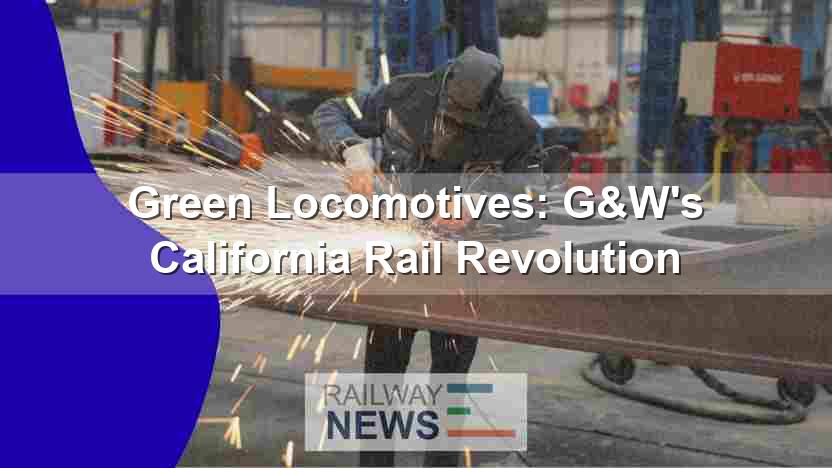
This article explores the significant advancements in sustainable rail transport, focusing on Genesee & Wyoming’s (G&W) adoption of low-emission locomotives in California. The introduction of these new locomotives represents a pivotal step towards reducing the environmental impact of freight rail operations, particularly within the context of increasingly stringent emission regulations and a growing emphasis on environmentally responsible business practices. We will delve into the technical specifications of these locomotives, the financial aspects of their acquisition, and the broader implications for the short-line rail industry and its role in achieving cleaner transportation. The analysis will consider the multifaceted benefits, encompassing reduced emissions, cost savings through improved fuel efficiency, and the collaborative nature of the project, highlighting the successful public-private partnership that made it possible. The case study of Genesee & Wyoming’s California operation serves as a compelling example for other rail operators facing similar challenges and demonstrates the feasibility of transitioning to a more sustainable future for the rail freight sector. This transition is not only beneficial for the environment but also crucial for the long-term viability and public acceptance of the rail industry.
Implementing Low-Emission Locomotives: A Case Study of Genesee & Wyoming in California
Genesee & Wyoming (G&W), a prominent US-based railroad operator, has successfully deployed two cutting-edge, low-emission locomotives in California. These 2,400-horsepower diesel locomotives, manufactured by Knoxville Locomotive Works, are compliant with the stringent US Environmental Protection Agency (EPA) Tier 4 emission standards. The integration of Selective Catalytic Reduction (SCR) technology is central to achieving these compliance standards, significantly reducing harmful emissions. The use of 12-cylinder MTU engines further contributes to enhanced fuel efficiency, resulting in a projected 25% reduction in fuel consumption compared to older models.
Environmental and Economic Benefits
The impact of these new locomotives extends beyond mere compliance. Their deployment marks a substantial decrease in diesel emissions, with estimates suggesting an almost 80% reduction in pollutants such as carbon dioxide (CO2) and nitrogen oxides (NOx) compared to their predecessors. This significant improvement in air quality directly benefits the communities served by the California Northern Railroad Company (CFNR), a G&W subsidiary operating the locomotives. This reduction in emissions is not solely an environmental benefit, but also reduces the operational costs. The lower fuel consumption translates into considerable savings, improving the economic viability of rail freight operations.
Public-Private Partnership and Funding
The acquisition of these state-of-the-art locomotives was facilitated by a significant $3.7 million grant from the California Bay Area Air Quality Management District (Air District). This grant was awarded through a program designed to encourage the adoption of greener technologies within the freight transportation sector. The collaborative effort between G&W, the Air District, and the CFNR highlights the power of public-private partnerships in driving sustainable transportation initiatives. This demonstrates a clear commitment to environmentally responsible practices, showcasing the synergistic relationship between governmental support and private sector innovation.
Implications for the Short-Line Rail Industry
The success of this project has profound implications for the short-line railroad industry. Short lines, like CFNR, often face operational challenges that limit their ability to invest in new equipment. This initiative serves as a powerful model for other short lines, demonstrating the feasibility of securing funding for sustainable upgrades through public-private collaborations. By reducing their environmental footprint and lowering operating costs, short lines can enhance their competitiveness while simultaneously contributing to broader sustainability goals. The G&W example underscores that even smaller rail operators can contribute significantly to cleaner transportation and illustrates the importance of governmental incentives in facilitating this transition.
Conclusions
The introduction of low-emission locomotives by Genesee & Wyoming (G&W) in California represents a significant milestone in sustainable rail transportation. The successful deployment of these EPA Tier 4-compliant locomotives, incorporating SCR technology and 12-cylinder MTU engines, has demonstrably reduced emissions (CO2 and NOx) by approximately 80% and fuel consumption by 25% compared to older models. This achievement is not merely a technological advancement but a testament to a successful public-private partnership, enabled by a substantial grant from the California Bay Area Air Quality Management District. This collaboration underscores the crucial role of government incentives in facilitating the adoption of greener technologies within the rail industry, particularly for smaller operators like short-line railroads. The economic benefits, derived from reduced fuel costs, further enhance the viability of this transition. The overall success of this project serves as a compelling case study, offering a blueprint for other rail operators seeking to reduce their environmental impact and improve operational efficiency. This initiative showcases that sustainable practices are not only environmentally responsible but also economically advantageous in the long run. This initiative offers a compelling example for the broader rail industry, demonstrating the feasibility and effectiveness of transitioning to cleaner, more sustainable operations, while simultaneously contributing to the economic well-being of both rail companies and the communities they serve.

Railway infrastructure, rolling stock and transport technologies specialist focused on global rail industry developments, high-speed rail systems, signaling technologies and freight transportation. Covering railway investments, public transport modernization, rail operations and international mobility projects across Europe, Asia and North America.
RELATED POSTS

September 5, 2026 4:19 pm
CPK launched formal tender talks with four consortia to design...

September 6, 2026 4:12 am
Alstom delivered the first of 100 new G Class trams...

September 5, 2026 7:14 pm
HS2 Ltd signed renegotiated civils contracts with EKFB and Align...
September 19, 2026 11:19 am
China launched an experimental 1.11-tonne maglev test sled to 800...
September 7, 2026 4:15 pm
Zimbabwe approved the EUR 3 billion Harare Light Rail project,...
September 5, 2026 6:17 pm
Universal Signalling won a deal to install its U-Cross system...