
Turin-Lyon TAV: Politics, Economics, and EU Stakes
The Turin-Lyon high-speed rail project (TAV) faces significant political and economic challenges in Italy due to internal coalition tensions and concerns over cost-effectiveness, while also facing substantial financial penalties for potential withdrawal from EU funding.
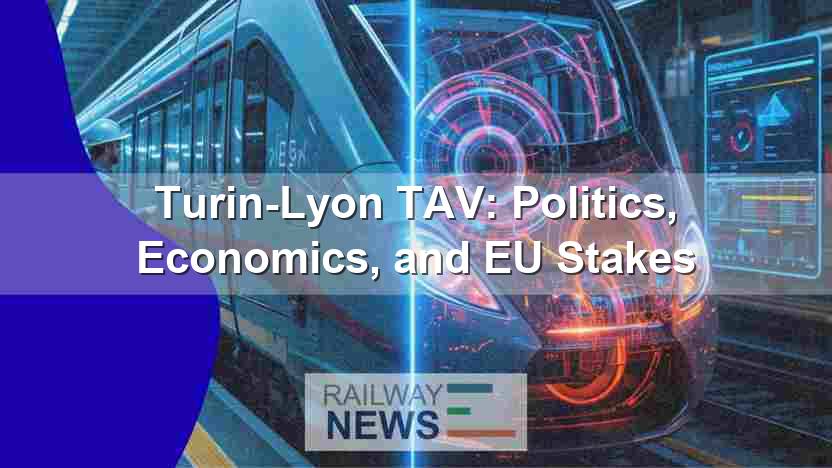
This article examines the complex political and economic landscape surrounding the Turin-Lyon high-speed rail project (TAV), a proposed 270km high-speed line connecting Turin, Italy, with Lyon, France. The project, traversing the challenging Alpine terrain, has been a source of significant political debate within Italy, pitting coalition partners against each other and raising questions about its economic viability. This analysis will delve into the competing arguments surrounding the TAV, exploring the political pressures, financial implications, and broader strategic considerations that have shaped its trajectory. We will consider the role of the European Union (EU) funding, the potential financial penalties associated with withdrawal, and the long-term economic projections that have fueled the controversy. Ultimately, this examination aims to provide a detailed understanding of the complexities involved in large-scale infrastructure projects and the intricate interplay between national politics, international collaborations, and economic feasibility.
Political Gridlock and Coalition Tensions
The TAV project has been a major point of contention within Italy’s ruling coalition. The 5-Star Movement (M5S), a prominent member of the coalition, has consistently opposed the project, citing concerns about its cost-effectiveness and environmental impact. Conversely, the League party has strongly advocated for the TAV, highlighting its potential to boost economic growth and improve connectivity between Italy and France. This internal conflict within the ruling coalition has led to significant delays and uncertainty, including the suspension of tenders for the project. The Prime Minister’s evolving stance, initially expressing doubts and then ultimately endorsing the project, underscores the intense political pressures surrounding the decision. The Prime Minister’s decision highlights the complex balancing act required in navigating coalition politics, particularly when faced with significant international commitments and potential financial ramifications.
Economic Viability and Financial Projections
The economic viability of the TAV project has been a central point of contention. A government-commissioned report concluded that the project would result in a substantial loss of approximately €7 billion by 2059, raising serious questions about its long-term financial sustainability. This negative assessment has fueled the opposition’s arguments against the project. However, proponents argue that the benefits extend beyond purely financial gains, including improved transportation links, economic development in the affected regions, and enhanced international connectivity. The potential for increased tourism and trade, as well as the creation of jobs during construction and operation, are frequently cited as counterarguments to the purely financial criticisms.
The Role of European Union Funding
The EU’s involvement is a crucial element in the TAV debate. The EU’s offer to increase its funding contribution to 55% of the total project cost, up from the previously agreed 40%, has significantly influenced the Italian government’s decision. This increased financial commitment from the EU reduces the financial burden on Italy, lessening the perceived risk and making the project more appealing. However, this increased contribution also comes with conditions, including deadlines for acceptance and potential penalties for withdrawal. This highlights the critical role played by supra-national institutions in shaping national infrastructure projects and the importance of negotiating favorable terms within the framework of such partnerships.
International Implications and Potential Penalties
The TAV project’s international dimension is significant. France’s stance on the project is equally crucial, as a unilateral withdrawal by Italy could result in substantial financial penalties. This underscores the importance of maintaining international partnerships in major infrastructure endeavors. The potential consequences of abandoning the project, both financially and politically, have played a critical role in shaping the Italian government’s final decision. The potential for strained relations with France and the EU further underscores the strategic considerations beyond the purely economic aspects of the decision.
Conclusions
The Turin-Lyon high-speed rail project represents a multifaceted case study in the complexities of large-scale infrastructure development. The project’s journey has been fraught with political challenges, economic uncertainties, and significant international considerations. The internal disagreements within the Italian coalition government, initially leading to project suspension, highlight the inherent difficulties in balancing competing political agendas and economic priorities. The government-commissioned report, projecting a substantial financial loss, further fueled the debate, raising concerns about the project’s long-term sustainability. However, the increased EU funding commitment and the potential penalties associated with withdrawal ultimately swayed the decision in favor of project completion. The TAV project’s fate serves as a powerful illustration of how intricate political maneuvering, economic forecasting, and international collaboration shape infrastructure decisions. While the project’s long-term profitability remains a subject of ongoing debate, the decision to proceed demonstrates the considerable weight placed on international relationships and potential financial repercussions in the face of internal political dissent. The experience provides valuable insights into the critical need for transparent cost-benefit analyses, effective international partnerships, and robust risk management strategies in such large-scale undertakings. Future infrastructure projects can learn from the TAV experience, emphasizing the importance of detailed planning and a thorough understanding of the political, economic, and international implications involved.

Railway infrastructure, rolling stock and transport technologies specialist focused on global rail industry developments, high-speed rail systems, signaling technologies and freight transportation. Covering railway investments, public transport modernization, rail operations and international mobility projects across Europe, Asia and North America.
RELATED POSTS

September 5, 2026 4:19 pm
CPK launched formal tender talks with four consortia to design...

September 5, 2026 7:14 pm
HS2 Ltd signed renegotiated civils contracts with EKFB and Align...

September 6, 2026 4:12 am
Alstom delivered the first of 100 new G Class trams...
September 5, 2026 6:17 pm
Universal Signalling won a deal to install its U-Cross system...
September 6, 2026 8:17 am
DB InfraGO reopened the Nuremberg-Regensburg line in Bavaria on 31...
September 7, 2026 11:16 pm
China Railway Tunnel Group completed the 11.3-km underwater Yangtze tunnel...