
ORR Slams Network Rail: Regional Rail Fail?
The Office of Rail and Road’s investigation into Network Rail reveals persistent underperformance across various regions, with Wales leading improvements but Scotland falling short of its targets, underscoring the need for effective strategies in managing infrastructure maintenance to meet national service standards.
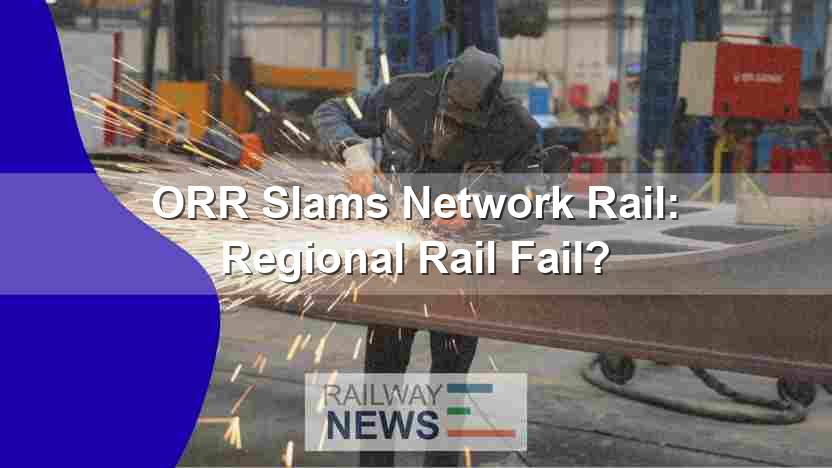
This article examines the Office of Rail and Road’s (ORR) investigation into Network Rail’s performance, specifically focusing on the discrepancies in service quality across different regions of the United Kingdom. The ORR, the UK’s independent rail regulator, plays a crucial role in ensuring the safety and efficiency of the national rail network. Their investigations are vital for identifying systemic issues and holding Network Rail, responsible for managing and maintaining Britain’s rail infrastructure, accountable for meeting performance targets and providing reliable passenger services. This analysis will delve into the ORR’s findings, exploring the reasons behind the inconsistent performance levels, the effectiveness of Network Rail’s improvement plans, and the broader implications for the UK’s rail network. We will assess the impact on passenger satisfaction, the financial implications for train operating companies, and the wider challenges faced by the rail industry in maintaining a consistently high standard of service.
Network Rail’s Performance Under Scrutiny
The ORR’s investigation highlighted significant regional variations in Network Rail’s performance. While Network Rail’s contribution to national delays decreased slightly from 2018 (a 1.1% reduction), the North West and Central regions continued to experience unacceptable levels of delays attributable to Network Rail’s infrastructure management. This persistent underperformance prompted the ORR to formally warn Network Rail and launch a thorough investigation into their recovery plan. The investigation aims to assess the effectiveness of Network Rail’s strategies for improving service reliability and identify underlying causes for the persistent problems in these specific regions. A key aspect of the investigation focuses on the efficacy of track maintenance and management strategies employed by Network Rail in these areas.
Regional Disparities and Performance Comparisons
The ORR’s report starkly contrasts the poor performance in the North West and Central regions with improvements observed elsewhere. The Wales and Western region, for example, reported its best performance in five years, illustrating the potential for service improvement through effective management and investment. Scotland also demonstrated a noteworthy 24% reduction in Network Rail-related passenger train delays. However, even this positive trend fell short of the targets set for ScotRail and Caledonian Sleeper, emphasizing the ongoing need for continuous improvement across the entire network. This regional disparity underscores the importance of understanding the unique challenges and opportunities presented by different rail corridors and implementing tailored solutions.
The Role of the ORR and Regulatory Oversight
The ORR’s role extends beyond simply identifying problems; it includes holding Network Rail accountable for meeting its obligations. The formal warning issued to Network Rail signifies the seriousness of the situation and the regulator’s commitment to ensuring service improvements. The ORR’s investigation involves scrutinizing Network Rail’s recovery plan, evaluating its effectiveness in addressing the identified issues, and assessing the impact of its implementation. This process includes monitoring key performance indicators (KPIs) to track progress and identify areas requiring further attention. Additionally, the ORR’s investigation also highlights the need for robust regulatory oversight to ensure accountability and encourage continuous improvement within the rail industry. This also allows the ORR to compare the performance of Network Rail with other train operating companies (TOCs) and identify areas for system-wide improvements.
Wider Implications and Future Outlook
The ORR’s investigation into Network Rail’s performance has broader implications for the UK rail industry. The financial stability of train operating companies, such as the reported financial difficulties faced by Northern Rail, is directly linked to the reliability and efficiency of the underlying infrastructure provided by Network Rail. Persistent delays and disruptions not only impact passenger satisfaction but also affect the financial viability of TOCs. Additionally, the investigation highlights the importance of a coordinated and collaborative approach involving Network Rail, train operating companies, and the ORR to address the challenges and ensure the delivery of a consistently high-quality and reliable rail service for all passengers across the UK. This collaborative approach is crucial in identifying systemic issues and implementing effective solutions.
Conclusions
The ORR’s investigation into Network Rail’s performance underscores the critical need for continuous improvement and effective regulation within the UK rail industry. The significant regional disparities in performance, particularly the persistent underperformance in the North West and Central regions, highlight the complexity of managing a nationwide rail network. While improvements have been observed in other areas, such as Wales and Western and Scotland, the overall performance remains inconsistent and falls short of expectations in several key regions. The ORR’s role in holding Network Rail accountable and investigating the effectiveness of their improvement plans is crucial in driving positive change. The financial implications for train operating companies, as demonstrated by the case of Northern Rail, further emphasize the interconnectedness of infrastructure performance and the overall health of the rail industry. Looking ahead, a collaborative approach involving Network Rail, train operating companies, and the ORR is essential to ensure a reliable, efficient, and financially sustainable rail network that meets the needs of passengers across the UK. The focus must be on implementing effective strategies, addressing root causes of delays, and investing in long-term solutions to enhance service quality and reliability.

Railway infrastructure, rolling stock and transport technologies specialist focused on global rail industry developments, high-speed rail systems, signaling technologies and freight transportation. Covering railway investments, public transport modernization, rail operations and international mobility projects across Europe, Asia and North America.
RELATED POSTS

September 5, 2026 4:19 pm
CPK launched formal tender talks with four consortia to design...

September 6, 2026 4:12 am
Alstom delivered the first of 100 new G Class trams...

September 5, 2026 7:14 pm
HS2 Ltd signed renegotiated civils contracts with EKFB and Align...
September 5, 2026 6:17 pm
Universal Signalling won a deal to install its U-Cross system...
September 6, 2026 8:17 am
DB InfraGO reopened the Nuremberg-Regensburg line in Bavaria on 31...
September 7, 2026 11:16 pm
China Railway Tunnel Group completed the 11.3-km underwater Yangtze tunnel...