
Hitachi Rail Wins $2.2B WMATA Contract: 8000-Series Railcars
This article discusses a significant contract awarded to Hitachi Rail by WMATA for 256 8000-series railcars, valued at nearly $2.2 billion, highlighting technological advancements, economic benefits, strategic implications, and long-term effects on both the project’s success and regional employment opportunities.
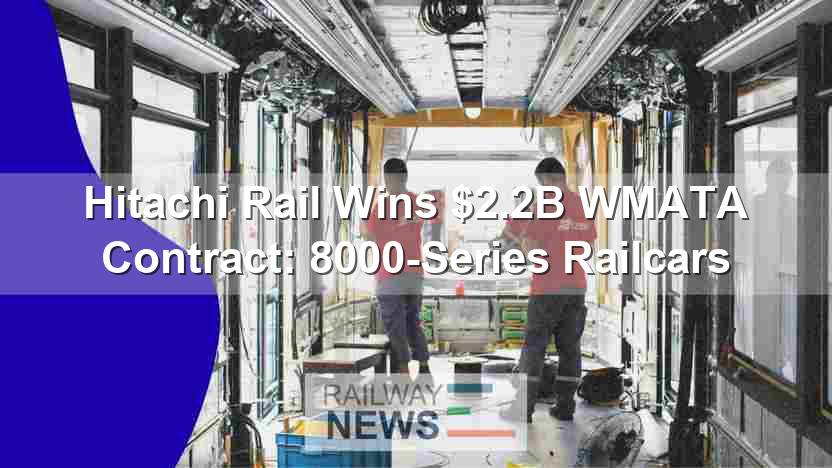
This article explores the significant contract awarded to Hitachi Rail by the Washington Metropolitan Area Transit Authority (WMATA) for the design and manufacturing of 256 8000-series railcars, with options for up to 800. This procurement represents a substantial investment in upgrading WMATA’s fleet and improving the passenger experience. The contract’s value, nearing $2.2 billion, underscores the scale of the project and its implications for the regional economy. We will explore the technological advancements incorporated into these new railcars, the economic benefits for the region, and the broader context of this project within the evolving landscape of modern rail transportation. We will also discuss the strategic implications for Hitachi Rail and its expanding presence in the North American market. Finally, we will analyze the long-term effects of this investment on WMATA’s operations and the commuting public.
Technological Advancements in the 8000-Series Railcars
The 8000-series railcars represent a significant leap forward in passenger rail technology. Key improvements include upgraded regenerative braking systems, enhancing energy efficiency and reducing operational costs. These systems recover kinetic energy during braking, converting it back into electricity, thereby reducing energy consumption and wear on the braking components. Additionally, the improved ventilation system promises enhanced passenger comfort, especially during peak hours and in varying weather conditions. High-definition cameras integrated throughout the railcars contribute significantly to security and safety, providing real-time surveillance and incident recording capabilities. Robust cybersecurity measures are also incorporated to protect sensitive data and maintain system integrity. Finally, passenger amenities are enhanced with features such as dynamic maps, USB charging ports, additional handholds, and multiple digital screens displaying real-time information, improving the overall riding experience.
Economic Impact and Job Creation
The contract’s substantial value of nearly $2.2 billion, with potential expansion to 800 units, will inject significant capital into the National Capital Region’s economy. Hitachi Rail’s commitment to assembling the railcars within the metro region translates into direct job creation in manufacturing, assembly, and related support services. Indirect job creation extends to industries supplying components and services to the project. This economic stimulus will benefit local businesses and contribute to overall regional growth and prosperity. The investment represents a significant commitment to infrastructure development, boosting local economies and promoting sustainable transportation solutions.
Strategic Implications for Hitachi Rail
For Hitachi Rail, securing this contract signifies a major expansion of its US business and strengthens its position in the North American rail market. The successful delivery of these railcars will serve as a strong reference project, potentially attracting further contracts from other transit agencies. The project also allows Hitachi Rail to showcase its technological capabilities and innovative solutions to a large potential client base. This contract is a testament to Hitachi Rail’s commitment to technological advancement and its success in securing major infrastructure projects within the United States. It positions them as a leading provider of state-of-the-art rail solutions.
Long-Term Effects on WMATA and Commuters
The introduction of the 8000-series railcars promises a significant enhancement to the WMATA system. Improved reliability, enhanced passenger comfort, and increased safety features will contribute to a more positive commuting experience. The investment in modern technology translates into improved efficiency, reduced maintenance costs, and a longer lifespan for the railcars. The upgraded features will likely result in increased ridership and enhance the overall attractiveness of public transit within the region. The long-term impact will be a more efficient, reliable, and enjoyable public transportation system serving the National Capital Region.
Conclusion
The WMATA’s contract with Hitachi Rail for the 8000-series railcars represents a substantial investment in modernizing its rail fleet and improving the commuting experience for millions of passengers. The project’s scope, encompassing technological advancements, economic benefits, and strategic implications, highlights the importance of public-private partnerships in developing sustainable and efficient transportation systems. The integration of cutting-edge technologies, such as regenerative braking and advanced safety features, showcases a commitment to environmental sustainability and passenger well-being. The economic impact, both directly through job creation and indirectly through regional economic stimulus, is significant. This contract is a landmark achievement for Hitachi Rail, showcasing their ability to deliver complex rail projects and establish a strong foothold in the North American market. For WMATA, this investment represents a long-term commitment to providing reliable, efficient, and safe public transportation, ultimately enhancing the quality of life for residents of the National Capital Region. The success of this project will serve as a model for future rail modernization projects globally, highlighting the importance of integrating advanced technology and strategic planning to create a superior passenger experience and contribute to economic growth.

Railway infrastructure, rolling stock and transport technologies specialist focused on global rail industry developments, high-speed rail systems, signaling technologies and freight transportation. Covering railway investments, public transport modernization, rail operations and international mobility projects across Europe, Asia and North America.
RELATED POSTS

October 8, 2026 1:15 pm
Alstom secured a €1bn contract to build 13 automated trains,...

October 1, 2026 7:09 am
United States regulators confirmed a September 30 deadline for the...

October 8, 2026 12:18 pm
Siemens Mobility signed an agreement with VinSpeed to supply 350...

October 4, 2026 5:14 pm
Alstom secured a CA$4.7 billion order from VIA Rail Canada...

October 5, 2026 6:12 pm
AECOM and Jacobs secured a contract in September 2026 to...

October 4, 2026 11:08 pm
Sound Transit confirmed the September 30 opening of Seattle Pinehurst...