
Vinci’s Grand Paris Express: €80.9M Rail Project
The Vinci Contract for the construction of three elevated stations on Line 18 of the Grand Paris Express showcases the complexities and opportunities presented by large-scale rail infrastructure projects in France, emphasizing the crucial elements of successful execution and long-term benefits for urban development and regional connectivity.
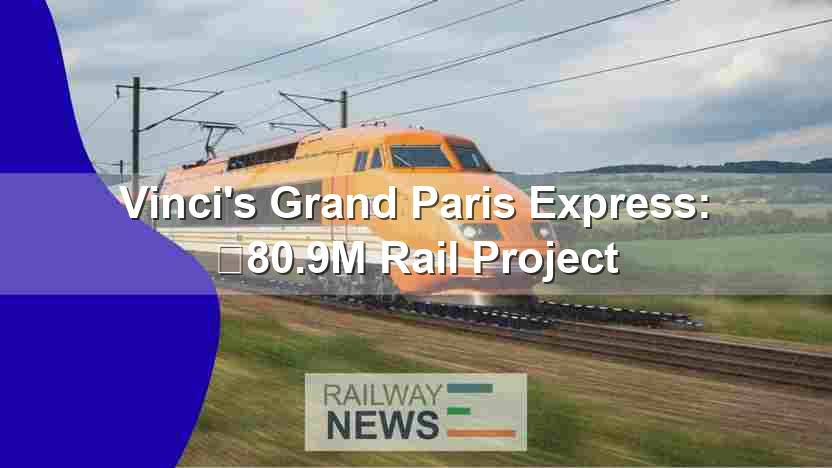
This article examines the significant €80.9 million contract awarded to Vinci Construction for the construction of three elevated stations on Line 18 of the Grand Paris Express (GPE) project in France. The project highlights key aspects of modern large-scale rail infrastructure development, including complex project management, the integration of diverse engineering disciplines, and the economic impact of such undertakings. We will explore the scope of Vinci’s responsibilities, the technological challenges involved in constructing elevated stations, the logistical considerations inherent in such a project, and the broader context of the GPE within the framework of French national transport policy. The analysis will delve into the intricacies of this specific contract, illustrating the complexities and opportunities presented by major rail infrastructure projects. This case study provides valuable insights for future similar projects, emphasizing the crucial elements of successful execution and the long-term benefits for urban development and regional connectivity.
Elevated Station Construction: Engineering and Design Considerations
The construction of elevated stations presents unique engineering challenges compared to underground stations. Vinci’s responsibility encompasses the complete civil and structural works, including the design and implementation of the station’s metal framework and facades. This requires meticulous planning to ensure structural integrity, aesthetic appeal, and seamless integration with the surrounding environment. Considerations include load-bearing capacity, seismic resilience, and the efficient management of materials and construction processes within a potentially constrained urban environment. The viaduct’s design and construction, extending from Massy-Palaiseau to the CEA-Saint-Aubin station, also demands careful consideration of factors such as ground conditions, wind loads, and potential thermal expansion.
Project Management and Timeline: Coordinating Multiple Stakeholders
The 38-month timeline for completion underscores the critical importance of effective project management. This involves coordinating various subcontractors, ensuring timely delivery of materials, and adhering to rigorous safety regulations. Given the scale of the project and the involvement of multiple stakeholders (Société du Grand Paris, Vinci, subcontractors), robust communication and collaboration protocols are crucial to prevent delays and cost overruns. Successful project management involves proactive risk assessment, contingency planning, and the implementation of efficient monitoring and control systems throughout the construction phases. This complexity is exacerbated by the concurrent execution of other GPE projects by Vinci, including tunnel boring and the construction of an operations and maintenance center.
Integration of Systems: Beyond Civil Engineering
The contract’s scope extends beyond the purely civil engineering aspects. Vinci’s role includes finishing works, implying the integration of various building systems, such as electrical, mechanical, and plumbing (MEP) systems, communication networks, and passenger information displays. This integrated approach is essential for ensuring a functional and user-friendly station environment. Successful integration necessitates close collaboration between different engineering disciplines and the seamless coordination of various subcontractors to ensure a unified and efficient system. The interaction with other ongoing GPE works, including underground sections, further highlights the need for integrated planning and execution across the entire project.
The Broader Context: Grand Paris Express and National Infrastructure Development
The GPE project represents a significant investment in French national infrastructure, aiming to improve public transportation and alleviate congestion in the greater Paris region. Vinci’s involvement in multiple aspects of the GPE, including tunneling, viaduct construction, and station development, showcases its expertise in large-scale infrastructure projects. This project, along with others like the operational and maintenance center, signifies a wider commitment to modernizing the country’s transport network and facilitating economic growth through improved connectivity. The success of the GPE is not just a matter of technical proficiency but also involves effective regulatory frameworks, environmental considerations, and a commitment to sustainable urban development.
Conclusions
The €80.9 million contract awarded to Vinci for the construction of three elevated stations on Line 18 of the Grand Paris Express exemplifies the complexities and challenges involved in modern large-scale rail infrastructure projects. The project highlights the importance of robust project management, the integration of multiple engineering disciplines, and the need for meticulous planning to ensure on-time and within-budget delivery. The construction of elevated stations presents unique engineering challenges compared to underground counterparts, demanding careful consideration of structural integrity, environmental impact, and aesthetic integration. Vinci’s broader involvement in the GPE, including tunneling and the construction of an operation and maintenance center, underscores the interconnectedness of different aspects of rail infrastructure development. The project’s success contributes not only to improved public transport in the Paris region but also serves as a case study for future large-scale infrastructure endeavors, emphasizing the need for detailed planning, effective stakeholder coordination, and a commitment to sustainable practices. The overall impact extends far beyond the immediate construction phase, contributing to improved regional connectivity, economic growth, and sustainable urban development.

Railway infrastructure, rolling stock and transport technologies specialist focused on global rail industry developments, high-speed rail systems, signaling technologies and freight transportation. Covering railway investments, public transport modernization, rail operations and international mobility projects across Europe, Asia and North America.
RELATED POSTS

September 5, 2026 4:19 pm
CPK launched formal tender talks with four consortia to design...

September 5, 2026 7:14 pm
HS2 Ltd signed renegotiated civils contracts with EKFB and Align...

September 6, 2026 4:12 am
Alstom delivered the first of 100 new G Class trams...
September 6, 2026 8:17 am
DB InfraGO reopened the Nuremberg-Regensburg line in Bavaria on 31...
September 5, 2026 6:17 pm
Universal Signalling won a deal to install its U-Cross system...
September 6, 2026 12:20 pm
Indian Railways ordered a probe after a fire destroyed 2...