
Revolutionizing Rail: TMS & Advanced Tech
The partnership between Princeton TMX and Telegraph revolutionizes North American rail shipping by integrating advanced technology directly into TMS platforms, offering shippers streamlined end-to-end solutions for managing their operations with enhanced visibility and predictive capabilities, significantly reducing inefficiencies and operational costs.
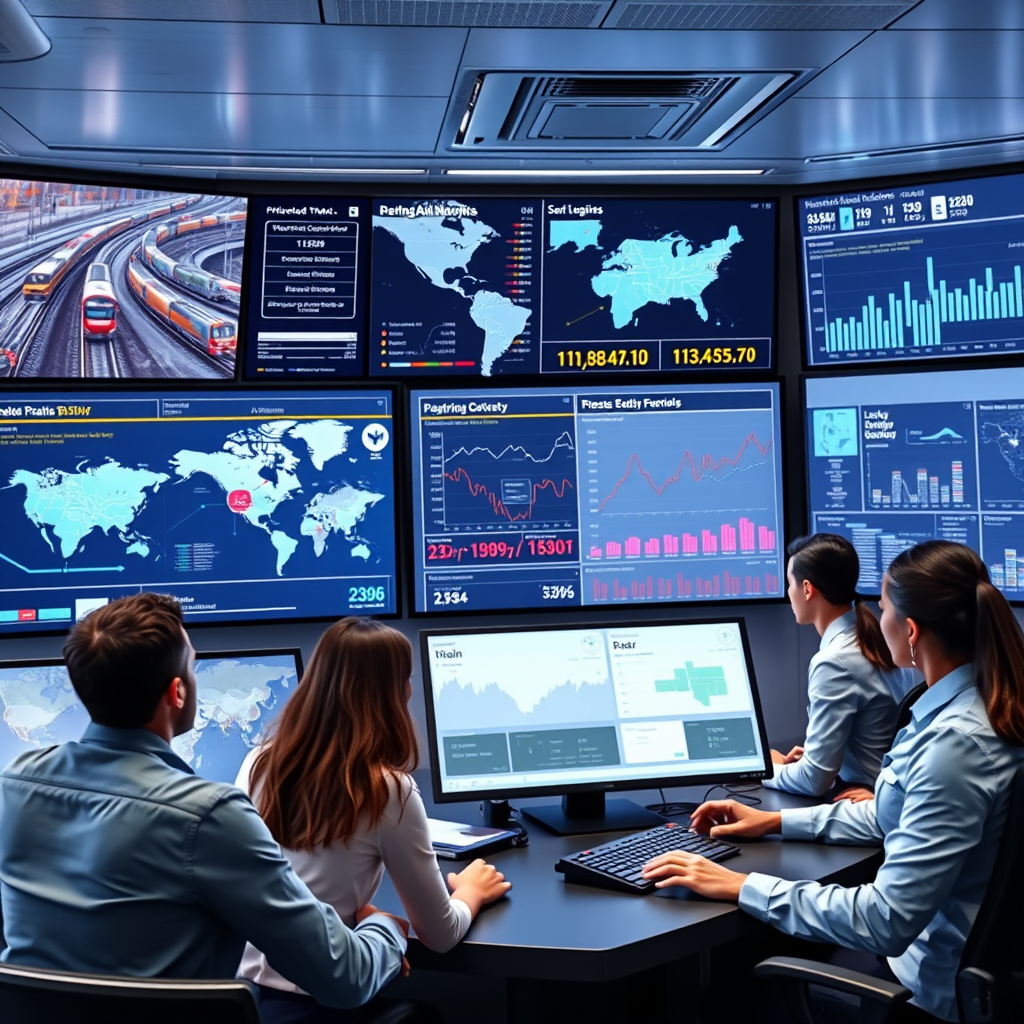
The North American freight rail industry faces significant challenges in efficiency and transparency. Traditional rail shipping processes are often manual, fragmented, and lack real-time visibility, leading to delays, increased costs, and operational inefficiencies for shippers. This article explores a recent partnership between Princeton TMX, a Transportation Management System (TMS) provider, and Telegraph, a rail technology solutions company, designed to revolutionize rail shipping for North American businesses. This collaboration integrates Telegraph’s advanced rail technology directly into the Princeton TMX platform, offering shippers a streamlined, end-to-end solution for managing their rail operations. We will examine the key features of this integrated system, its benefits for shippers across various industries, and the broader implications for the future of rail logistics in North America. The analysis will also consider the technological advancements driving this transformation and the potential for further innovation in the field.
Streamlining Rail Operations with Integrated TMS Technology
The partnership between Princeton TMX and Telegraph directly addresses the longstanding challenges of fragmented rail logistics. Historically, shippers have needed to interact with multiple systems and providers throughout the rail shipping process, leading to inefficiencies and communication breakdowns. By integrating Telegraph’s technology into its TMS, Princeton TMX provides a centralized platform where shippers can manage all aspects of their rail shipments – from initial booking and tracking to demurrage (charges for delaying the return of railcars) management – within a single interface. This eliminates the need for shippers to switch between various platforms, significantly reducing administrative burden and improving overall efficiency.
Enhanced Visibility and Predictive Capabilities
One of the key advantages of this integrated system is the enhanced visibility it provides to shippers. Telegraph’s technology offers real-time tracking of railcars, allowing shippers to accurately predict arrival times and optimize their supply chain accordingly. This predictive capability is crucial for minimizing delays, improving inventory management, and reducing overall transportation costs. Accurate equipment forecasting is also a significant benefit, enabling shippers to anticipate and secure the necessary railcars in advance, thereby avoiding potential delays and disruptions.
Expanding the Reach of Advanced Rail Technology
The Princeton TMX and Telegraph partnership aims to democratize access to advanced rail technology. While such technology has existed for some time, its adoption has been limited due to cost and complexity. By embedding this technology into a widely-used TMS platform, the collaboration makes it readily available to a much broader range of shippers, regardless of their size or technological expertise. This scalability is vital for driving widespread improvements in rail logistics across North America.
A Future of Smarter Rail Logistics
The partnership between Princeton TMX and Telegraph represents a significant step towards modernizing rail shipping in North America. The integrated TMS platform offers a more efficient, transparent, and predictable shipping experience for shippers, leading to substantial cost savings and improved operational performance. By simplifying complex processes and providing real-time visibility, the system fosters better collaboration between shippers, carriers, and other stakeholders in the rail ecosystem. The continued development of this technology, including plans to extend advanced solutions to additional shippers, holds immense promise for enhancing the efficiency and sustainability of the North American freight rail network. The success of this collaboration highlights the growing importance of technological innovation in transforming traditionally fragmented industries and underscores the potential for similar partnerships to drive further improvements in other sectors.
Conclusion
The collaboration between Princeton TMX and Telegraph signifies a pivotal moment in the evolution of North American rail logistics. By integrating Telegraph’s cutting-edge rail technology into its widely used TMS platform, Princeton TMX is empowering shippers with unprecedented levels of control, visibility, and efficiency. This partnership directly addresses the historical challenges of fragmented and manual rail processes, offering a streamlined, end-to-end solution for managing rail shipments. The resulting benefits are multifaceted: reduced administrative overhead, enhanced predictability through real-time tracking and accurate arrival predictions, improved equipment forecasting, and optimized demurrage management. The expansion of this technology to a broader range of shippers further underscores its potential to reshape the North American rail landscape. The ability to manage all aspects of rail transportation within a single, user-friendly interface is a significant leap forward, fostering greater efficiency and transparency across the entire supply chain. This innovative approach not only reduces costs and delays but also promotes sustainability by improving resource utilization and minimizing waste. The success of this partnership serves as a compelling example of how technological advancements can transform traditional industries and pave the way for a future of smarter, more efficient rail logistics. This is not merely a technological upgrade but a fundamental shift in how rail shipping is perceived and managed, benefiting shippers, carriers, and the overall economy.

Railway infrastructure, rolling stock and transport technologies specialist focused on global rail industry developments, high-speed rail systems, signaling technologies and freight transportation. Covering railway investments, public transport modernization, rail operations and international mobility projects across Europe, Asia and North America.
RELATED POSTS

October 1, 2026 7:09 am
United States regulators confirmed a September 30 deadline for the...

October 1, 2026 12:13 am
Illinois approved $1.5 billion annually for the Northern Illinois Transit...

October 1, 2026 6:10 am
Amtrak approved a System Expansion Committee on July 30 to...

October 5, 2026 1:13 pm
New York MTA confirmed a late 2026 DEIS release for...

October 6, 2026 9:17 am
Illinois approved $1.1M in state funds to upgrade two McHenry...

October 6, 2026 2:14 am
Union Pacific launched export rail shipments with Ferromex to deliver...