
$396M Rail Grant: US Infrastructure Revolution
The $396 million grant from the US Department of Transportation’s Federal Railroad Administration (FRA) supports vital improvements in America’s railway infrastructure, addressing critical needs like track repair, switch upgrades, and platform area enhancements to ensure a safe and efficient rail network.
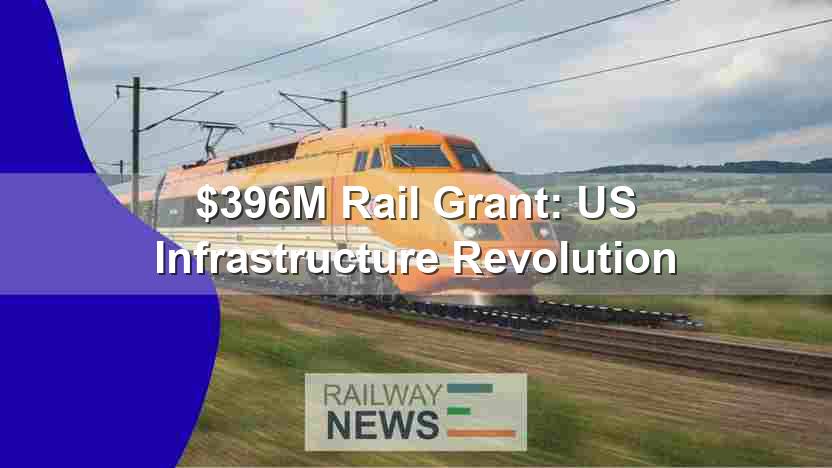
The following article explores the significant impact of the $396 million grant awarded by the US Department of Transportation’s Federal Railroad Administration (FRA) for rail capital projects. This funding, allocated through the Federal-State Partnership for State of Good Repair Program (Partnership Program), represents a crucial investment in the revitalization and modernization of America’s rail infrastructure. The article will delve into the specifics of the grant program, the types of projects it supports, the potential benefits for both urban and rural communities, and the long-term implications for the nation’s rail network. We will analyze how this initiative addresses critical infrastructure needs, enhances safety, and promotes economic growth. The detailed examination will shed light on the vital role of such federal funding in ensuring the efficient and reliable operation of the US rail system, a critical component of the nation’s transportation network. Finally, we will consider the broader context of this investment within the framework of national infrastructure priorities and its contribution to sustainable transportation solutions.
Funding the Future: The Federal-State Partnership for State of Good Repair
The USDOT’s (United States Department of Transportation) FRA’s (Federal Railroad Administration) $396 million grant, awarded under the Partnership Program, underscores the federal government’s commitment to improving the nation’s railway infrastructure. This program prioritizes projects focused on maintaining and upgrading existing rail assets, directly addressing issues of state of good repair (SGR). The significant sum allocated signifies a recognition of the crucial role that a well-maintained rail network plays in the nation’s economy and the daily lives of its citizens. The focus on SGR is vital, as deferred maintenance can lead to costly repairs later and compromises safety. This proactive approach is a key step towards ensuring the long-term viability and efficiency of the rail system.
Eligible Projects and Infrastructure Improvements
The Partnership Program’s funding is targeted towards a wide range of essential rail infrastructure improvements. Eligible projects include the repair, replacement, or rehabilitation of:
- Track and ballast: Ensuring the structural integrity and smooth operation of the rail lines.
- Switches and interlockings: Critical components for safe and efficient train movement and control.
- Track and platform areas: Improving accessibility and safety for passengers.
- Passenger cars and locomotives: Modernizing rolling stock for enhanced reliability and passenger comfort.
- Communication and signal systems: Upgrading technology for improved safety and operational efficiency.
- Power systems: Ensuring the reliable electrification of rail lines.
- Grade crossings: Improving safety at crossings to reduce accidents.
- Station buildings, signage, yards, and terminal areas: Enhancing the overall passenger experience and operational efficiency.
This detailed scope demonstrates a commitment to addressing a wide spectrum of infrastructure needs, enhancing both safety and operational efficiency.
Impact on Urban and Rural Communities
The benefits of this investment extend to both urban and rural communities. Improved rail infrastructure in urban areas can lead to increased ridership, reduced congestion, and improved air quality. In rural areas, enhanced rail service can connect communities, boost economic development, and provide vital transportation links. The program’s focus on intercity passenger rail recognizes the critical role rail plays in bridging the gap between urban centers and more remote regions. This balanced approach ensures that the benefits of improved rail infrastructure reach all parts of the country.
Safety and Economic Benefits
The investment in rail infrastructure improvements directly translates to enhanced safety and significant economic benefits. Modernized tracks, signaling systems, and rolling stock reduce the risk of accidents and delays. Improved efficiency leads to lower operational costs and increased productivity. The economic impact extends beyond the rail industry itself, as improved infrastructure stimulates economic activity in surrounding communities. Additionally, the investment in this program supports jobs in the construction, engineering, and rail industries, contributing to overall economic growth.
Conclusion
The $396 million grant from the FRA’s Partnership Program represents a substantial investment in the future of America’s rail network. By focusing on state of good repair (SGR) and funding projects aimed at upgrading critical infrastructure components, the program addresses long-term maintenance needs and promotes safety improvements across the country. This initiative demonstrates a commitment to enhancing both urban and rural connectivity, boosting economic growth, and ensuring the efficient and reliable operation of the nation’s rail system. The detailed nature of the eligible projects – encompassing track, signaling, rolling stock, and station facilities – ensures a holistic approach to improving rail infrastructure. The program’s success will be measured not only in terms of dollars spent but also in the measurable improvements to safety, efficiency, ridership, and the overall economic vitality of communities served by the nation’s rail lines. This investment is a critical step toward creating a modern, sustainable, and efficient rail system that will serve the needs of the nation for years to come. Additionally, the program serves as a model for future infrastructure investments, highlighting the importance of proactive maintenance and strategic planning for long-term sustainability. The success of this initiative is vital for the continued growth and competitiveness of the United States, showcasing the significance of targeted, federal funding in supporting critical national infrastructure.

Railway infrastructure, rolling stock and transport technologies specialist focused on global rail industry developments, high-speed rail systems, signaling technologies and freight transportation. Covering railway investments, public transport modernization, rail operations and international mobility projects across Europe, Asia and North America.
RELATED POSTS

October 8, 2026 1:15 pm
Alstom secured a €1bn contract to build 13 automated trains,...

October 1, 2026 7:09 am
United States regulators confirmed a September 30 deadline for the...

October 8, 2026 12:18 pm
Siemens Mobility signed an agreement with VinSpeed to supply 350...

October 4, 2026 5:14 pm
Alstom secured a CA$4.7 billion order from VIA Rail Canada...

October 5, 2026 6:12 pm
AECOM and Jacobs secured a contract in September 2026 to...

October 4, 2026 11:08 pm
Sound Transit confirmed the September 30 opening of Seattle Pinehurst...