
ZSSK Secures EUR 144 Million for 16 BEMUs Slovakia
ZSSK secured a EUR 144 million non-repayable grant from European funds for 16 Škoda-led battery-electric multiple units in Slovakia, with deliveries from 2028.
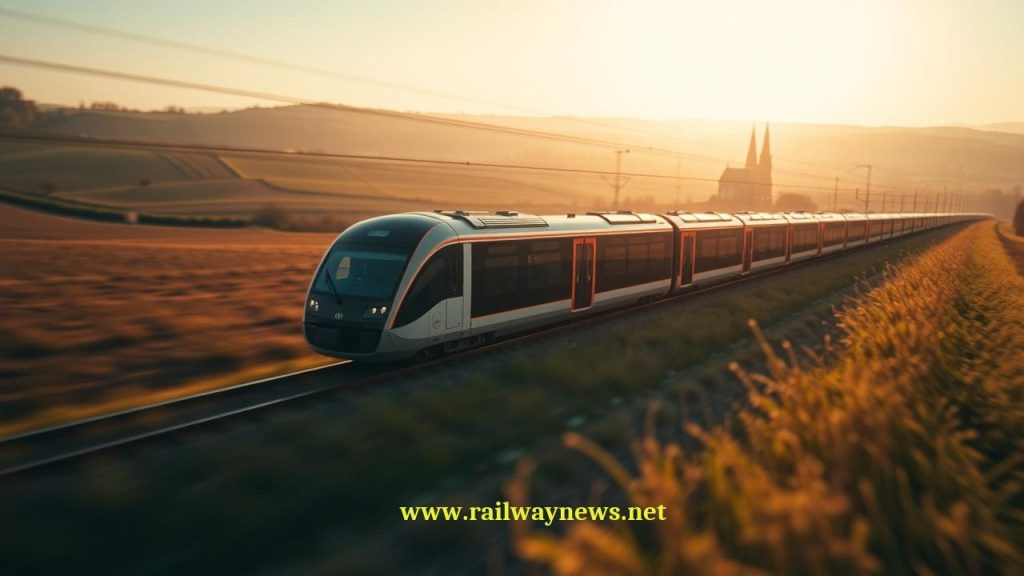
⚡ In Brief: Slovakian national operator ZSSK has secured EUR 144 million in European funding to co-finance its EUR 332 million order for 16 new battery-electric multiple units (BEMUs) from a Škoda-led consortium, with deliveries set to begin in 2028.
BRATISLAVA, SLOVAKIA – The national passenger rail operator of Slovakia, ZSSK, has finalized a non-repayable funding agreement worth EUR 144 million with the country’s Ministry of Transport. The agreement, which entered into force in April 2026, will support the procurement of 16 battery-electric multiple units (BEMUs). This funding is part of a larger EUR 332 million contract signed with a consortium of Škoda and ŽOS Trnava.
How Is the Funding Structured?
The EUR 144 million grant represents a non-repayable contribution from European funds, covering approximately 43.4% of the total EUR 332 million contract value for the initial 16 BEMU units. This financial support is crucial for the operator’s strategy to extend electric traction benefits to regions with non-electrified lines, specifically in the Nitra, Trenčín, Trnava, and Žilina regions. The specific European Union fund from which the financing originates, such as the Cohesion Fund or Recovery and Resilience Facility, was not disclosed in the announcement.
Key Funding Data
| Parameter | Value |
|---|---|
| Fund / Programme Name | European Union Funding (specific programme not disclosed) |
| Total Value | EUR 144 million (non-repayable grant) |
| Parties Involved | ZSSK (recipient), Slovak Ministry of Transport (administrator), Škoda/ŽOS Trnava (supplier) |
| Timeline / Completion | Agreement effective April 2026; fleet delivery from 2028 |
| Country / Corridor | Slovakia / Regional lines in Nitra, Trenčín, Trnava, Žilina |
How Does This Compare to Similar Funding Programs?
ZSSK’s move to BEMUs aligns with a growing European trend to decarbonise routes where full electrification is cost-prohibitive. While Slovakia will be the first in its immediate region to introduce BEMUs, Germany has been a frontrunner in their deployment, with operators like DB Regio ordering hundreds of battery trains from manufacturers such as Stadler and Siemens to replace diesel fleets. In contrast, the United Kingdom’s adoption has been more cautious, focusing primarily on retrofitting existing stock and smaller-scale trials, making Slovakia’s 16-unit new-build order a significant commitment for an operator of its size.
Editor’s Analysis
Slovakia’s investment makes it a regional leader in adopting battery-electric traction, providing a pragmatic solution for its network, of which only 44% is currently electrified. The decision to install ETCS Level 2 from the outset is a critical step, future-proofing the fleet for interoperability and aligning with the broader European push for digital railway signalling. This dual investment in green traction and advanced signalling reflects a wider transport sector trend towards integrated, sustainable modernization, as seen in the maritime industry’s recent surge in alternative-fuel vessel orders. (Source: DNV, 2026).
FAQ
Q: Which specific routes will the new battery trains serve?
A: The 16 BEMUs are intended for regional services primarily in the Nitra, Trenčín, Trnava, and Žilina regions. They will be deployed on routes currently operated by diesel trains due to a lack of overhead electrification.
Q: What is the cost per train and when will the first one enter service?
A: The contract values the 16 units at EUR 332 million, an average of approximately EUR 20.75 million per unit. The gradual entry into service is scheduled to begin from 2028, pending production cycles and certification processes.
Q: How will these trains operate on non-electrified lines?
A: The battery-electric multiple units (BEMUs) will charge their onboard batteries while running on electrified sections of the network using a pantograph. On non-electrified lines, they will switch to battery power, providing a zero-emission service without requiring new infrastructure investment.

Railway infrastructure, rolling stock and transport technologies specialist focused on global rail industry developments, high-speed rail systems, signaling technologies and freight transportation. Covering railway investments, public transport modernization, rail operations and international mobility projects across Europe, Asia and North America.
RELATED POSTS

October 8, 2026 1:15 pm
Alstom secured a €1bn contract to build 13 automated trains,...

October 1, 2026 7:09 am
United States regulators confirmed a September 30 deadline for the...

October 8, 2026 12:18 pm
Siemens Mobility signed an agreement with VinSpeed to supply 350...

October 4, 2026 5:14 pm
Alstom secured a CA$4.7 billion order from VIA Rail Canada...

October 5, 2026 6:12 pm
AECOM and Jacobs secured a contract in September 2026 to...

October 1, 2026 12:13 am
Illinois approved $1.5 billion annually for the Northern Illinois Transit...