
Platform4 Launches Zero-Carbon Homes Cambridge North
Platform4 launched zero-carbon homes in Cambridge North, UK, partnering with Grainger plc to deliver a new transit-oriented residential quarter.
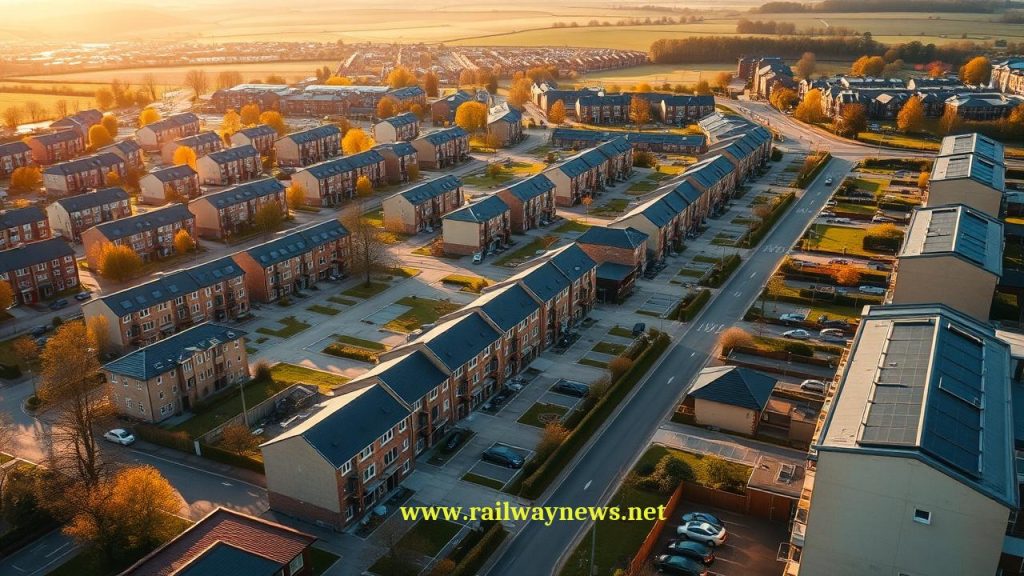
⚡ In Brief: Platform4 and blocwork have partnered with Grainger plc to deliver the Cambridge North Residential Quarter, a zero-carbon, transit-oriented development on under-used UK railway land that forms part of a wider 2,000-home national pipeline.
CAMBRIDGE, UK – Platform4, Network Rail’s property development arm, alongside joint venture partner blocwork and residential landlord Grainger plc, announced the development of the Cambridge North Residential Quarter on brownfield railway land. The project builds upon the existing Cambridge North Masterplan, which already features a 217-room hotel and commercial offices. This sustainable, transit-oriented project will contribute to Grainger’s broader partnership pipeline of over 2,000 rental homes across Great Britain.
What Is the Full Scope of This Project?
The Cambridge North Residential Quarter transforms under-used railway brownfield land into a high-density, low-carbon residential neighborhood directly connected to major transport links. The scheme integrates fabric-first architectural design, hot water heat pumps, photovoltaic panels, and water-saving fittings to achieve net-zero carbon operations. Developed by blocwork—a partnership between Network Rail’s Platform4 and bloc ltd—with forward-funding and long-term management by Grainger plc, the masterplan prioritizes active travel through pedestrian- and cycle-friendly streets. While the exact number of residential units for this specific phase and the total financial value of the development were not disclosed by the partners, the site lies adjacent to Cambridge North station, offering direct rail connectivity to London and the wider region.
Key Project Data
| Parameter | Value |
|---|---|
| Project / Contract Name | Cambridge North Residential Quarter |
| Total Value | Not disclosed |
| Parties Involved | Platform4 (Network Rail), bloc ltd, blocwork LLP, Grainger plc, Franklin Ellis Architects, Bidwells |
| Timeline / Completion | Not disclosed |
| Country / Corridor | United Kingdom / East of England |
How Does This Compare to Similar Projects?
The repurposing of railway land for mixed-use, transit-oriented development (TOD) is a growing global strategy to optimize public assets, as seen in projects like the Oakridge Park redevelopment in Vancouver, Canada, which integrates residential, civic, and 650,000 square feet of retail space around rapid transit infrastructure (Source: Westbank, 2024). Within the UK, Platform4’s brownfield initiative directly aligns with broader national rail estate strategies aimed at unlocking high-value land near transport hubs to address the housing crisis. While real estate-led railway regeneration focuses on residential density, it coexists with heavy capital expenditures on operational infrastructure, such as HS2’s recent £1.24 billion market engagement for asset maintenance contracts running from 2027 through 2037 (Source: HS2 Ltd, 2024). Furthermore, UK rail operators are increasingly pairing physical land developments with digital infrastructure upgrades, including a 2025 government-backed initiative to connect mainline trains to low-earth orbit satellites for improved passenger WiFi (Source: Department for Transport, 2025).
Editor’s Analysis
Unlocking surplus railway brownfield land represents a highly pragmatic mechanism for Network Rail to generate non-farebox revenue while directly supporting the UK government’s mandate to build 1.5 million homes. This strategy reflects a broader European trend where rail operators leverage high-density residential development around secondary transit hubs to secure long-term passenger demand and offset infrastructure maintenance backlogs (Source: International Union of Railways, 2024). By partnering with institutional build-to-rent landlords like Grainger, Network Rail successfully mitigates development risk while ensuring high-quality, long-term estate management.
FAQ
Q: What is the main objective of the Cambridge North Residential Quarter project?
A: The project aims to regenerate under-used railway brownfield land into a sustainable, transit-oriented residential neighborhood. It will feature zero-carbon homes, green spaces, and direct transport links to London and Cambridge.
Q: How much will the Cambridge North Residential Quarter development cost to build?
A: The total investment value and construction cost of this specific phase have not been publicly disclosed. However, the project is forward-funded and will be managed long-term by Grainger plc.
Q: Who is responsible for the design and planning of the new residential quarter?
A: Franklin Ellis Architects is leading the architectural design of the high-quality, sustainable buildings. Planning and development support for the scheme is provided by Bidwells.

Railway infrastructure, rolling stock and transport technologies specialist focused on global rail industry developments, high-speed rail systems, signaling technologies and freight transportation. Covering railway investments, public transport modernization, rail operations and international mobility projects across Europe, Asia and North America.
RELATED POSTS

October 8, 2026 1:15 pm
Alstom secured a €1bn contract to build 13 automated trains,...

October 1, 2026 7:09 am
United States regulators confirmed a September 30 deadline for the...

October 4, 2026 5:14 pm
Alstom secured a CA$4.7 billion order from VIA Rail Canada...

October 5, 2026 6:12 pm
AECOM and Jacobs secured a contract in September 2026 to...

October 1, 2026 12:13 am
Illinois approved $1.5 billion annually for the Northern Illinois Transit...

October 4, 2026 11:08 pm
Sound Transit confirmed the September 30 opening of Seattle Pinehurst...