
World Bank: $1.5B for South Africa Rail Freight: Future Trends, Guide
World Bank loans $1.5B to South Africa for rail freight sector revamp, aiming to modernize and attract private investment. Reforms include market liberalization and Transnet unbundling.
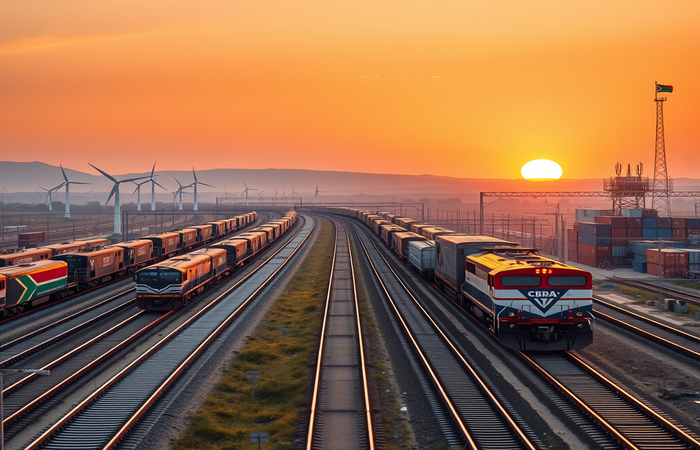
World Bank Approves $1.5 Billion Loan to Revitalize South Africa’s Rail Freight Sector
The World Bank has approved a substantial USD 1.5 billion loan to South Africa, targeting significant infrastructure reforms in the rail freight transport and energy sectors. Announced recently, the funding aims to catalyze essential structural changes within the country’s critical infrastructure. This initiative, spearheaded by the World Bank, will focus on liberalizing the rail freight market to encourage private sector participation, a crucial step to modernize and improve efficiency. The overarching goal, according to government officials, is to transform South Africa’s infrastructure, creating a more competitive and sustainable foundation for economic growth. The loan, administered to the South African government, underscores the commitment to revitalize a vital segment of the national economy. This article will delve into the specifics of the loan agreement, analyze the planned reforms, and explore the potential impact on the South African rail freight industry and its broader economic implications.
Liberalizing the Rails: The Core of the Reform
The primary objective of the loan within the rail freight sector is to facilitate market liberalization, transitioning from a state-owned monopoly to a competitive landscape. This initiative directly addresses the inefficiencies within the current system. The key enabler will be the unbundling of Transnet, the state-owned enterprise (SOE) responsible for ports, rail, and pipelines. This separation is designed to allow for the entry of multiple private operators, with a target of at least four new players. The reforms are expected to increase rail network capacity, aiming to boost it from 25% in 2023 to 65% by 2027, leading to improvements in the movement of cargo. The South African government, under the guidance of the Finance Minister, Enoch Godongwana, sees this as a pivotal move to attract new technologies and investment, making the rail network more efficient, affordable, and climate-resilient for the future.
Building the Framework: Legal and Regulatory Changes
To ensure the success of market liberalization, the South African authorities are focused on establishing a robust legal and regulatory environment. A central component of this is the creation of an independent transport economic regulator. This entity will be responsible for ensuring fair and open access to the rail network for all operators, both public and private. This creates a level playing field, vital for fostering competition and preventing anti-competitive behavior. Another critical measure is the unbundling of Transnet, which will separate the infrastructure ownership and operations. This segregation will allow train operators to compete directly on the network. The convergence of these changes is designed to improve the operational efficiency of the sector, leading to better customer service and a more efficient freight system. These reforms are key elements to improve the sector’s efficiency, bringing it closer to global standards.
Economic Impact and Job Creation
The World Bank expects these reforms to have a significant positive impact on the South African economy. The creation of new jobs, driven by private sector investment and increased activity, is a primary goal. Projections indicate the potential for creating 250,000 jobs by 2027, with the prospect of approximately half a million jobs by the early 2030s. The energy sector is also a focus of the loan. These reforms, according to the World Bank, are considered essential for attracting investment and enhancing public service delivery. The aim is to establish a more diversified economy.
Just Transition and Broader Partnership
The initiative also incorporates “just transition” measures to support communities impacted by the energy transition. These measures aim to mobilize USD 750 million in grants and provide job opportunities for nearly 10,000 workers, including women, in communities affected by the move to renewable energy sources. This element of the loan aligns with the broader 2022–2026 partnership framework between the World Bank and South Africa. Under this framework, three mutually reinforcing pillars are supported by the current loan. The World Bank’s commitment, as expressed by Satu Kahkonen, World Bank Division Director for South Africa, signifies the importance of the reform efforts in tackling longstanding bottlenecks and supporting sustainable economic growth.
Conclusion
The World Bank’s USD 1.5 billion loan to South Africa represents a crucial step toward modernizing the country’s rail freight system and enhancing the energy sector. By focusing on market liberalization, regulatory reform, and unbundling of state-owned assets like Transnet, the initiative aims to increase efficiency and attract private investment. The creation of an independent regulator is essential to ensure fair competition and the success of the new market players. The potential for job creation is significant, with hundreds of thousands of new positions projected in the coming years. However, the success of the reforms hinges on effective implementation and the ability of the South African government to navigate the challenges of transitioning to a more competitive environment. The initiative has the capacity to transform South Africa’s freight and logistics networks.

Railway infrastructure, rolling stock and transport technologies specialist focused on global rail industry developments, high-speed rail systems, signaling technologies and freight transportation. Covering railway investments, public transport modernization, rail operations and international mobility projects across Europe, Asia and North America.
RELATED POSTS

October 8, 2026 1:15 pm
Alstom secured a €1bn contract to build 13 automated trains,...

October 1, 2026 7:09 am
United States regulators confirmed a September 30 deadline for the...

October 8, 2026 12:18 pm
Siemens Mobility signed an agreement with VinSpeed to supply 350...

October 4, 2026 5:14 pm
Alstom secured a CA$4.7 billion order from VIA Rail Canada...

October 5, 2026 6:12 pm
AECOM and Jacobs secured a contract in September 2026 to...

October 4, 2026 11:08 pm
Sound Transit confirmed the September 30 opening of Seattle Pinehurst...