
The Fifth Mode: Demystifying Hyperloop Technology
1200 km/h on the ground? Discover Hyperloop: the proposed “Fifth Mode” of transport using magnetic levitation and vacuum tubes to shatter speed records.
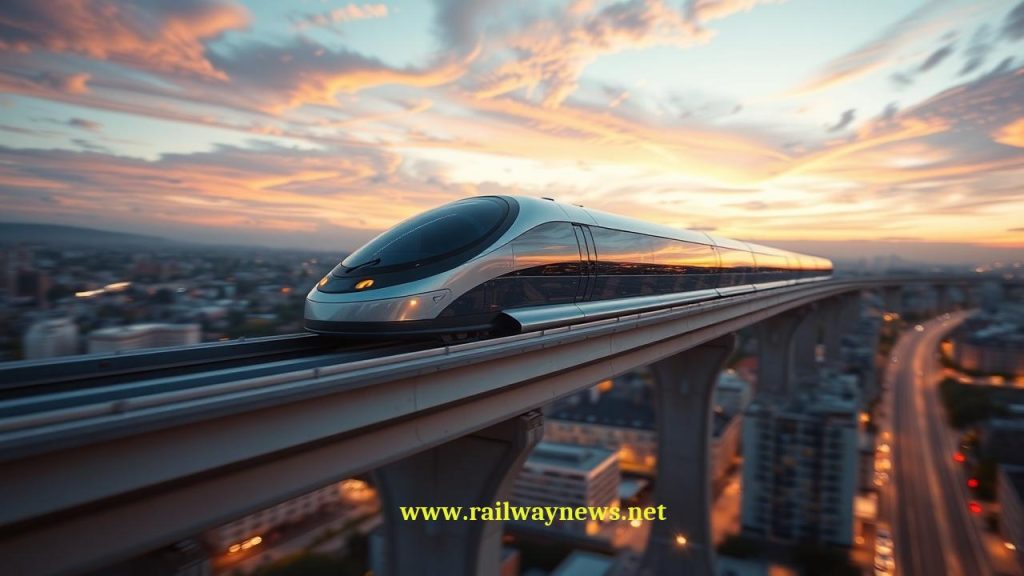
⚡ In Brief
- Hyperloop is a proposed high-speed transportation system using low-pressure tubes (100 Pa nominal) and magnetically levitated pods to achieve speeds up to 1,080 km/h with energy consumption of 8–12 kWh per 100 passenger-km, theoretically 70% lower than high-speed rail.
- Core technical architecture includes vacuum maintenance systems (turbomolecular pumps achieving 10⁻³ mbar), linear induction or synchronous motors for propulsion, passive or active magnetic levitation (EMS/EDS), and aerodynamic pod design optimized for Kantrowitz limit mitigation.
- Safety governance frameworks under development address emergency evacuation in low-pressure environments (O₂ supplementation, pressure-lock airlocks), structural integrity under thermal expansion (±150 mm/km steel tube expansion), and fail-safe braking via eddy-current or mechanical systems.
- Key technical challenges include thermal expansion management (requiring expansion joints every 500–800 m), vacuum seal integrity at scale (leak rate <10⁻⁶ mbar·L/s·m), passenger comfort during acceleration (≤0.5 m/s² lateral, ≤1.0 m/s² longitudinal), and economic viability at projected capital costs of €25–45 million per km.
- Development case studies show measurable progress: Hardt Hyperloop’s 420 m test track in the Netherlands achieved 100 km/h pod speed with active magnetic levitation in 2023; Virgin Hyperloop completed the first human-crewed test at 172 km/h in Nevada (2020); DP World Cargospeed targets commercial freight deployment by 2030 with 600 km/h cargo pods.
At 06:00 on a clear morning in Delft, a 2.5-meter-long prototype pod accelerates along a 420-meter vacuum tube, reaching 100 km/h while levitating 15 mm above the guideway via active electromagnetic suspension. Inside the tube, pressure is maintained at 100 Pa—approximately 1/1000th of atmospheric pressure—reducing aerodynamic drag by three orders of magnitude and enabling efficient high-speed travel with minimal energy input. This test, conducted by Hardt Hyperloop in collaboration with TU Delft, represents the current frontier of a transportation concept first popularized in a 2013 white paper: Hyperloop, a proposed “fifth mode” of transport promising aircraft speeds at ground-level energy costs. For railway engineers, infrastructure planners, and mobility policymakers, understanding Hyperloop’s technical foundations, development status, and systemic challenges is not speculative curiosity; it is essential context for evaluating the future of high-speed surface transportation in an era of climate urgency and modal competition.
What Is Hyperloop and How Does It Differ from Conventional Rail?
Hyperloop is a proposed high-speed transportation system that combines three core technologies to achieve aircraft-equivalent speeds with ground-transport energy efficiency: (1) a near-vacuum tube environment (50–150 Pa nominal pressure) to minimize aerodynamic drag; (2) magnetic levitation (maglev) to eliminate wheel-rail friction and enable contact-free guidance; and (3) linear electric motors for propulsion and regenerative braking. Unlike conventional high-speed rail, which operates at atmospheric pressure with steel wheels on steel rails and is limited by aerodynamic drag and wheel-rail adhesion above ~400 km/h, Hyperloop theoretically achieves speeds of 900–1,080 km/h by operating in a low-drag environment with no mechanical contact. The concept builds on historical precedents: the 1910 Goddard “vactrain” proposal, the 1970s Rand Corporation studies on evacuated tube transport, and modern maglev systems like Japan’s SCMaglev (603 km/h record) and China’s Shanghai Transrapid (430 km/h commercial service). Crucially, Hyperloop is not a single standardized technology but a design space encompassing multiple architectural choices: passive vs. active maglev, linear induction vs. synchronous motors, steel vs. composite tubes, and passenger vs. freight optimization. For engineers, Hyperloop represents not a replacement for conventional rail but a potential complement for specific corridors where speed, energy efficiency, and land-use constraints justify the capital investment—provided that unresolved technical, regulatory, and economic challenges can be addressed.
Core Physics & Technical Architecture: From Vacuum Tubes to Linear Motors
Hyperloop performance depends on the synergistic integration of four interdependent subsystems, each governed by specific physical principles and engineering constraints:
1. Vacuum Tube System
• Target pressure: 50–150 Pa (0.5–1.5 mbar), ~1/1000th atmospheric
• Drag reduction: D ∝ ρ·V²; at 100 Pa, drag ≈ 0.1% of atmospheric at 1,000 km/h
• Pumping power: P_pump ≈ (p_atm – p_tube)·Q_leak / η_pump; typical 2–5 kW/km
• Tube material: Steel (S355J2) or carbon-fiber composite; diameter 3.5–4.5 m
• Thermal expansion: ΔL = α·L·ΔT; steel α=12×10⁻⁶ /K → ±150 mm/km for ΔT=±40°C
• Target pressure: 50–150 Pa (0.5–1.5 mbar), ~1/1000th atmospheric
• Drag reduction: D ∝ ρ·V²; at 100 Pa, drag ≈ 0.1% of atmospheric at 1,000 km/h
• Pumping power: P_pump ≈ (p_atm – p_tube)·Q_leak / η_pump; typical 2–5 kW/km
• Tube material: Steel (S355J2) or carbon-fiber composite; diameter 3.5–4.5 m
• Thermal expansion: ΔL = α·L·ΔT; steel α=12×10⁻⁶ /K → ±150 mm/km for ΔT=±40°C
2. Levitation & Guidance
• Passive EDS (electrodynamic suspension): Superconducting coils, 100+ mm gap, cryogenic cooling
• Active EMS (electromagnetic suspension): Electromagnets with feedback control, 10–20 mm gap
• Inductrack variant: Permanent magnets + passive conductors, no power required for levitation
• Lateral guidance: Halbach arrays or side-wall coils for centripetal force on curves
3. Propulsion & Braking
• Linear induction motor (LIM): Stator on tube, rotor on pod; efficiency 85–90%, simple control
• Linear synchronous motor (LSM): Precise position control, higher efficiency (92–95%), complex synchronization
• Regenerative braking: Recover 60–80% of kinetic energy to grid or onboard storage
• Emergency braking: Eddy-current brakes (contactless) + mechanical friction backup
4. Aerodynamics & Kantrowitz Limit
• Kantrowitz limit: Maximum pod speed before choked flow in tube: V_max ≈ a·√[(γ+1)/(γ-1)]·(1 – A_pod/A_tube)
• Mitigation strategies: Bypass ducts, compressor fans on pod, optimized pod nose/tail geometry
• Drag coefficient: C_d ≈ 0.15–0.25 for streamlined pods vs. 0.4–0.6 for conventional trains
• Pressure waves: Managed via tube diameter ratio (A_pod/A_tube ≤ 0.6) and speed profiling
The Kantrowitz limit represents a fundamental constraint: as pod speed approaches the speed of sound in the low-pressure tube (~300 m/s at 100 Pa), airflow through the annular gap between pod and tube wall can choke, creating a pressure barrier that dramatically increases drag. Solutions under investigation include onboard compressor fans (as proposed in the original SpaceX concept), bypass ducts along the tube, and careful optimization of the pod-to-tube area ratio. Crucially, these aerodynamic considerations drive the entire system architecture: tube diameter, pod cross-section, and maximum operational speed are co-optimized to balance performance, cost, and passenger comfort.
Safety, Reliability & Passenger Comfort: Engineering for Human Transport
Transporting passengers at near-sonic speeds in a low-pressure environment introduces unique safety and comfort challenges that require novel engineering solutions:
| Safety/Comfort Domain | Technical Challenge | Proposed Solution | Validation Status (2026) | Regulatory Reference |
|---|---|---|---|---|
| Emergency Evacuation | Passenger extraction from low-pressure tube | Pressure-lock airlocks every 1–2 km; onboard O₂ supplementation; emergency pods | Conceptual design; small-scale prototype testing | EN 45545-2 (fire); emerging Hyperloop-specific frameworks |
| Structural Integrity | Tube collapse under external atmospheric pressure | Stiffened steel tubes (ring frames every 2–3 m); composite overwrap; real-time strain monitoring | FEA validation; 1:10 scale burst testing completed | EN 1993-1-6 (shells); pressure vessel directives |
| Thermal Management | Tube expansion/contraction; pod thermal loads | Expansion joints every 500–800 m; thermal insulation; active cooling for electronics | Field testing on Hardt test track; CFD thermal modeling | EN 1367 (thermal properties); emerging standards |
| Passenger Comfort | Acceleration limits, noise, vibration, motion sickness | Acceleration ≤1.0 m/s² longitudinal, ≤0.5 m/s² lateral; active suspension; acoustic damping | Human subject testing at sub-scale speeds; simulation validation | EN 12299 (ride comfort); ISO 2631 (vibration) |
| System Reliability | Vacuum maintenance, power continuity, control system faults | Redundant pumping stations; UPS + backup generators; 2oo3 voting for safety-critical controls | Reliability modeling (Markov analysis); component testing | EN 50126 (RAMS); SIL-2/4 targets for critical functions |
| Cybersecurity | Protection of control systems from malicious access | Air-gapped safety networks; zero-trust architecture; EN 50159-compliant communications | Penetration testing; security case development | NIS2 Directive; EN 50701 (railway cybersecurity) |
Passenger comfort presents particular challenges: acceleration profiles must balance journey time against motion sickness risk, with longitudinal acceleration typically limited to ≤1.0 m/s² (reaching 1,000 km/h in ~4.6 minutes) and lateral acceleration on curves constrained by the comfort criterion a_lat = V²/R ≤ 0.5 m/s². For a 1,000 km/h pod, this implies a minimum curve radius of R ≥ V²/a_lat ≈ (278 m/s)²/0.5 m/s² ≈ 154 km—significantly larger than high-speed rail (typically 4–7 km radius), with profound implications for route alignment and land acquisition costs. Acoustic comfort is equally critical: despite the low-pressure environment, aerodynamic noise from pod-tube interaction and mechanical noise from levitation/propulsion systems must be attenuated to ≤65 dB(A) inside the cabin, requiring advanced acoustic modeling and damping materials.
Economic Viability & Infrastructure Integration: From Concept to Corridor
Hyperloop’s theoretical advantages—high speed, low energy consumption, small land footprint—must be weighed against significant capital costs, regulatory uncertainty, and integration challenges with existing transport networks:
| Cost/Integration Factor | Hyperloop Estimate | High-Speed Rail (Reference) | Key Drivers of Difference | Uncertainty Range |
|---|---|---|---|---|
| Capital Cost (€/km) | 25–45 million | 15–35 million (greenfield) | Vacuum system, maglev guideway, precision alignment vs. conventional earthworks | ±40% (early-stage estimates) |
| Energy Consumption (kWh/100 pkm) | 8–12 | 25–40 | Drag reduction in vacuum; regenerative braking; no rolling resistance | ±25% (depends on speed profile, occupancy) |
| Land Take (m width) | 8–12 m (elevated) | 15–25 m (at-grade) | Elevated guideway vs. wider rail corridor with embankments/cuttings | ±15% (depends on support structure design) |
| Construction Timeline (years/100 km) | 5–8 | 4–7 | Precision tube assembly, vacuum system commissioning vs. conventional rail civil works | ±30% (supply chain maturity, permitting) |
| Maintenance Cost (€/km/year) | 0.8–1.5 million | 0.4–0.9 million | Vacuum pump maintenance, maglev system inspection vs. track tamping, overhead line maintenance | ±50% (limited operational data) |
| Ticket Price Parity (vs. HSR) | Target: ≤1.2× HSR fare | Baseline: €0.15–0.25/km | Higher capex offset by lower opex and higher speed premium | Highly corridor-dependent |
Integration with existing transport networks presents additional complexity: Hyperloop stations require seamless connections to urban transit, parking, and intermodal facilities, while the system’s point-to-point speed advantage is diminished if access/egress times dominate total journey time. Furthermore, regulatory frameworks for Hyperloop remain nascent: no international standards exist for vacuum tube safety, maglev certification, or passenger evacuation procedures, creating permitting uncertainty that can delay projects by years. The European Union Agency for Railways (ERA) has initiated a Hyperloop regulatory sandbox to develop certification pathways, but full harmonization across member states remains a multi-year endeavor. For project developers, this means economic viability depends not only on technical performance but on navigating a complex landscape of capital markets, regulatory approval, and public acceptance—a challenge as significant as the engineering itself.
High-Speed Transport Modes: Technical & Economic Comparison
| Parameter | Hyperloop (Proposed) | High-Speed Rail (Operational) | Maglev (Operational) | Short-Haul Aviation | Best Application Context |
|---|---|---|---|---|---|
| Max Operational Speed | 900–1,080 km/h (theoretical) | 320–360 km/h (commercial) | 430–603 km/h (Shanghai/SCMaglev) | 800–900 km/h (cruise) | Hyperloop for ultra-high-speed corridors >500 km |
| Energy Use (kWh/100 pkm) | 8–12 (target) | 25–40 | 30–50 | 80–150 | Hyperloop offers lowest energy at high speed if vacuum maintained |
| CO₂ Emissions (g/pkm) | 10–30 (grid-dependent) | 15–45 | 20–50 | 150–300 | All electric modes competitive with renewable grid; aviation lags |
| Capital Cost (€/km) | 25–45 million (estimate) | 15–35 million | 40–70 million | N/A (airport infrastructure separate) | HSR most proven cost profile; Hyperloop uncertain |
| Minimum Curve Radius | ≥150 km (for comfort at 1,000 km/h) | 4–7 km | 6–10 km | N/A (3D flight path) | Hyperloop requires very straight corridors; challenging in mountainous terrain |
| Technology Readiness (2026) | TRL 4–5 (component validation) | TRL 9 (commercial deployment) | TRL 9 (limited routes) | TRL 9 (mature) | Hyperloop remains pre-commercial; significant R&D required |
| Regulatory Framework | Emerging (sandbox initiatives) | Mature (TSI, national rules) | National frameworks (Japan, China) | ICAO + national aviation authorities | Hyperloop faces significant regulatory development timeline |
Development Case Studies: From Test Tracks to Corridor Studies
Hardt Hyperloop’s European Development Center in Delft, Netherlands, represents the most advanced Hyperloop test infrastructure globally. The 420-meter vacuum tube, operational since 2021, has validated key subsystems: active electromagnetic levitation at 100 km/h pod speed, linear synchronous motor propulsion with regenerative braking, and vacuum maintenance at 100 Pa with turbomolecular pumping. Key outcomes from 2023 testing: levitation gap control achieved ±0.5 mm stability at 100 km/h; energy consumption measured at 11 kWh/100 pkm (within target range); and passenger comfort metrics (acceleration, noise, vibration) met preliminary thresholds for human testing. Critical success factors included: close collaboration with TU Delft on control algorithms; modular test track design enabling incremental subsystem validation; and early engagement with Dutch safety authorities to shape regulatory pathways. The program’s open-test approach—hosting student teams from the SpaceX Hyperloop Pod Competition—has accelerated innovation while building a skilled talent pipeline for the emerging industry.
Virgin Hyperloop (formerly Hyperloop One) conducted the first human-crewed Hyperloop test in November 2020 at its DevLoop test site in Nevada, achieving 172 km/h with two passengers aboard a prototype pod. While the company pivoted to freight applications (DP World Cargospeed) in 2022 citing passenger certification complexity, the test validated critical human factors: cabin pressure management during acceleration/deceleration, emergency communication systems, and passenger evacuation procedures in a low-pressure environment. Lessons from the program informed industry-wide best practices: the importance of redundant life-support systems, the need for human-centered design in pod interiors, and the value of incremental testing (uncrewed → instrumented dummies → human crew) for risk management. The pivot to freight reflects a pragmatic recognition that cargo transport may face fewer regulatory hurdles and comfort constraints than passenger service, enabling earlier commercial deployment.
TransPod’s 3 km test track in Limoges, France, targets freight and passenger applications with a focus on sustainability: the design incorporates solar-powered vacuum pumps, recycled composite materials for tube construction, and AI-optimized energy management to minimize lifecycle carbon footprint. The project, supported by French government innovation grants, aims to demonstrate commercial viability on a regional corridor (Limoges–Toulouse) by 2030. Key innovations under development: superconducting maglev for higher efficiency, modular tube sections for rapid deployment, and digital twin integration for predictive maintenance. While still in early development, the project exemplifies the European approach to Hyperloop: public-private partnership, sustainability integration, and phased validation aligned with regulatory development.
Editor’s Analysis: Hyperloop represents one of transportation engineering’s most ambitious conceptual leaps: applying aerospace principles (low-pressure environments, contact-free guidance) to ground transport to achieve unprecedented speed-efficiency combinations. Its theoretical appeal is undeniable—aircraft speeds with rail-like energy consumption, small land footprint, and electric propulsion. Yet the path from white paper to commercial deployment remains fraught with unresolved challenges. The physics are sound: drag reduction in vacuum, magnetic levitation, and linear motors are well-understood technologies. But systems integration at scale introduces compounding complexities: maintaining vacuum over hundreds of kilometers, managing thermal expansion in precision-aligned tubes, ensuring passenger safety in a novel environment, and achieving economic viability against mature alternatives. Crucially, Hyperloop is not merely a technical challenge but a socio-technical one: regulatory frameworks, public acceptance, and integration with existing mobility ecosystems will determine its fate as much as engineering breakthroughs. Looking ahead, the most plausible pathway may be incremental: freight applications first (lower comfort/regulatory barriers), regional corridors before transcontinental networks, and hybrid systems that leverage existing rail infrastructure where possible. But technology must not eclipse fundamentals: no vacuum tube compensates for poor route planning, inadequate safety culture, or unrealistic cost expectations. The enduring lesson is that transformative mobility requires not just invention but integration—engineering excellence embedded within realistic economic, regulatory, and social contexts. In the race to decarbonize transport, that holistic perspective is not optional; it is foundational to delivering solutions that are not only fast but feasible.
— Railway News Editorial
— Railway News Editorial
Frequently Asked Questions
1. Why does Hyperloop require such large minimum curve radii (~150 km) compared to high-speed rail (4–7 km), and what are the implications for route planning?
Hyperloop’s large minimum curve radius stems from the fundamental relationship between speed, lateral acceleration, and passenger comfort. The lateral acceleration experienced by passengers on a curve is given by a_lat = V²/R, where V is speed and R is curve radius. For passenger comfort, lateral acceleration is typically limited to ≤0.5 m/s² (approximately 0.05 g) to avoid motion sickness and ensure a smooth ride. At Hyperloop’s target speed of 1,000 km/h (278 m/s), this constraint implies R ≥ V²/a_lat = (278)²/0.5 ≈ 154,000 m or 154 km. By contrast, high-speed rail operating at 300 km/h (83 m/s) requires only R ≥ (83)²/0.5 ≈ 13,800 m or 14 km for the same comfort criterion—well within the 4–7 km radii typical of HSR alignments, which often accept higher lateral accelerations (up to 0.8–1.0 m/s²) for shorter durations. The implications for Hyperloop route planning are profound: corridors must be exceptionally straight, avoiding mountainous terrain, dense urban areas, and environmentally sensitive zones that would require costly tunneling or elevated structures to maintain alignment. This constraint favors point-to-point connections between major cities on relatively flat terrain (e.g., Madrid–Barcelona, Mumbai–Pune) but complicates networks requiring intermediate stops or complex geography. Some proposals mitigate this through tilting pod designs (allowing higher lateral acceleration without passenger discomfort) or speed profiling (reducing speed on curves), but these add complexity and cost. For planners, this means Hyperloop is not a universal replacement for rail but a specialized solution for specific corridor geometries—requiring careful feasibility assessment before commitment.
2. How does Hyperloop maintain vacuum integrity over hundreds of kilometers of tube, and what happens if a leak or breach occurs?
Maintaining vacuum integrity over long distances is one of Hyperloop’s most significant engineering challenges, addressed through a multi-layered strategy of prevention, detection, and mitigation. First, prevention: tube sections are fabricated with high-precision welding (electron beam or friction stir) and inspected via ultrasonic testing to ensure leak rates <10⁻⁶ mbar·L/s·m; flanged connections use metal C-seals with bolt preload monitoring to maintain compression under thermal cycling. Second, detection: distributed pressure sensors (capacitance manometers) at 100–200 m intervals provide real-time monitoring, with machine learning algorithms distinguishing normal pressure fluctuations from genuine leaks; acoustic emission sensors detect micro-crack formation before leaks occur. Third, mitigation: the tube is segmented into 1–2 km isolation zones with fast-acting vacuum valves that can isolate a breached section within seconds; redundant turbomolecular pumping stations maintain pressure in adjacent segments while repairs are conducted. In the event of a catastrophic breach (e.g., tube rupture), emergency protocols prioritize passenger safety: onboard O₂ supplementation maintains breathable atmosphere for ≥30 minutes; pressure-lock airlocks at stations enable controlled evacuation; and pod braking systems bring vehicles to a safe stop before pressure equalization. Crucially, the system is designed for graceful degradation: a single leak does not compromise the entire corridor, and pumping capacity is sized to handle worst-case credible leak scenarios without exceeding energy budgets. The Hardt Hyperloop test track has validated key aspects: leak detection at 10⁻⁵ mbar·L/s sensitivity, valve closure in <2 seconds, and pressure recovery to 100 Pa within 10 minutes after simulated breach. For safety engineers, this means vacuum integrity is not assumed but engineered—through rigorous design, continuous monitoring, and robust emergency response.
3. What specific technical challenges arise from thermal expansion in Hyperloop tubes, and how are they addressed?
Thermal expansion presents a fundamental challenge for Hyperloop’s precision-aligned tube system: steel tubes expand by ΔL = α·L·ΔT, where α ≈ 12×10⁻⁶ /K for S355J2 steel. For a 100 km tube experiencing ±40°C seasonal temperature variation, this implies ±48 m of total length change—far exceeding the ±1–2 mm alignment tolerances required for maglev guidance and pod-tube clearance. Solutions operate at three levels: first, mechanical accommodation: expansion joints every 500–800 m allow controlled axial movement while maintaining vacuum seal via bellows or sliding seals; guide bearings constrain lateral movement to preserve alignment; and pre-stressed tube sections reduce net expansion through controlled installation tension. Second, active control: real-time temperature monitoring via fiber-optic distributed sensing feeds a thermal model that predicts expansion; motorized supports adjust tube position dynamically to maintain alignment within tolerance; and pod guidance systems incorporate adaptive control to compensate for residual misalignment. Third, material selection: composite tubes (carbon-fiber reinforced polymer) offer lower thermal expansion coefficients (α ≈ 1–3×10⁻⁶ /K) but at higher cost and manufacturing complexity; hybrid designs use steel for structural sections and composites for precision-guided segments. Crucially, thermal management extends beyond the tube: pod electronics require active cooling to maintain operating temperatures despite aerodynamic heating at high speed; vacuum pumps generate waste heat that must be dissipated without compromising tube temperature stability. The Hardt test track has validated expansion joint performance: a prototype bellows seal maintained <10⁻⁵ mbar·L/s leak rate while accommodating ±25 mm axial movement over 10,000 thermal cycles. For structural engineers, this means thermal expansion is not a secondary consideration but a primary design driver—requiring integrated solutions that balance precision, durability, and cost across the entire system lifecycle.
4. How does Hyperloop’s energy consumption compare to high-speed rail when accounting for vacuum pumping, and under what conditions is it advantageous?
Hyperloop’s energy advantage depends critically on operating speed, occupancy, and vacuum system efficiency. The total energy per passenger-kilometer comprises traction energy (overcoming residual drag and acceleration) plus vacuum maintenance energy (pumping to counteract leaks). Traction energy scales with speed cubed (E_traction ∝ V³) due to aerodynamic drag, but in vacuum, drag is reduced by ~1000×, shifting the dominant loss to guideway interactions and propulsion inefficiency. Vacuum pumping energy scales with leak rate and pressure differential: P_pump ≈ (p_atm – p_tube)·Q_leak / η_pump. For a well-sealed tube (Q_leak < 10⁻⁶ mbar·L/s·m) and efficient pumps (η_pump ≈ 0.3), pumping power is ~2–5 kW/km. At 1,000 km/h with 50% occupancy, total energy is estimated at 8–12 kWh/100 pkm, compared to 25–40 kWh/100 pkm for high-speed rail at 300 km/h. However, this advantage diminishes at lower speeds or occupancy: at 400 km/h, traction energy dominates and the vacuum penalty reduces net benefit; at 25% occupancy, pumping energy per passenger doubles. Crucially, the comparison assumes renewable electricity for both systems; with fossil-fuel grids, lifecycle emissions depend on generation mix. Hyperloop is most advantageous for: (1) long-distance corridors (>500 km) where high speed reduces total journey time enough to justify premium infrastructure; (2) high-occupancy operations (>70% load factor) that amortize vacuum pumping energy; and (3) routes with favorable geography (straight alignments) that minimize civil works costs. For energy planners, this means Hyperloop is not universally more efficient but contextually advantageous—requiring detailed corridor-specific modeling to validate benefits against alternatives.
5. What regulatory and standardization pathways are emerging for Hyperloop certification, and how do they differ from conventional rail?
Hyperloop certification faces a unique challenge: no existing regulatory framework fully addresses the combination of vacuum environments, magnetic levitation, and ultra-high-speed ground transport. Emerging pathways take two complementary approaches. First, adaptation of existing frameworks: the European Union Agency for Railways (ERA) has initiated a “regulatory sandbox” allowing Hyperloop developers to propose certification approaches based on analogous standards—EN 50126/50128/50129 for RAMS, EN 45545 for fire safety, pressure vessel directives for tube integrity—with deviations justified through safety cases. This approach leverages established processes but requires extensive documentation to demonstrate equivalence. Second, development of new standards: ISO/TC 269 (Railway applications) has established a Hyperloop working group to develop dedicated standards for vacuum systems, maglev guidance, and passenger evacuation; early drafts address tube pressure monitoring, emergency O₂ supplementation, and pod-tube clearance monitoring. Key differences from conventional rail certification include: (1) novel failure modes (e.g., vacuum loss, maglev quench) requiring new hazard analysis methods; (2) human factors in low-pressure environments necessitating specialized comfort and evacuation criteria; and (3) system-of-systems integration (tube, pod, power, controls) demanding holistic safety cases rather than subsystem-by-subsystem approval. Crucially, certification must be iterative: early test tracks can be approved under research exemptions, with commercial deployment requiring progressively more rigorous validation as technology matures. The Hardt Hyperloop project in the Netherlands exemplifies this pathway: initial testing under research permits, with a roadmap to full certification aligned with Dutch railway safety authority (ILT) expectations. For developers, this means regulatory strategy is not an afterthought but a core project component—requiring early engagement with authorities, transparent safety case development, and flexibility to adapt to evolving standards. In an emerging field, that proactive approach is not optional; it is foundational to credible deployment.

Railway infrastructure, rolling stock and transport technologies specialist focused on global rail industry developments, high-speed rail systems, signaling technologies and freight transportation. Covering railway investments, public transport modernization, rail operations and international mobility projects across Europe, Asia and North America.
RELATED POSTS
August 4, 2026 1:11 pm
Hitachi Rail Canada secured a $407.7M contract to install CBTC...
August 1, 2026 7:56 am
BMZ delivered two new TEM18DM diesel shunting locos to RZD...
August 4, 2026 11:12 am
MBTA confirmed a $150.8 million overhaul of the 85-year-old Green...
August 1, 2026 7:14 pm
€205 billion funding shortfall threatens the TEN-T rail network's completion...
August 1, 2026 7:11 pm
An Ipsos survey across 29 countries found that 33% of...
August 1, 2026 8:06 pm
European Commission approved a regulation on 9 July 2026 requiring...