
Why EN 15437-2 Transforms EU Rail Safety & Maintenance
EN 15437-2 standardizes on-board axlebox temperature monitoring. It ensures railway safety, prevents failures, and enables predictive maintenance with continuous, real-time data.
Understanding EN 15437-2: On-Board Axlebox Temperature Monitoring Systems
EN 15437-2 is a crucial European standard within the railway industry that specifies the performance and design requirements for on-board systems dedicated to monitoring the temperature of axlebox bearings. Its primary purpose is to ensure the safe and reliable operation of rolling stock by detecting overheating conditions, commonly known as a “hot box,” before they lead to catastrophic failures.
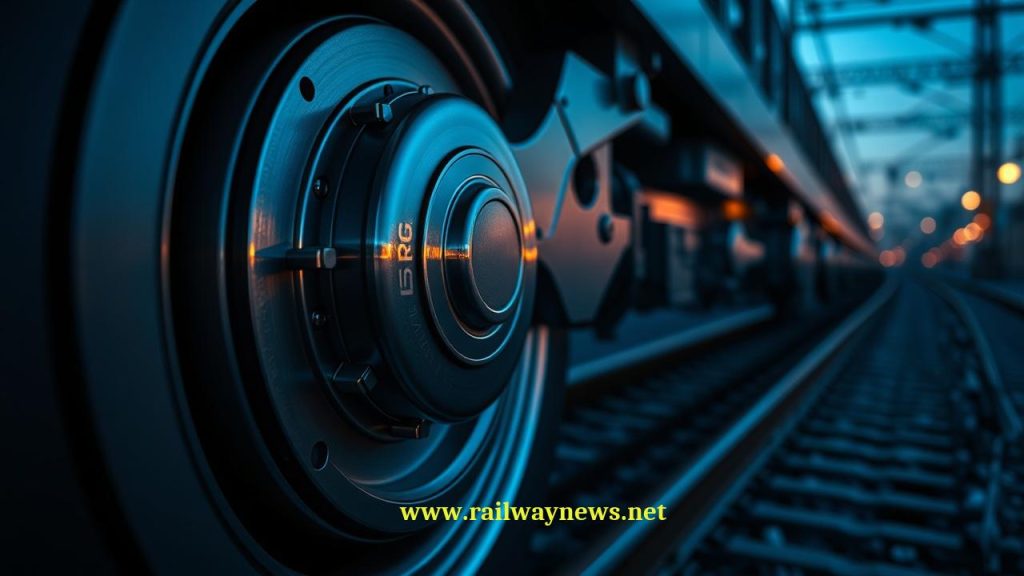
An axlebox contains the bearings that support the vehicle’s axle, allowing the wheels to rotate smoothly. Excessive heat generation in these bearings is a critical indicator of potential mechanical failure, such as bearing collapse or seizure, which can result in derailment. This standard provides a framework for manufacturers and operators to design, implement, and verify monitoring systems that are effective, reliable, and interoperable across different railway networks.
Key Objectives and Scope of EN 15437-2
The standard establishes a common set of technical and functional requirements to guide the development of on-board axlebox condition monitoring systems. The main objectives include:
- Enhancing Safety: To provide early warnings of abnormal temperature increases in axlebox bearings, allowing for timely intervention to prevent accidents.
- Defining Performance Criteria: To set clear benchmarks for system accuracy, measurement range, response time, and alarm logic.
- Ensuring Reliability and Availability: To outline requirements for system durability, self-diagnostics, and fault tolerance, ensuring the system operates correctly under harsh railway environmental conditions.
- Promoting Interoperability: To standardize interfaces and data formats, facilitating the integration of these systems with the Train Control and Management System (TCMS) and enabling consistent data analysis across fleets.
Core Technical Requirements and Design Principles
EN 15437-2 explores specific technical details that are fundamental to the system’s effectiveness. These requirements cover the entire system, from the sensor to the driver’s interface.
System Architecture and Components
A compliant on-board system typically consists of several key components:
- Temperature Sensors: These are installed directly on or near the axlebox housing to accurately measure the bearing temperature. The standard addresses sensor type, placement, accuracy, and protection against the harsh operational environment.
- Data Acquisition and Processing Unit: This unit collects data from all sensors, processes it in real-time according to the defined logic, and generates alerts or alarms when predefined thresholds are exceeded.
- Human-Machine Interface (HMI): This is the interface, often on the driver’s display, that presents system status and alarm information clearly and unambiguously to the train crew, enabling them to take appropriate action.
- Communication Interface: The system must be able to communicate with other on-board systems, primarily the TCMS, to log events, transmit data for maintenance purposes, and integrate alarm management into the train’s overall control system.
Performance and Measurement Criteria
The standard mandates stringent performance levels to guarantee detection reliability. Key criteria include:
- Measurement Range: The system must be capable of accurately measuring temperatures across a wide operational spectrum, typically from -40°C to over 150°C.
- Accuracy: A defined level of accuracy (e.g., ±2°C within the critical operating range) is required to ensure that measurements are meaningful and that false alarms are minimized.
- Response Time: The system must be able to detect and report a critical temperature rise within a very short timeframe to provide the maximum possible warning period.
Alarm Management and Logic
One of the most critical aspects of EN 15437-2 is its detailed specification for alarm logic. A robust system uses multiple criteria to identify a potential failure, rather than relying on a single temperature reading. The main alarm types are:
- Absolute Temperature Alarm: An alarm is triggered when an axlebox temperature exceeds a fixed, predefined critical value (e.g., 120°C). This indicates a severe overheating event.
- Differential Temperature Alarm: This alarm compares the temperature of one axlebox to others on the same bogie or vehicle. A significant difference (e.g., 20°C higher than the average) can indicate a developing fault in one bearing, even if its absolute temperature is not yet critical. This is a powerful tool for early fault detection.
- Rate-of-Rise Alarm (Gradient Alarm): This alarm is triggered if the temperature of a bearing increases at an abnormally fast rate. A rapid temperature gradient is a strong indicator of a rapidly deteriorating bearing condition.
Comparison: On-Board (EN 15437-2) vs. Trackside Monitoring Systems
While on-board systems are the focus of EN 15437-2, it’s useful to compare them with traditional trackside Hot Box Detectors (HBDs).
| Feature | On-Board System (EN 15437-2) | Trackside System (HBD) |
|---|---|---|
| Monitoring Type | Continuous, real-time monitoring throughout the journey. | Intermittent, point-in-time checks only at specific locations. |
| Data Granularity | Provides a complete temperature history for each bearing, enabling trend analysis and predictive maintenance. | Provides a single “snapshot” measurement as the train passes. |
| Detection Speed | Immediate detection and alerting of a developing fault, regardless of train location. | Detection only occurs when the train passes a detector; a fault could develop significantly between points. |
| Alarm Logic | Can utilize complex logic, including differential and rate-of-rise alarms. | Typically limited to absolute temperature alarms. |
| Maintenance Focus | Enables Condition-Based and Predictive Maintenance by analyzing temperature trends over time. | Primarily reactive, triggering an immediate stop or inspection after a fault is detected. |
Integration, Reliability, and Environmental Considerations
EN 15437-2 places strong emphasis on the system’s ability to withstand the demanding railway environment. It must be designed to resist shock, vibration, extreme temperatures, humidity, and electromagnetic interference (EMI), often referencing other standards like EN 50155 (Electronic equipment used on rolling stock). Additionally, the standard requires systems to include self-diagnostic functions to monitor their own health and report any internal faults, ensuring the integrity and availability of the safety function.
Conclusion: A Pillar of Modern Railway Safety
EN 15437-2 is more than just a technical document; it is a foundational element in the push for safer, more reliable, and more efficient rail transport. By standardizing the requirements for on-board axlebox temperature monitoring, it ensures a high level of safety across networks and empowers operators to move from traditional, time-based maintenance to a more intelligent, condition-based approach. The continuous data stream provided by these systems is invaluable for predicting failures, optimizing maintenance schedules, and ultimately, ensuring the operational integrity of rolling stock.

Railway infrastructure, rolling stock and transport technologies specialist focused on global rail industry developments, high-speed rail systems, signaling technologies and freight transportation. Covering railway investments, public transport modernization, rail operations and international mobility projects across Europe, Asia and North America.