
Why EN 13232-6 Changes European Rail Safety
Understanding EN 13232-6: A Technical Guide to Fixed Common and Obtuse Crossings, this standard specifies technical requirements and acceptance procedures for railway track components used in fixed common and obtuse crossings, ensuring safety, reliability, and interoperability across European rail networks.
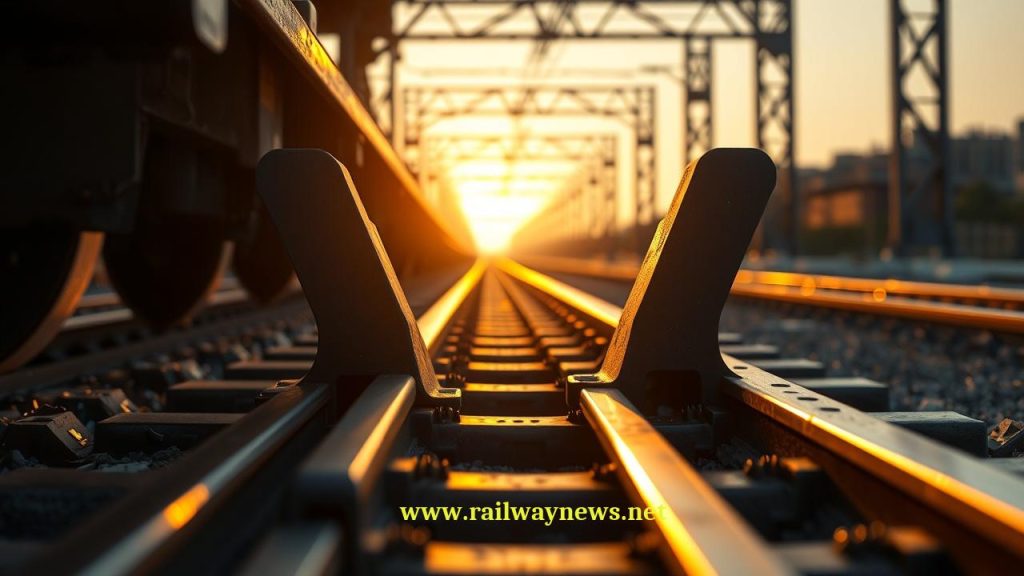
Understanding EN 13232-6: A Technical Guide to Fixed Common and Obtuse Crossings
EN 13232-6 is a European Standard that specifies the technical requirements and acceptance procedures for fixed common and obtuse crossings used in railway tracks. As a critical part of the EN 13232 series on “Railway applications – Track – Switches and crossings,” this standard establishes a unified framework for the design, manufacturing, and quality assurance of these essential track components, ensuring safety, reliability, and interoperability across European rail networks.
The primary focus of EN 13232-6 is to define the properties of new, unassembled fixed crossings, manufactured from various steel grades, most significantly austenitic manganese steel. It provides manufacturers and infrastructure managers with a clear set of rules covering everything from material properties and geometric tolerances to testing protocols.
Core Technical Concepts in EN 13232-6
The standard explores several key technical areas to ensure the performance and longevity of railway crossings. Understanding these concepts is vital for anyone involved in the specification, production, or maintenance of railway turnouts.
Defining Common and Obtuse Crossings
A fundamental aspect of the standard is its precise definition of the components it covers:
- Common Crossing (Frog): A common crossing is the component in a turnout or crossover that allows the wheel flange to pass through the intersection of two running rails. It consists of a “Vee” point (the nose) and two wing rails that guide the wheel through the un-supported gap. This is the most frequently encountered type of crossing.
- Obtuse Crossing (Diamond Crossing): An obtuse crossing is used where two tracks intersect each other, forming a diamond shape. It consists of two acute angle crossings and two obtuse angle crossings. EN 13232-6 specifically addresses the design and manufacture of the obtuse “K” crossing elements within this formation, which manage the complex wheel-rail interaction at non-diverging intersections.
Material and Manufacturing Requirements
The performance of a crossing is heavily dependent on the material used and the manufacturing process. The standard places significant emphasis on these aspects:
- Material Specification: The most common material specified for high-duty crossings is austenitic manganese steel (e.g., 1.3401 grade). This material is chosen for its exceptional work-hardening properties; under the repeated impact of wheel loads, its surface hardens significantly, increasing wear resistance while the core remains tough and resistant to fracture.
- Manufacturing Processes: EN 13232-6 covers crossings produced through various methods:
- Casting: Monoblock crossings are often cast from manganese steel, allowing for complex geometries and excellent structural integrity.
- Fabrication: Crossings can be fabricated by welding together precisely machined rail profiles. This is common for specific geometries or lower-traffic applications.
- Forging and Welding: Some components, like the crossing nose, may be forged for superior grain structure and then welded to rolled rail sections.
- Welding and Heat Treatment: The standard provides strict guidelines for welding procedures (to join manganese steel to carbon steel rails) and post-weld heat treatment to relieve residual stresses and ensure a durable, safe connection.
Geometrical and Dimensional Tolerances
Precision is paramount for a smooth and safe transition of rolling stock. EN 13232-6 defines a detailed set of acceptable deviations for all critical dimensions. These tolerances are crucial for preventing derailments, minimizing noise and vibration, and reducing wear on both the wheels and the track components.
- Flangeway Gaps: The width and depth of the flangeway (the channel that guides the wheel flange) must be within tight limits to ensure proper wheel guidance without excessive impact or the risk of a wheel “climbing” the rail.
- Running Surface Profile: The profile of the crossing’s running surface must match the adjoining rails precisely. The standard details requirements for vertical and lateral alignment to ensure a seamless transition.
- Crossing Angle (Tg α): The angle of the crossing must be manufactured to a high degree of accuracy to match the design of the turnout.
- Straightness and Flatness: The overall straightness of the wing rails and the flatness of the crossing’s base are specified to ensure correct installation and load distribution onto the sleepers.
Comparison Table: Common Crossing vs. Obtuse Crossing
While both are governed by EN 13232-6, their function and design challenges differ significantly. The following table highlights their key distinctions.
| Feature | Common Crossing (Frog) | Obtuse Crossing (K-Crossing) |
|---|---|---|
| Primary Function | Enables wheels to traverse the intersection point within a turnout where one track diverges from another. | Allows two tracks to cross over each other at a level junction (diamond crossing) without the option of diverging. |
| Geometric Configuration | A single intersection point formed by a “Vee” (nose) and two wing rails. | Two obtuse angle intersections, typically made of four separate rail pieces forming a “K” shape. |
| Typical Location | In all standard turnouts and crossovers. | In diamond crossings and complex station throat layouts where tracks must cross. |
| Key Design Challenge | Managing the high impact forces on the crossing nose and ensuring a smooth transfer over the un-supported gap. | Ensuring precise geometry and rigidity across four intersection points to prevent flange climb or excessive wear. |
| EN 13232-6 Focus | Nose profile integrity, wing rail geometry, flangeway gap control, and weld quality to connecting rails. | K-crossing point geometry, alignment of the four constituent parts, and overall structural stability. |
Acceptance and Testing Procedures
To verify compliance with the standard, every crossing must undergo a rigorous series of checks and tests before it can be accepted for installation. EN 13232-6 mandates a clear inspection and testing regime.
- Visual Inspection: A thorough examination for any surface defects such as cracks, porosity from casting, or imperfections in the welds.
- Dimensional Checks: Using calibrated gauges, templates, and coordinate measuring machines (CMM) to ensure all geometric parameters are within the specified tolerances. This is a mandatory factory acceptance test.
- Non-Destructive Testing (NDT): Critical areas, especially the crossing nose and welded zones, are subjected to NDT methods to detect internal flaws that are not visible on the surface. Common methods include:
- Ultrasonic Testing (UT): To find internal voids, cracks, or lack of fusion.
- Dye Penetrant Inspection (DPI): To reveal surface-breaking cracks.
- Magnetic Particle Inspection (MPI): For detecting surface and near-surface flaws in ferromagnetic materials.
- Hardness Testing: Performed to confirm that the material meets the required hardness specifications, particularly after any heat treatment, which is indicative of its wear-resistant properties.
The Role of EN 13232-6 in Modern Railways
EN 13232-6 serves as a cornerstone for quality and safety in railway infrastructure. By standardizing the requirements for fixed crossings, it provides a common technical language for manufacturers, railway operators, and regulatory bodies. This harmonization fosters a competitive market, guarantees a minimum level of performance and safety, and simplifies the procurement and maintenance processes for these highly stressed and safety-critical components of the railway track.

Railway infrastructure, rolling stock and transport technologies specialist focused on global rail industry developments, high-speed rail systems, signaling technologies and freight transportation. Covering railway investments, public transport modernization, rail operations and international mobility projects across Europe, Asia and North America.