
West Midlands: Five New Stations Complete, 2026 Launch Set
West Midlands stations reopening: Five new stations complete, restoring passenger rail after decades. Boosting economic growth and transforming communities with 2026 launch.
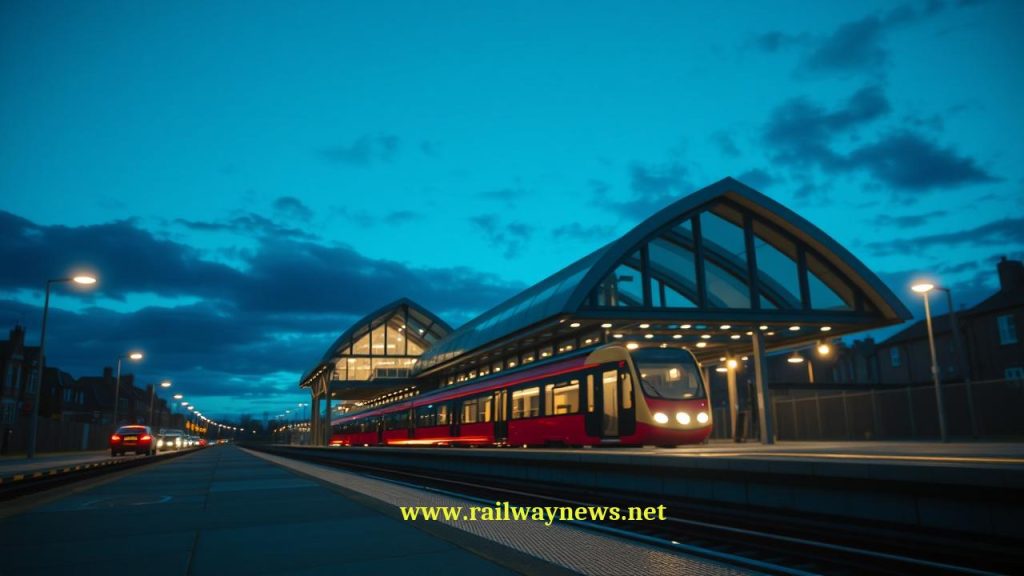
BIRMINGHAM, UK – Construction has concluded on five new railway stations across the West Midlands, marking a major milestone in a landmark regional transport project set to restore passenger services to communities disconnected for over 80 years. The completed infrastructure, a key pillar of the Mayor’s 2026 regional development strategy, now moves into a critical testing and commissioning phase ahead of a planned service launch in early 2026.
| Category | Details |
|---|---|
| Project Name | West Midlands Stations Reopening Programme |
| Locations | Camp Hill Line (3), Walsall-Wolverhampton Line (2) |
| Key Stakeholders | TfWM, WMRE, Network Rail, West Midlands Railway, DfT |
| Lead Contractors | VolkerFitzpatrick (Camp Hill), Kier (Walsall/Darlaston) |
| Current Status | Construction Complete; Testing & Commissioning Phase |
| Passenger Service Launch | Targeted for Early 2026 |
Transport for West Midlands (TfWM) and the West Midlands Rail Executive (WMRE) have announced the completion of building works for five new stations in south Birmingham and the Black Country. The project includes three stations on the Camp Hill Line—Moseley Village, Kings Heath, and Pineapple Road—and two stations between Walsall and Wolverhampton at Willenhall and Darlaston. West Midlands Mayor Richard Parker marked the occasion by unveiling a station name sign at the new Willenhall station, confirming his pre-election promise to finish construction by the end of the year. The stations are now being handed over to operator West Midlands Railway (WMR) to begin the complex process of safety checks, systems commissioning, and driver training.
The new infrastructure will reintroduce passenger rail to corridors that have been freight-only for decades. The Camp Hill Line stations, last served by passenger trains before the Second World War, will benefit from a half-hourly service running between Kings Norton and Birmingham New Street. Meanwhile, Willenhall and Darlaston stations, closed since the 1960s, will initially offer direct services connecting Wolverhampton and Birmingham. Discussions are ongoing with the Department for Transport (DfT) and Walsall Council regarding future service patterns, including a direct link into Walsall town centre. While the physical structures are complete, the sites will remain closed to the public until all operational and safety protocols are satisfied.
This project is a cornerstone of the Mayor’s wider strategic vision for the West Midlands, which prioritises integrated transport, housing delivery, and investment in advanced manufacturing for 2026. By reconnecting these long-isolated communities, the new rail links are designed to act as a catalyst for economic growth, supporting investment in new homes and businesses. Mayor Parker stated the new services will “change everyday life” by simplifying commutes and boosting footfall for local town centres. The successful delivery, in partnership with Network Rail, WMR, and local councils, is being positioned as a tangible outcome of the region’s devolved transport powers and long-term investment strategy.
Key Takeaways
- Construction Complete: Five new stations across two lines in the West Midlands are now structurally complete and ready for the operational testing phase.
- Historic Reconnection: The project restores passenger services to the Camp Hill Line for the first time since WWII and to the Walsall-Wolverhampton corridor for the first time since the 1960s.
- Economic Catalyst: The new transport links are integral to the region’s 2026 economic plan, aimed at stimulating housing development, business investment, and local regeneration.
Editor’s Analysis
The completion of these five West Midlands stations represents more than just new infrastructure; it is a powerful example of the UK’s growing focus on reversing the Beeching-era cuts and using targeted rail investment as a tool for “levelling up.” By reconnecting suburbs and towns that have been underserved for generations, regional authorities like TfWM are demonstrating that strategic, localised transport projects can deliver significant socio-economic benefits. This model, which blends transport connectivity with housing and employment strategies, serves as a crucial case study for other metropolitan areas in the UK and beyond. The global rail industry will be watching closely to see how quickly these new stations translate into the promised economic uplift and whether the operational launch in 2026 proceeds on schedule, setting a benchmark for similar regeneration-led rail schemes.
Frequently Asked Questions
- Which new stations have been built in the West Midlands?
- Five new stations have been built: Moseley Village, Kings Heath, and Pineapple Road on the Camp Hill Line in south Birmingham, and Willenhall and Darlaston on the line between Walsall and Wolverhampton.
- When will the new stations open for passenger services?
- Following the completion of construction, the stations will undergo a period of testing, commissioning, and staff training. Passenger services are expected to begin in early 2026.
- What train services will be available from the new stations?
- The Camp Hill Line stations will have a half-hourly service between Birmingham New Street and Kings Norton. The Willenhall and Darlaston stations will initially have services connecting Wolverhampton and Birmingham, with other service options under review.

Railway infrastructure, rolling stock and transport technologies specialist focused on global rail industry developments, high-speed rail systems, signaling technologies and freight transportation. Covering railway investments, public transport modernization, rail operations and international mobility projects across Europe, Asia and North America.
RELATED POSTS

October 1, 2026 7:09 am
United States regulators confirmed a September 30 deadline for the...

October 8, 2026 1:15 pm
Alstom secured a €1bn contract to build 13 automated trains,...

October 4, 2026 5:14 pm
Alstom secured a CA$4.7 billion order from VIA Rail Canada...

October 1, 2026 12:13 am
Illinois approved $1.5 billion annually for the Northern Illinois Transit...

October 6, 2026 2:14 am
Union Pacific launched export rail shipments with Ferromex to deliver...

October 1, 2026 6:10 am
Amtrak approved a System Expansion Committee on July 30 to...