
Wabtec’s Green Friction: Revolutionizing Rail Sustainability
Wabtec’s Green Friction braking solution, featuring innovative material science and rigorous field testing, significantly reduces particulate matter emissions from railway brakes, offering a substantial environmental improvement in urban rail operations.
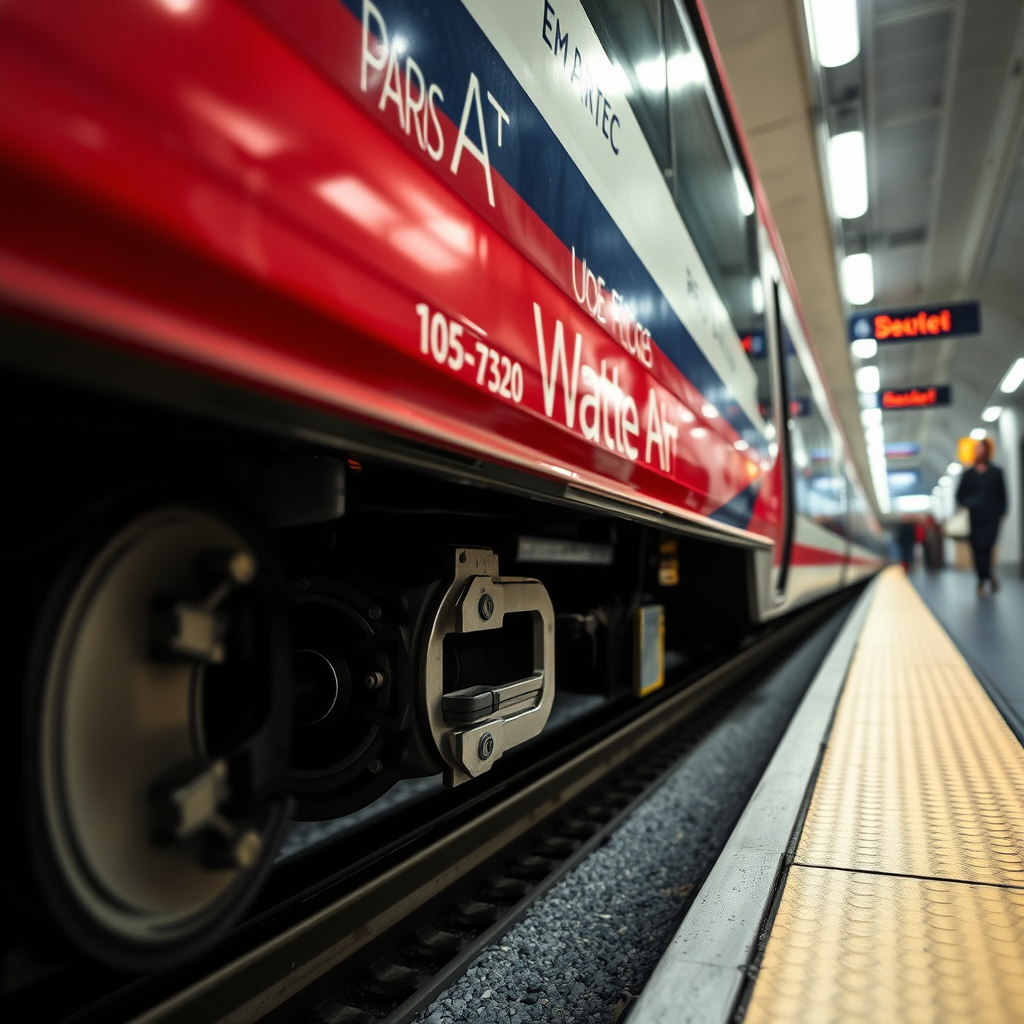
The global railway industry is under increasing pressure to reduce its environmental impact. Particulate matter (PM) emissions from train brakes, particularly problematic in confined spaces like tunnels and urban metro systems, represent a significant contributor to air pollution and public health concerns. This article explores Wabtec’s innovative “Green Friction” braking solution, its successful deployment on the Paris RER A line, and its potential to transform railway sustainability worldwide. We will delve into the technology behind this breakthrough, its performance data, and its implications for the future of environmentally responsible railway operations. The analysis will cover the technology’s impact, its testing, and the potential for widespread adoption, focusing on the benefits of reduced emissions and improved air quality in urban rail environments. The article will also consider the broader context of sustainable railway practices and the role of technological innovation in achieving ambitious environmental goals.
Technological Advancements in Green Friction Braking
Wabtec’s Green Friction braking system represents a significant leap forward in reducing PM emissions from railway braking systems. Unlike traditional brake lining materials, which generate substantial particulate matter during braking, Green Friction utilizes a unique formulation of materials designed to minimize PM generation. This innovative composition allows for effective braking performance while significantly reducing the release of harmful pollutants into the atmosphere. The core of the technology lies in the advanced material science employed in creating the brake lining. The precise composition of this material is proprietary, but it’s understood that it focuses on reducing friction-induced particle formation and release.
Rigorous Testing and Validation
The effectiveness of the Green Friction braking system has been rigorously validated through extensive field testing. Wabtec partnered with RATP (Régie Autonome des Transports Parisiens) and Île-de-France Mobilités to conduct over one million kilometers of testing on the RER A line’s MI09 trains. These trials provided substantial real-world data demonstrating a remarkable reduction in PM emissions. The results indicated an average emission reduction of 70%, with peak reductions reaching as high as 90%. This rigorous testing process underscores Wabtec’s commitment to delivering a proven, reliable, and environmentally superior solution.
Commercial Deployment and Global Impact
The successful completion of the testing phase has led to the commercial deployment of Green Friction on the RER A line in Paris, marking a significant milestone for the technology. This deployment provides valuable real-world operational experience, further validating the technology’s performance and reliability under diverse conditions. Beyond Paris, Wabtec has already received significant interest in Green Friction from other metro systems in France and various unnamed countries across Europe and Asia, highlighting the global demand for sustainable railway solutions.
Conclusion: A Pathway to Cleaner, Greener Railways
Wabtec’s Green Friction braking solution represents a significant contribution to the railway industry’s pursuit of environmental sustainability. The technology’s proven ability to significantly reduce PM emissions, coupled with its successful commercial deployment on the Paris RER A line, demonstrates its effectiveness and market viability. The extensive testing program, involving over one million kilometers of real-world operation, has validated the technology’s performance, establishing its capacity to achieve emission reductions of up to 90%. The widespread adoption of Green Friction could dramatically improve air quality in urban areas served by rail networks, particularly within tunnels and stations where PM concentrations are often high. This success not only showcases a technological advancement but also underscores the potential for collaborative efforts between manufacturers, transit authorities, and regulatory bodies in driving the adoption of greener railway technologies. The positive reception from other metro systems worldwide reinforces the expectation that Green Friction will become a pivotal technology in achieving global railway sustainability goals and promoting healthier urban environments. This successful implementation sets a crucial precedent, demonstrating the feasibility and benefits of integrating environmentally friendly braking systems into existing and new rail infrastructure. Future research and development should focus on further optimizing the technology, potentially exploring even more eco-friendly materials and expanding the range of applications to various types of rolling stock and track conditions to maximize the environmental benefits globally.

Railway infrastructure, rolling stock and transport technologies specialist focused on global rail industry developments, high-speed rail systems, signaling technologies and freight transportation. Covering railway investments, public transport modernization, rail operations and international mobility projects across Europe, Asia and North America.
RELATED POSTS

October 1, 2026 7:09 am
United States regulators confirmed a September 30 deadline for the...

October 8, 2026 1:15 pm
Alstom secured a €1bn contract to build 13 automated trains,...

October 4, 2026 5:14 pm
Alstom secured a CA$4.7 billion order from VIA Rail Canada...

October 8, 2026 12:18 pm
Siemens Mobility signed an agreement with VinSpeed to supply 350...

October 5, 2026 6:12 pm
AECOM and Jacobs secured a contract in September 2026 to...

October 4, 2026 11:08 pm
Sound Transit confirmed the September 30 opening of Seattle Pinehurst...