
USDOT Opens $626.7M INFRA Grant for Freight Rail
USDOT opened a $626.7 million INFRA grant with priority for freight-rail projects exceeding $150 million in total cost, applications due July 1 and 15, 2026.
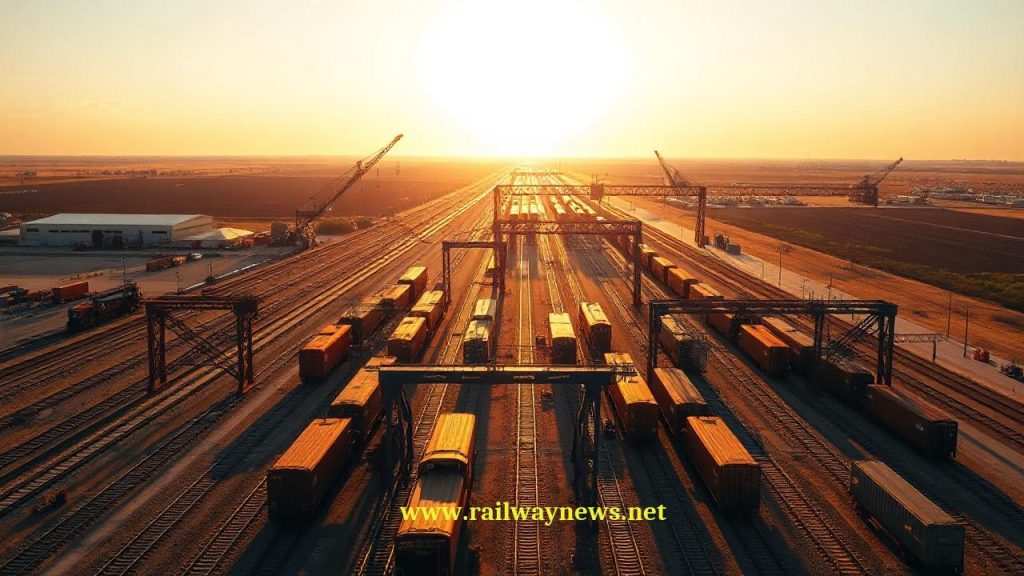
⚡ In Brief: The U.S. Department of Transportation opened $626.7 million in INFRA grant funding for large-scale transportation projects, with freight-rail upgrades eligible and applications due by July 1 and 15, 2026.
WASHINGTON, D.C. – The U.S. Department of Transportation (USDOT) released a $626.7 million grant solicitation in June 2026 under the Nationally Significant Multimodal Freight and Highway (INFRA) program. Priority goes to projects with total costs above $150 million, and the solicitation is split into two tracks: one using fiscal 2023 and 2024 funds for surface transportation, the other using fiscal 2026 funds for commercial motor vehicle parking projects.
How Is the Funding Structured?
The $626.7 million total is drawn from three fiscal years. Track 1 utilizes FY23 and FY24 money for surface transportation projects such as highway, bridge, port, and freight-rail upgrades. Track 2 allocates a portion of FY26 money exclusively for commercial motor vehicle parking projects. Applications for the first track are due July 1, 2026; the parking-focused track closes July 15, 2026. No breakdown of the total between the two tracks was announced.
Key Funding Data
| Parameter | Value |
|---|---|
| Fund / Programme Name | Nationally Significant Multimodal Freight and Highway (INFRA) Projects program |
| Total Value | $626.7 million |
| Parties Involved | USDOT; eligible applicants include state and local governments, port authorities, and other public-sector entities |
| Timeline / Completion | Applications due July 1, 2026 (Track 1) and July 15, 2026 (Track 2); award announcement date not disclosed |
| Country / Corridor | United States |
How Does This Compare to Similar Funding Programs?
The $626.7 million available in this cycle is smaller than the $1.55 billion in INFRA grants awarded for 26 projects during fiscal year 2022 (Source: U.S. DOT, 2022). This round also introduces a dedicated track for commercial motor vehicle parking, a category that had not been separated in previous INFRA solicitations. While the overall program retains its core focus on large-scale multimodal freight corridors, the addition of a parking-only track reflects a shift toward addressing supply chain labor pinch points, such as truck driver rest-area shortages, that have gained prominence since the pandemic-era freight disruptions.
Editor’s Analysis
The infusion coincides with a period of broad freight strength on U.S. rails. In May 2026, the Association of American Railroads reported that carload and intermodal volumes posted strong gains, with growth spreading across agriculture, chemicals, industrial products, and consumer-related intermodal traffic — a sign of resilient underlying economic activity. Directing INFRA dollars toward projects that exceed $150 million in total cost suggests a federal strategy to target bottleneck infrastructure that can support this growing volume, rather than spreading funds thinly across smaller-scale fixes. However, the split into two tracks and the inclusion of commercial-motor-vehicle parking may indicate that USDOT is also responding to persistent trucking-sector constraints, a dimension not typically addressed in legacy freight-rail grant rounds.
FAQ
Q: What types of freight-rail projects are eligible for INFRA grants?
A: USDOT lists intermodal facility upgrades, transloading terminal improvements, grade-crossing safety projects, and port-related rail infrastructure as eligible. Projects must generally have a total cost of at least $150 million to qualify for the large-project track.
Q: When will grant winners be announced?
A: No award announcement date has been disclosed. The first application deadline is July 1, 2026, for surface transportation projects; the parking-project deadline is July 15, 2026. Past INFRA rounds typically announce awards several months after the solicitation closes.
Q: How does INFRA differ from other federal rail grant programs?
A: Unlike the Consolidated Rail Infrastructure and Safety Improvements (CRISI) program, which funds a broader range of safety and smaller-capacity projects, INFRA rewards nationally significant multimodal projects with high individual project costs. The $150 million minimum project-size threshold is a defining feature not present in most other rail grant offerings.
Note: The modal split of this funding — what portion is directed to freight-rail versus highway or port projects — was not disclosed at the time of announcement.

Railway infrastructure, rolling stock and transport technologies specialist focused on global rail industry developments, high-speed rail systems, signaling technologies and freight transportation. Covering railway investments, public transport modernization, rail operations and international mobility projects across Europe, Asia and North America.
RELATED POSTS

October 1, 2026 7:09 am
United States regulators confirmed a September 30 deadline for the...

October 1, 2026 12:13 am
Illinois approved $1.5 billion annually for the Northern Illinois Transit...

October 1, 2026 6:10 am
Amtrak approved a System Expansion Committee on July 30 to...
October 1, 2026 4:10 am
DART launched two public ridership dashboards in March 2026 to...
October 1, 2026 3:12 am
Greenbrier confirmed Brian Comstock as new president and CEO effective...

October 1, 2026 5:14 am
Siemens confirmed delivery of the first new S200 train to...