
USA: Hudson River Tunnel TBMs Ready, 2026 Boring Starts
Hudson River Tunnel’s TBMs pass factory tests, a major step for the Gateway Program. Tunneling starts Spring 2026, doubling rail capacity on the Northeast Corridor.
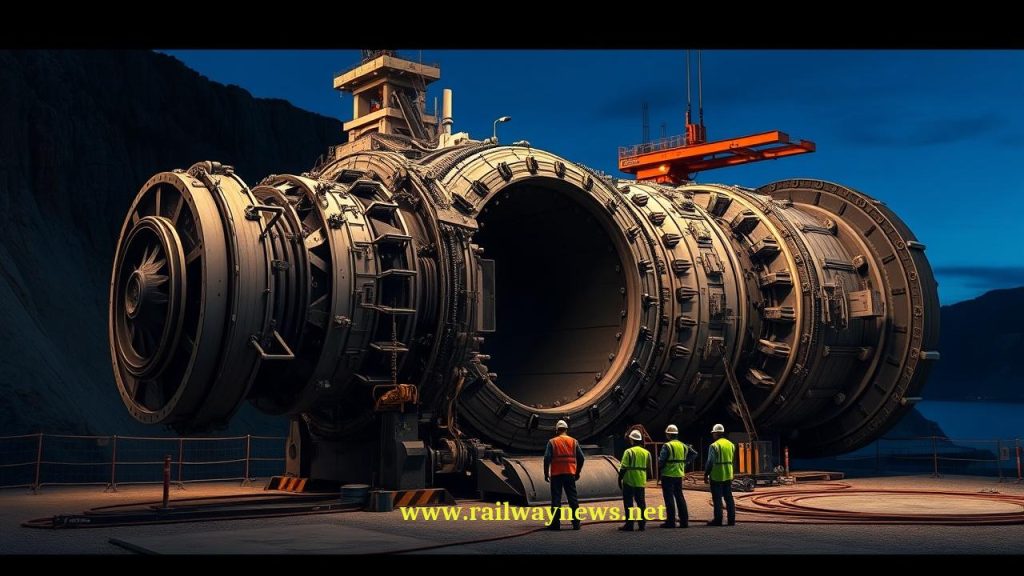
NEW YORK, USA – The critical Hudson River Tunnel project has achieved a major construction milestone, with officials confirming the successful completion of factory testing for its first two custom-built Tunnel Boring Machines (TBMs). This development signals tangible progress for the cornerstone of the Gateway Program, which aims to double rail capacity in the most congested section of the vital Northeast Corridor, serving 450 trains daily.
| Category | Details |
|---|---|
| Project Component | Hudson River Tunnel (Part of the Gateway Program) |
| Key Milestone | Factory testing completed for first two Tunnel Boring Machines (TBMs) |
| Announcement Date | December 15 |
| Project Scope | New two-tube rail tunnel, 9 miles of new track, rehabilitation of existing 1910 North River Tunnel |
| TBM Boring Rate | Approximately 30 feet (9.1 meters) per day, per machine |
| Tunneling Commencement | Spring 2026 |
Main Body:
In a significant step forward for one of North America’s most ambitious infrastructure projects, the Gateway Development Commission (GDC) announced on December 15 that the first two TBMs destined for the Hudson River Tunnel have passed all factory acceptance tests. The massive, custom-engineered machines will now be dismantled and shipped from the factory to North Bergen, New Jersey. Crews are preparing a site at the base of the Palisades where the components, the first of which will arrive in January, will be reassembled ahead of the official launch.
The two TBMs are engineered to execute a complex and precise task. They will excavate approximately one mile of parallel tunnels on the New Jersey side, digging through challenging geological conditions beneath the Palisades. As the machines advance at a planned rate of 30 feet per day, they will simultaneously install a robust, precast concrete tunnel lining, creating the permanent structure of the new tunnel. This integrated process is crucial for ensuring stability and expediting the construction timeline for the nearly 5-mile sub-river crossing.
The project addresses a critical vulnerability in the U.S. rail network. The existing North River Tunnel, built in 1910, is a source of constant delays and carries 450 Amtrak and New Jersey Transit trains daily through the Northeast Corridor’s most severe bottleneck. Upon completion, the new tunnel will allow for the full rehabilitation of the old tubes without a catastrophic service shutdown, ultimately creating a modern, resilient four-track system between New York and New Jersey. The project’s national importance is underscored by its visibility at the highest political levels, with leaders including New York Governor Kathy Hochul citing the new rail tunnel as a key regional priority in top-level discussions.
Key Takeaways
- Construction Readiness: With TBMs tested and approved, the project moves from planning to the physical construction phase, with components arriving in January.
- Capacity Expansion: The project will double track capacity under the Hudson River, alleviating a chokepoint that impacts the entire Northeast Corridor.
- Firm Timeline: The GDC has confirmed that the highly anticipated tunnel boring operations are on schedule to begin in the spring of 2026.
Editor’s Analysis
The successful testing of the Hudson Tunnel TBMs is more than a project update; it’s a litmus test for the ability of the United States to execute complex, multi-billion-dollar “megaprojects.” For the global rail market, this milestone demonstrates a commitment to modernizing century-old infrastructure, a challenge faced by many developed economies. International suppliers of tunneling technology, rolling stock, and signaling systems will be watching closely, as the Gateway Program’s progress could unlock a new era of investment in legacy rail corridors across North America. This project serves as a crucial case study in inter-agency cooperation and advanced engineering to solve a generational infrastructure problem.
Frequently Asked Questions
- What is the Hudson River Tunnel project?
- It is a major infrastructure project to build a new two-track rail tunnel under the Hudson River between New Jersey and New York and to fully rehabilitate the existing 114-year-old North River Tunnel. The goal is to improve reliability and double rail capacity in the busiest section of the Northeast Corridor.
- When will the new tunnel boring begin?
- The Gateway Development Commission has stated that tunnel boring operations are scheduled to commence in the spring of 2026, following the assembly of the TBMs in New Jersey.
- How will this project improve rail travel?
- By creating a four-track system, the project will significantly increase capacity and reliability for the 450 Amtrak and NJ Transit trains that use the crossing daily. It will eliminate the current two-track bottleneck, reduce delays, and allow for detailed repairs to the old tunnel without major service disruptions.

Railway infrastructure, rolling stock and transport technologies specialist focused on global rail industry developments, high-speed rail systems, signaling technologies and freight transportation. Covering railway investments, public transport modernization, rail operations and international mobility projects across Europe, Asia and North America.
RELATED POSTS

October 1, 2026 7:09 am
United States regulators confirmed a September 30 deadline for the...

October 8, 2026 1:15 pm
Alstom secured a €1bn contract to build 13 automated trains,...

October 4, 2026 5:14 pm
Alstom secured a CA$4.7 billion order from VIA Rail Canada...

October 1, 2026 12:13 am
Illinois approved $1.5 billion annually for the Northern Illinois Transit...

October 6, 2026 2:14 am
Union Pacific launched export rail shipments with Ferromex to deliver...

October 1, 2026 6:10 am
Amtrak approved a System Expansion Committee on July 30 to...