
US-China Tariff Truce: A 90-Day Gamble
Geneva’s announcement of a 90-day pause on escalated tariffs between the United States and China offers temporary respite to global markets and industries reliant on international commerce, signaling a potential shift away from protectionist measures that have characterized recent trade policy.
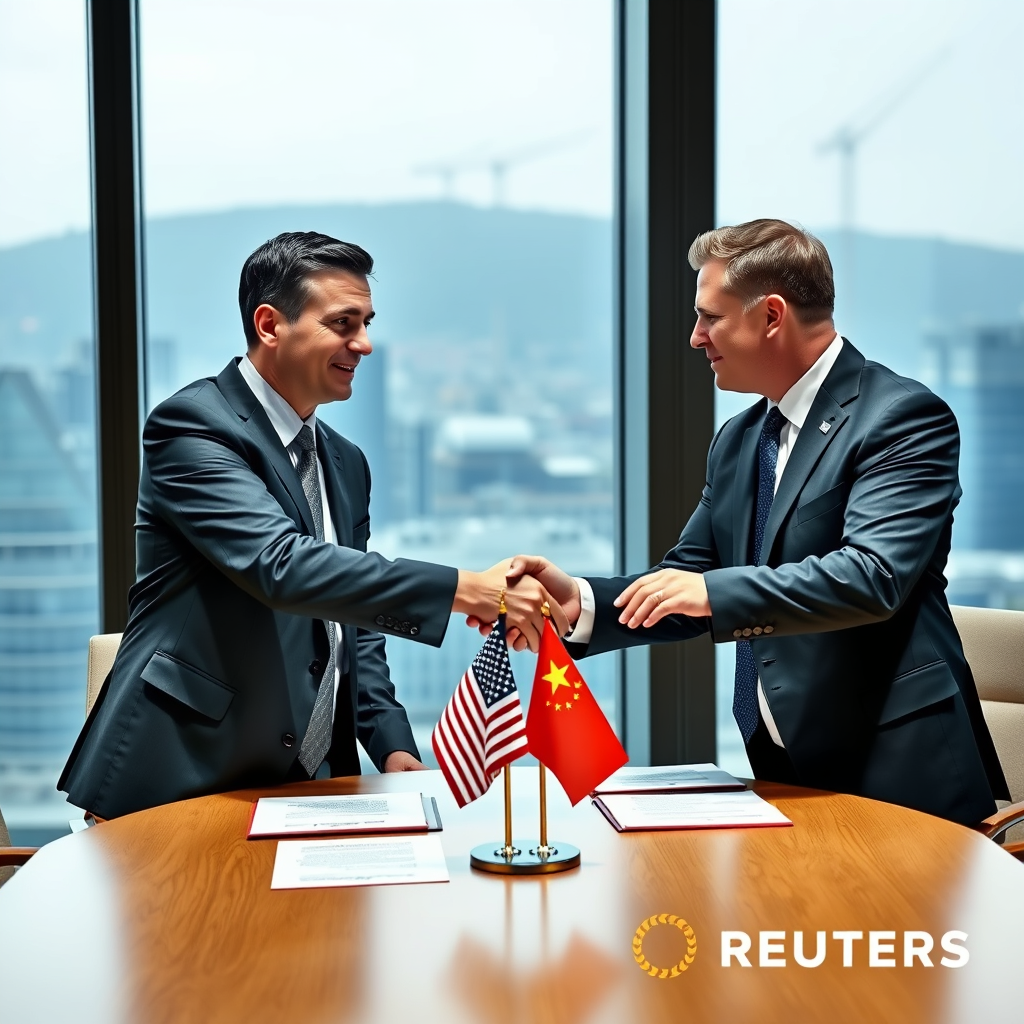
Geneva, Switzerland – May 12, 2025
A significant, albeit temporary, de-escalation in the protracted trade dispute between the United States (US) and China has been announced, offering a tentative sigh of relief to global markets and industries reliant on international commerce. Following two days of intense closed-door negotiations in Geneva, top officials from both nations unveiled a 90-day pause on recently escalated tariffs. This development, detailed by US Treasury Secretary Scott Bessent and US Trade Representative Jamieson Greer, signals a potential pivot from the spiralling protectionist measures that have characterized recent trade policy. While the immediate market reaction has been positive, the underlying complexities and the administration’s broader tariff agenda suggest a period of continued unpredictability. This article will delve into the specifics of this tariff truce, the economic philosophies underpinning such trade interventions, the broader context of deglobalization, and the profound implications for industries navigating this shifting geopolitical and economic landscape, including those within the railway sector which depend heavily on stable global supply chains and trade flows.
A Fragile Truce: Details of the Tariff De-escalation
The agreement, effective May 14, represents a notable, if temporary, pullback from the brink. The US will reduce tariffs on specified Chinese goods from 145% down to 30%, a significant 115 percentage point (pp) decrease. Concurrently, China will lower its tariffs on certain US goods from 125% to 10%. This mutual reduction has been hailed as “substantial progress” and was accompanied by a joint statement acknowledging “the importance of their bilateral economic and trade relationship to both countries and the global economy.” Crucially, the statement also confirmed the establishment of a mechanism for ongoing discussions regarding economic and trade relations, suggesting a potential pathway, however tenuous, towards a more stable long-term arrangement. The immediate impact was a discernible uptick in global stock prices, reflecting cautious optimism from investors who have been wary of the escalating trade tensions. However, the 90-day timeframe underscores the provisional nature of this détente, leaving businesses in a state of watchful anticipation rather than assured relief.
The Economic Rationale and Risks of Tariff Strategies
The imposition of tariffs, particularly the sweeping agenda pursued by the current US administration following Donald Trump’s return to office, is rooted in several stated objectives. These include addressing perceived “unfair” trade deficits, significantly the $295.4bn deficit with China in 2024, generating revenue for domestic tax reductions, and incentivizing the onshoring of industrial production to the US. Steve Blitz, chief US economist at TS Lombard, offers a microeconomic perspective, suggesting an “optimal tariff price” exists. He argues that tariffs are not necessarily intended to halt trade entirely but to make sourcing from specific countries more expensive, thereby theoretically boosting domestic production or enhancing the competitiveness of US exporters globally. He also notes that tariffs can serve as a revenue stream for the government. However, this approach is not without significant risks. The “tit-for-tat” escalation seen prior to this pause can disrupt established supply chains, increase costs for manufacturers and consumers, and potentially stifle economic growth, impacting sectors like railway manufacturing which rely on global sourcing for components and raw materials.
Deglobalization, Geopolitical Stresses, and Fragmenting Trade Blocs
The current tariff volatility is occurring within a broader global shift away from the era of largely unfettered free trade. Peter Swartz, chief science officer at supply chain insights company Altana, characterized the situation as “a very intense moment of deglobalization,” a trend he notes has been developing for over a decade, accelerated by geopolitical stresses, events like the COVID-19 pandemic, and now, aggressive protectionist policies. This evolving landscape points towards a more “multipolar world” where global trade may fragment into distinct economic blocs with potentially competing standards and regulations. This shift necessitates a fundamental re-evaluation of global supply chain strategies for many industries. For the railway sector, this could mean diversifying sourcing for critical components like signaling systems, bogies, or specialized steel, and adapting to a more complex regulatory environment across different emerging trade zones. The era of “easy, frictionless supply chains,” as noted by analysts, appears to be receding, replaced by a new paradigm demanding greater resilience and adaptability.
Navigating an Unpredictable Horizon
Despite the current pause, the path forward remains fraught with uncertainty, largely due to the unpredictable nature of the political leadership driving these tariff policies. As Blitz from TS Lombard candidly remarked, “You’re dealing with somebody who gets bored and moves to the next thing…to think that everything’s going to settle down and now iterate through a solution without any further histrionics or changes is probably wrong.” This sentiment underscores the challenge for businesses in making long-term investment and operational decisions. Industries like railway development, which involve long project lead times and significant capital expenditure, are particularly vulnerable to such policy volatility. The White House statement framing the agreement as “a historic trade win” aimed at rectifying “unfair trade practices” and revitalizing American manufacturing indicates a continued firm stance. Businesses must therefore prepare for a period where strategic agility, robust risk assessment, and scenario planning become paramount to navigate a landscape where trade rules can shift with little warning, potentially impacting everything from the cost of imported railcars to the economic viability of freight corridors.
Conclusions: A Temporary Reprieve in a Shifting Global Order
The 90-day tariff reduction agreement between the US and China offers a much-needed, albeit temporary, respite from an escalating trade war that has cast a long shadow over the global economy. This pause, reducing punitive tariffs significantly, has been met with cautious optimism in financial markets and provides a window for further negotiation. However, it is crucial to contextualize this development within the broader policy aims of the US administration, which include addressing trade imbalances, encouraging domestic manufacturing, and generating revenue through tariffs. These underlying objectives suggest that the path towards a stable, long-term trade relationship remains complex and uncertain.
Additionally, this specific bilateral tension is symptomatic of a larger, more profound shift in global economic dynamics – a move away from hyper-globalization towards a more fragmented, potentially bloc-based world order. Factors such as geopolitical stresses, the lessons learned from the COVID-19 pandemic’s impact on supply chains, and a rising tide of economic nationalism are contributing to this reconfiguration. For industries deeply embedded in global value chains, such as the railway sector which relies on international sourcing for everything from raw materials like steel to sophisticated electronic components for signaling and rolling stock, this era demands a new level of strategic foresight. The cost and availability of essential goods, the viability of international freight routes, and investment decisions in infrastructure and technology are all susceptible to these macroeconomic currents. While the current tariff pause might be a “sweet spot,” as one analyst termed it, businesses must remain vigilant, agile, and prepared for continued unpredictability. The focus must be on building resilience, diversifying supply networks where feasible, and closely monitoring the geopolitical landscape to navigate the complexities of this evolving global trade environment. The era of “easy” global trade appears to be definitively over, replaced by a period demanding sophisticated risk management and adaptive strategies.
Company Summaries:
- TS Lombard: An independent investment research firm providing global macroeconomic, political, and thematic research and analysis to institutional investors.
- Altana: A company specializing in supply chain insights, likely using data analytics and artificial intelligence to provide visibility and understanding of complex global supply networks.
- GlobalData: A data analytics and consulting company, mentioned as the parent company of Investment Monitor (the original source of some insights in the base article). It provides business intelligence across various industries.

Railway infrastructure, rolling stock and transport technologies specialist focused on global rail industry developments, high-speed rail systems, signaling technologies and freight transportation. Covering railway investments, public transport modernization, rail operations and international mobility projects across Europe, Asia and North America.
RELATED POSTS

October 8, 2026 1:15 pm
Alstom secured a €1bn contract to build 13 automated trains,...

October 1, 2026 7:09 am
United States regulators confirmed a September 30 deadline for the...

October 4, 2026 5:14 pm
Alstom secured a CA$4.7 billion order from VIA Rail Canada...

October 8, 2026 12:18 pm
Siemens Mobility signed an agreement with VinSpeed to supply 350...

October 1, 2026 12:13 am
Illinois approved $1.5 billion annually for the Northern Illinois Transit...

October 1, 2026 6:10 am
Amtrak approved a System Expansion Committee on July 30 to...