
UP & NS Merger: Class I Railroads Unite in Opposition
Union Pacific and Norfolk Southern’s merger faces unified opposition, alleging an incomplete application. Increased rail traffic and safety concerns are at stake.
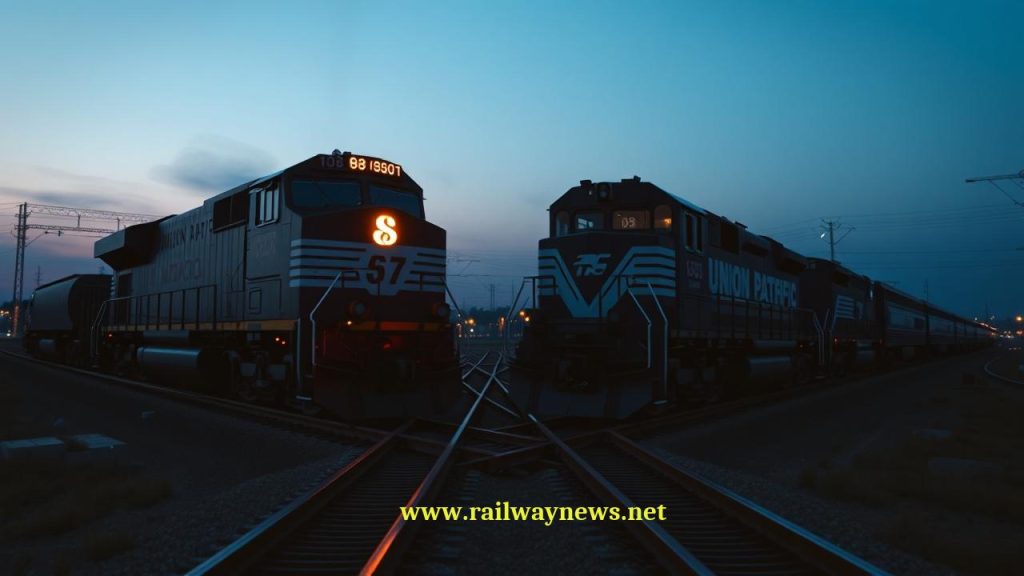
WASHINGTON D.C. – The proposed mega-merger between Union Pacific Railroad (UP) and Norfolk Southern Railway (NS) is facing a formidable wall of opposition from the entire Class I railroad industry, with competitors arguing the application is incomplete and should be dismissed. As the two rail giants defend their proposal, concerns are mounting over potential impacts on community rail corridors, such as in Chesterton, Indiana, which already handles an average of 85 trains daily.
| Category | Details |
|---|---|
| Proposed Merger | Union Pacific Railroad (UP) and Norfolk Southern Railway (NS) |
| Opposing Parties | BNSF Railway, Canadian Pacific Kansas City (CPKC), CN, and CSX |
| Core Contention | Opponents allege the merger application is fundamentally incomplete and should be rejected by regulators. |
| Potential Community Impact | Increased rail traffic in towns like Chesterton, IN, which already has 85 trains/day across 11 crossings. |
| Relevant Industry Context | A recent CSX derailment in Kentucky causing a chemical leak underscores operational and safety scrutiny. |
Main Body:
In a significant challenge to what would be a transformative consolidation in the North American rail landscape, Union Pacific and Norfolk Southern’s merger application has been met with unified resistance. The four other Class I carriers—BNSF Railway, Canadian Pacific Kansas City (CPKC), CN, and CSX—have formally requested that regulators reject the filing. Their collective argument centers on the assertion that the application, as submitted, lacks critical information and fails to meet the necessary completeness requirements for a thorough review. In response, UP and NS have filed a detailed rebuttal, defending the integrity of their application and urging regulators to proceed with the review process.
The potential operational consequences of the merger are already drawing scrutiny at the local level. In Chesterton, Indiana, a town bisected by a major rail corridor, the prospect of increased freight volume is a significant concern. The town currently manages an average of 85 trains per day along its 1.14-mile rail corridor, which includes nine pedestrian crossings. Local officials note that even prior to a formal merger, Union Pacific trains have been observed utilizing Norfolk Southern tracks, suggesting that any integration would inevitably lead to higher traffic density. This scenario highlights the tangible community impacts—from traffic delays to safety considerations—that will be a key focus for the Surface Transportation Board (STB).
This regulatory battle is unfolding against a backdrop of heightened public and governmental focus on railroad safety and operational reliability. A recent incident involving one of the merger’s opponents, CSX, serves as a stark reminder of the stakes. A CSX train derailment in rural Kentucky resulted in shipment delays and a chemical leak of molten sulfur, which subsequently sparked a fire. While no injuries were reported, the event underscores the inherent risks in rail transport and will likely lead to intensified scrutiny of any operational plans proposed by UP and NS that involve rerouting traffic or increasing train frequency on specific lines.
Key Takeaways
- The UP-NS merger is unanimously opposed by all other Class I railroads, creating a significant hurdle for regulatory approval.
- If approved, the merger is expected to significantly increase train density on key routes, raising concerns for communities like Chesterton, Indiana.
- Heightened focus on rail safety, amplified by recent incidents like the CSX derailment in Kentucky, will place the applicants’ operational and safety plans under a microscope.
Editor’s Analysis
The coordinated opposition from BNSF, CPKC, CN, and CSX is more than a simple procedural challenge; it’s a strategic move to either derail the merger entirely or force significant concessions that would preserve their competitive access and service routes. Regulators at the STB are now tasked with weighing the applicants’ claims of improved efficiency against the competitors’ warnings of a less competitive market and the public’s concerns about safety and community disruption. In today’s climate, any major rail merger proposal will be judged not just on its economic merits, but on its commitment to operational resilience and public safety. The outcome of this filing will not only determine the future of UP and NS but could redefine the competitive dynamics of the entire North American rail network for decades to come.
Frequently Asked Questions
- Which railroads are opposing the Union Pacific and Norfolk Southern merger?
- The merger is being formally challenged by the four other Class I railroads: BNSF Railway, Canadian Pacific Kansas City (CPKC), CN, and CSX.
- What is the primary argument against the merger application?
- The opposing railroads contend that the application submitted by Union Pacific and Norfolk Southern is incomplete and lacks the necessary detail for a proper regulatory review, and therefore should be rejected.
- How could the proposed merger affect local communities?
- The merger could lead to a significant increase in train traffic and congestion in towns along major rail corridors. For example, Chesterton, Indiana, which already sees an average of 85 trains daily, could experience even higher volumes, impacting traffic flow and safety at its 11 railroad crossings.

Railway infrastructure, rolling stock and transport technologies specialist focused on global rail industry developments, high-speed rail systems, signaling technologies and freight transportation. Covering railway investments, public transport modernization, rail operations and international mobility projects across Europe, Asia and North America.
RELATED POSTS

October 1, 2026 7:09 am
United States regulators confirmed a September 30 deadline for the...

October 8, 2026 1:15 pm
Alstom secured a €1bn contract to build 13 automated trains,...

October 4, 2026 5:14 pm
Alstom secured a CA$4.7 billion order from VIA Rail Canada...

October 1, 2026 12:13 am
Illinois approved $1.5 billion annually for the Northern Illinois Transit...

October 6, 2026 2:14 am
Union Pacific launched export rail shipments with Ferromex to deliver...

October 1, 2026 6:10 am
Amtrak approved a System Expansion Committee on July 30 to...