
Union Pacific Secures 6-Mile Industrial Rail Line Approval Mesa
Union Pacific secured approval to construct and operate a 6-mile industrial rail line in Mesa, Arizona, for Commercial Metals Co.
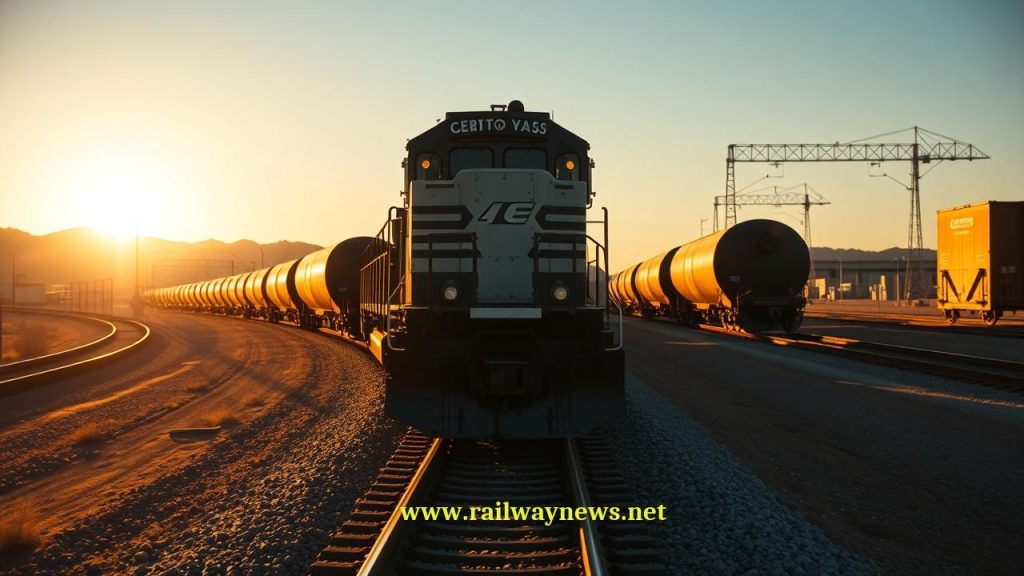
⚡ In Brief: The U.S. Surface Transportation Board has authorized Union Pacific to construct and operate a 6-mile industrial rail line in Mesa, Arizona, to provide service for Commercial Metals Co. following a multi-year environmental and historical review.
MESA, USA – The Surface Transportation Board (STB) has officially approved Union Pacific Railroad’s (UP) petition to build a new 6-mile rail line. The project will connect the Pecos advanced manufacturing zone to the UP main line. The primary customer for the new line is Commercial Metals Co.
What Is the Full Scope of This Project?
The project entails the construction and operation of a 6-mile rail line to serve the Pecos Industrial rail access and train extension project in Mesa, Arizona. While initially serving the Commercial Metals Co. facility, the STB decision notes the line is intended to accommodate future shippers within the manufacturing zone. The approval follows a protracted review process, which was delayed after a 2023 draft environmental assessment found that significant damage to National Register of Historic Places-eligible archaeological resources had already occurred in the right-of-way.
Key Project Data
| Parameter | Value |
|---|---|
| Project / Contract Name | Pecos Industrial Rail Access and Train Extension Project |
| Total Value | Not disclosed |
| Parties Involved | Union Pacific Railroad, Commercial Metals Co., Surface Transportation Board |
| Timeline / Completion | Not disclosed |
| Country / Corridor | USA / Mesa, Arizona |
How Does This Compare to Similar Projects?
While the value of this 6-mile industrial spur was not disclosed, it is being approved in a market characterized by escalating infrastructure costs. Public transit projects, for example, are facing significant financial challenges, with Seattle’s Sound Transit now projecting its West Seattle light rail extension could cost between $4.9 billion and $5.3 billion. Although vastly different in scale, the cost pressures on materials, labor, and regulatory compliance affect all new rail construction. The multi-year delay for this relatively short line due to environmental and historical site reviews highlights the increasing complexity and preliminary costs associated with securing approvals for any new rail right-of-way in the United States.
Editor’s Analysis
This approval demonstrates the persistent demand for direct rail access from heavy industry, a critical component for streamlining supply chains for bulk materials like steel. The lengthy delay caused by the archaeological issue underscores a key challenge for North American railroad expansion: balancing industrial development needs with stringent environmental and historical preservation regulations. As manufacturing continues to re-shore in the U.S., conflicts over land use for essential logistics infrastructure are likely to become more frequent, putting pressure on both developers and regulatory bodies like the STB.
FAQ
Q: What is the main purpose of this new rail line?
A: The line’s primary purpose is to provide direct rail freight service for Commercial Metals Co. and other future businesses in the Pecos advanced manufacturing zone in Mesa, Arizona, by connecting them to the Union Pacific main line.
Q: When will construction start and the line become operational?
A: The source article confirms the project’s authorization by the Surface Transportation Board, but neither Union Pacific nor the STB has released a public timeline for the start of construction or a projected operational date.
Q: Why was the project’s approval delayed?
A: The approval process was prolonged after a 2023 environmental assessment revealed that damage had occurred to historically significant archaeological sites within the proposed construction area, necessitating a resumption of the historic review process under the National Historic Preservation Act.

Railway infrastructure, rolling stock and transport technologies specialist focused on global rail industry developments, high-speed rail systems, signaling technologies and freight transportation. Covering railway investments, public transport modernization, rail operations and international mobility projects across Europe, Asia and North America.
RELATED POSTS

October 1, 2026 7:09 am
United States regulators confirmed a September 30 deadline for the...

October 8, 2026 1:15 pm
Alstom secured a €1bn contract to build 13 automated trains,...

October 4, 2026 5:14 pm
Alstom secured a CA$4.7 billion order from VIA Rail Canada...

October 1, 2026 12:13 am
Illinois approved $1.5 billion annually for the Northern Illinois Transit...

October 6, 2026 2:14 am
Union Pacific launched export rail shipments with Ferromex to deliver...

October 1, 2026 6:10 am
Amtrak approved a System Expansion Committee on July 30 to...