
Union Pacific Norfolk Southern Confirms Refiled STB Merger Bid
Union Pacific and Norfolk Southern refiled their U.S. merger application, proposing a 50,000-mile transcontinental network projected to save shippers $3.5 billion annually.
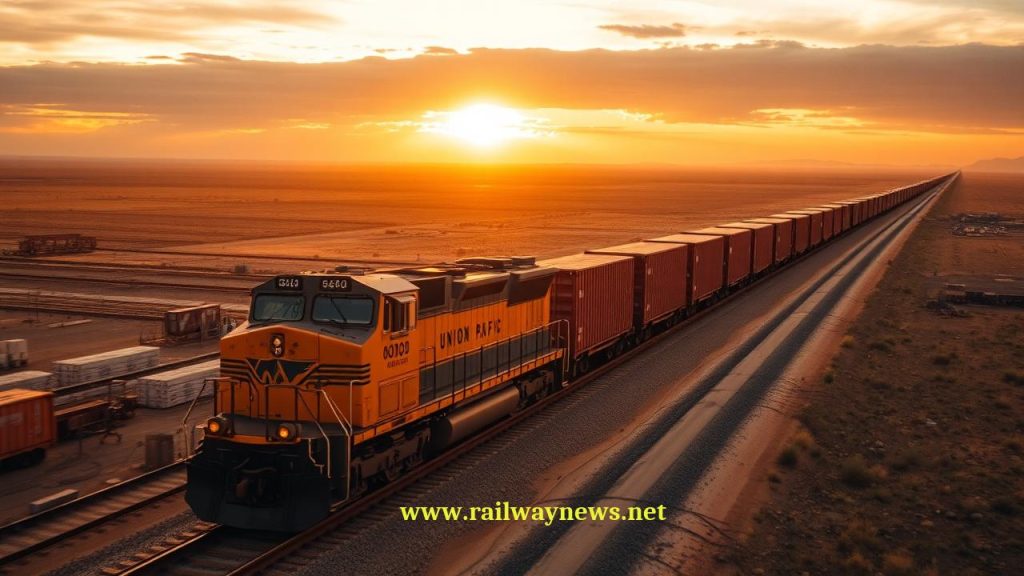
⚡ In Brief: Union Pacific and Norfolk Southern have refiled their merger application with the U.S. Surface Transportation Board, aiming to create a 50,000-mile transcontinental network projected to save shippers an estimated $3.5 billion annually by shifting 2.1 million trucks to rail.
WASHINGTON D.C. – Union Pacific Railroad and Norfolk Southern Railway have refiled their merger application with the U.S. Surface Transportation Board (STB) following a rejection in January. The revised application, now under review, proposes the creation of the first U.S.-only transcontinental railroad, covering over 50,000 route miles. The STB has set a May 8 deadline for comments on the application’s completeness.
What Is the Full Scope of This Development?
The proposed merger aims to create a single rail network connecting the Atlantic and Pacific coasts across 43 U.S. states. The applicants project the unified network would reduce cross-country delivery times by one to two days, create 1,200 new union jobs, and remove 2.1 million truckloads from highways annually. The revised application includes more detailed forward-looking data on competition and full disclosure of affected shippers and routes, addressing the STB’s primary reasons for the initial rejection. The deal contains a clause allowing Union Pacific to terminate the agreement if the STB requires concessions exceeding $750 million.
Key Development Data
| Parameter | Value |
|---|---|
| Company / Organisation | Union Pacific Railroad; Norfolk Southern Railway |
| Total Value | Not disclosed (includes a $2.5 billion breakup fee) |
| Parties Involved | Union Pacific, Norfolk Southern, U.S. Surface Transportation Board |
| Timeline / Completion | Comments on application due May 8; final STB decision timeline not yet set. |
| Country / Corridor | United States (nationwide) |
How Does This Compare to Industry Trends?
This proposal is the first major Class I railroad merger application since the successful combination of Canadian Pacific and Kansas City Southern. That deal, approved by the STB in March 2023 for $31 billion, created Canadian Pacific Kansas City (CPKC), the first and only single-line railway connecting Canada, the United States, and Mexico. The STB’s approval of CPKC established a stringent review process and a high regulatory bar, requiring applicants to prove a merger is in the public interest and enhances competition, a standard Union Pacific and Norfolk Southern must now meet. The long review period for the CPKC merger, which lasted over a year, suggests a similarly lengthy and detailed process for the current application. (Source: Surface Transportation Board, 2023)
Editor’s Analysis
The refiled application faces a regulatory environment shaped directly by the CPKC merger, which set a new precedent for weighing public benefits against competition concerns. The STB’s demand that Union Pacific demonstrate an *enhancement* of competition, not merely its preservation, is the central challenge. This case will serve as a definitive test of whether any further large-scale consolidation is permissible among the remaining North American Class I railroads, a sector that has shrunk dramatically over the past four decades.
FAQ
Q: Why was the first merger application rejected?
A: The Surface Transportation Board rejected the initial application in January primarily due to a lack of sufficient data. The STB cited concerns about inadequate forward-looking information on competition and a failure to fully disclose all affected shippers and routes.
Q: Has a transcontinental railroad merger been approved recently?
A: Yes, the STB approved the $31 billion merger of Canadian Pacific and Kansas City Southern in March 2023. This created CPKC, the first single-line rail network connecting Canada, the U.S., and Mexico, setting the modern regulatory standard for such large-scale combinations.
Q: What happens if the STB requires major changes to the deal?
A: The merger agreement includes a provision allowing Union Pacific to walk away from the deal if the STB mandates concessions valued at more than $750 million. If the deal is terminated for other reasons, such as regulatory rejection, Norfolk Southern would receive a $2.5 billion breakup fee.

Railway infrastructure, rolling stock and transport technologies specialist focused on global rail industry developments, high-speed rail systems, signaling technologies and freight transportation. Covering railway investments, public transport modernization, rail operations and international mobility projects across Europe, Asia and North America.
RELATED POSTS

October 8, 2026 1:15 pm
Alstom secured a €1bn contract to build 13 automated trains,...

October 1, 2026 7:09 am
United States regulators confirmed a September 30 deadline for the...

October 8, 2026 12:18 pm
Siemens Mobility signed an agreement with VinSpeed to supply 350...

October 4, 2026 5:14 pm
Alstom secured a CA$4.7 billion order from VIA Rail Canada...

October 5, 2026 6:12 pm
AECOM and Jacobs secured a contract in September 2026 to...

October 1, 2026 12:13 am
Illinois approved $1.5 billion annually for the Northern Illinois Transit...