
Alstom Launches ETCS Hybrid Level 3 LTE 4G Meerut Metro India
Alstom launched the 21km Meerut Metro in March 2024, deploying the world’s first ETCS Hybrid Level 3 LTE 4G urban signalling system.
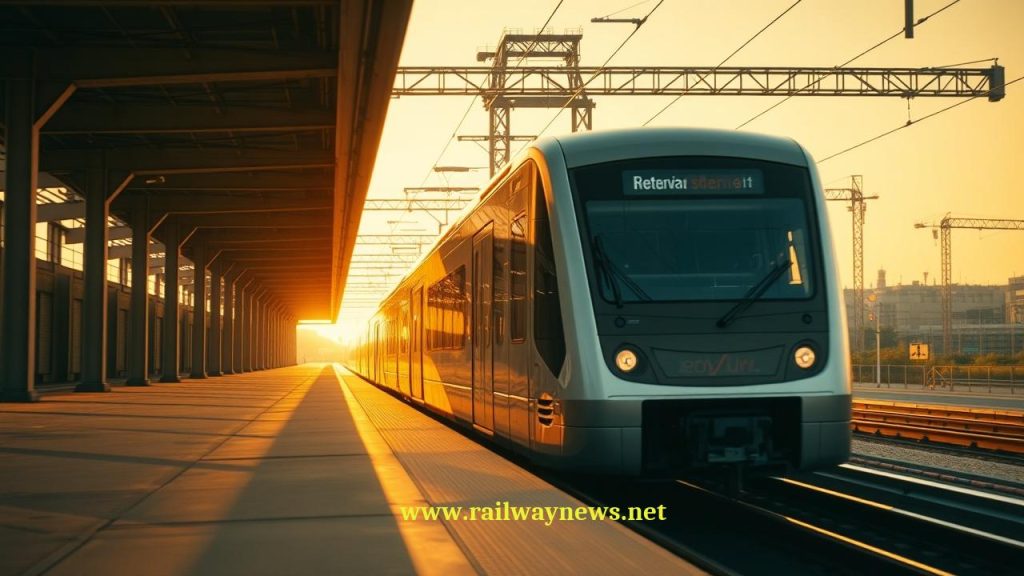
⚡ In Brief: Alstom has commenced commercial operations on India’s Meerut Metro, the world’s first urban transit system to deploy ETCS Hybrid Level 3 signalling over an LTE 4G network, completing a key section of the Delhi-Ghaziabad-Meerut corridor.
MEERUT, INDIA – Alstom’s advanced signalling and rolling stock are now in revenue service following the launch of the 21km Meerut Metro and the balance stretch of the Delhi-Meerut Namo Bharat corridor. The project, delivered for the National Capital Region Transport Corporation (NCRTC), establishes a new global benchmark for urban train control technology and enhances connectivity in India’s National Capital Region.
What Are the Technical Specifications?
The system is the first urban metro globally to operate using European Train Control System (ETCS) Hybrid Level 3 over a Long-Term Evolution (LTE) 4G wireless network. This architecture allows for more efficient train control, higher capacity, and enhanced safety compared to conventional signalling. Alstom’s 2020 contract included the design, manufacture, and delivery of 180 Regional Rapid Transit System (RRTS) cars and 30 Mass Rapid Transit System (MRTS) cars, alongside a 15-year maintenance agreement.
Key Technical Data
| Parameter | Value |
|---|---|
| Technology / System Name | ETCS Hybrid Level 3 over LTE 4G Signalling |
| Total Value | Not disclosed |
| Parties Involved | Alstom, National Capital Region Transport Corporation (NCRTC) |
| Timeline / Completion | Commercial operations commenced March 2024 |
| Country / Corridor | India / Delhi-Ghaziabad-Meerut |
Where Does This Technology Stand in the Market?
The deployment of ETCS Hybrid Level 3 for an urban metro is a world-first, positioning India at the forefront of advanced signalling adoption. This project reflects a wider trend of major international suppliers investing in India’s domestic rail capabilities. For example, competitor ABB recently announced plans to invest $75 million to expand its own manufacturing and R&D in India for high-speed rail and metro projects (Source: Business Standard, 2024). While the value of Alstom’s contract with NCRTC was not disclosed, its recent agreement to supply 153 trains and establish a new manufacturing facility in Portugal was valued at €1.03 billion, providing a benchmark for the scale of such detailed supply-and-build contracts (Source: GlobeNewswire, 2024).
Editor’s Analysis
This project serves as a critical technology demonstrator for India’s ‘Make in India’ and ‘Aatmanirbhar Bharat’ initiatives, proving the country’s capacity for producing and implementing world-class rail systems. The integration of the metro with the broader Industrial Corridor Project, which includes a Rs 213.81 crore budget for logistics infrastructure in Meerut, underscores a strategy of using advanced transport to anchor regional economic development. The successful deployment of ETCS Hybrid Level 3 will likely influence future signalling tenders for high-density urban corridors across India and other emerging markets.
FAQ
Q: What makes the Meerut Metro’s signalling system unique?
A: It is the first urban metro system anywhere in the world to use ETCS Hybrid Level 3 technology over an LTE 4G network. This advanced system allows for higher frequency and safer train operations compared to traditional signalling.
Q: What was the total value of Alstom’s contract for this project?
A: The full financial value of the detailed 2020 contract, which included rolling stock, signalling, and 15 years of maintenance, was not publicly disclosed by Alstom or the NCRTC.
Q: How does this project support India’s economy?
A: The project aligns with the ‘Make in India’ policy, with trainsets manufactured at Alstom’s facilities in Savli, Gujarat. It is also a key component of the Industrial Corridor Project, designed to support the growth of an Integrated Manufacturing and Logistics Cluster in Meerut.

Railway infrastructure, rolling stock and transport technologies specialist focused on global rail industry developments, high-speed rail systems, signaling technologies and freight transportation. Covering railway investments, public transport modernization, rail operations and international mobility projects across Europe, Asia and North America.
RELATED POSTS

October 1, 2026 7:09 am
United States regulators confirmed a September 30 deadline for the...

October 8, 2026 1:15 pm
Alstom secured a €1bn contract to build 13 automated trains,...

October 4, 2026 5:14 pm
Alstom secured a CA$4.7 billion order from VIA Rail Canada...

October 1, 2026 12:13 am
Illinois approved $1.5 billion annually for the Northern Illinois Transit...

October 6, 2026 2:14 am
Union Pacific launched export rail shipments with Ferromex to deliver...

October 1, 2026 6:10 am
Amtrak approved a System Expansion Committee on July 30 to...