
TÜRASAŞ Exports First DE 10000 Diesel Locomotive to Tanzania
TÜRASAŞ exported one DE 10000 shunting locomotive to Tanzania, Turkey’s first export of a locally developed locomotive, powered by the 1,000+ hp Özgün engine.
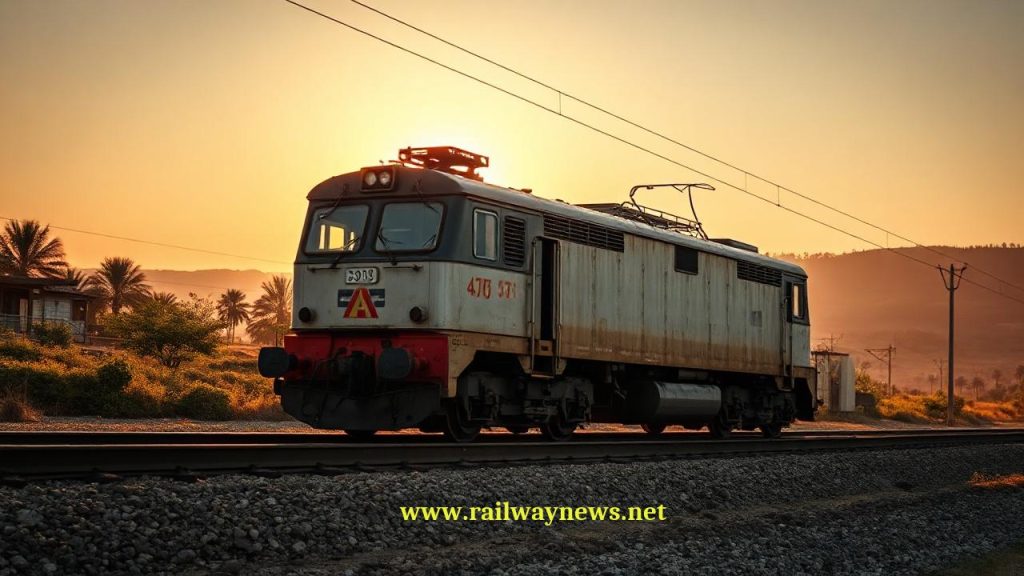
⚡ In Brief: Turkish state manufacturer TÜRASAŞ will export its DE 10000 diesel-electric shunting locomotive — powered by the domestically developed Özgün engine exceeding 1,000 hp — to Tanzania, marking Turkiye’s first international sale of a nationally produced diesel locomotive.
ANKARA, TURKIYE – TÜRASAŞ, Turkiye’s state-owned rolling stock manufacturer, will export the DE 10000 diesel shunting locomotive to Tanzania, the country’s first diesel locomotive built with local and national resources to enter the international market. Abdulkadir Uraloğlu, Turkish Minister of Transport and Infrastructure, confirmed the export from the TÜRASAŞ Eskişehir Regional Directorate facility on 16 June 2026. The Özgün Motor powering the locomotive exceeds 1,000 hp and was developed through a TÜBİTAK KAMAG public research collaboration.
What Does This Contract Cover?
The agreement covers the export of at least one DE 10000 diesel-electric shunting locomotive from TÜRASAŞ to an undisclosed railway operator in Tanzania, East Africa. The locomotive is built around the Özgün Motor — the first Turkish-designed diesel engine exceeding 1,000 hp — whose intellectual property rights are wholly owned by Turkiye. Minister Uraloğlu stated the engine “will be used for the first time on a locally produced locomotive platform and exported to international markets.” The contracting entity in Tanzania, the specific yard or corridor where the locomotive will be deployed, and whether the deal includes maintenance, training, or spare parts packages were not disclosed by Turkish authorities.
Key Contract Data
| Parameter | Value |
|---|---|
| Contract Name | DE 10000 Diesel Locomotive Export to Tanzania |
| Total Value | Not disclosed |
| Parties Involved | TÜRASAŞ (supplier); Tanzanian railway operator (buyer, identity not disclosed) |
| Timeline / Completion | Not disclosed |
| Country / Corridor | Tanzania, East Africa |
How Does This Compare to Similar Contracts?
Tanzania’s railway sector has sourced locomotives from multiple international suppliers over the past decade. CRRC Dalian supplied four diesel-electric locomotives to the Tanzania-Zambia Railway Authority (TAZARA) in 2022 for the Cape-gauge corridor linking Dar es Salaam to Kapiri Mposhi. (Source: CRRC Dalian, 2022) For its newer Standard Gauge Railway (SGR), Tanzania Railways Corporation procured electric locomotives from Hyundai Rotem, with the first batch arriving in 2023 for the Dar es Salaam–Morogoro section. TÜRASAŞ’s DE 10000 enters a different segment — it is a shunting locomotive, designed for yard and depot operations rather than mainline freight or passenger service. Comparable shunting locomotive deals in sub-Saharan Africa include South Africa’s Transnet awarding contracts to GE (now Wabtec) and China’s CRRC for diesel shunters, typically in batches of 6 to 20 units. The Turkish export of a single DE 10000 unit appears to be an initial market-entry transaction rather than a fleet-scale order. Tanzania’s total locomotive fleet across TRC and TAZARA exceeds 100 units, with the majority sourced from China, North America, and Europe. The specific financial terms, delivery schedule, and after-sales arrangements remain undisclosed, making direct cost-per-unit comparisons with CRRC or Hyundai Rotem contracts unavailable at time of publication.
Editor’s Analysis
This export represents Turkiye’s attempt to convert domestic industrial investment into a commercial foothold in Africa’s railway market — a space long dominated by Chinese, European, and North American manufacturers. The DE 10000’s entry point via a shunting locomotive is strategically conservative: yard locomotives face lower regulatory barriers than mainline units and allow the supplier to build an in-country service footprint before pursuing larger rolling stock tenders. Tanzania’s dual-gauge network — the SGR under TRC and the Cape-gauge TAZARA line — will require ongoing shunting capacity at ports and freight yards as Dar es Salaam expands its role as a regional logistics hub. The undisclosed contract value and single-unit scope suggest TÜRASAŞ is prioritising reference deployments over immediate revenue, a pattern observed in recent Turkish defence and industrial exports to East Africa. (Source: Turkish Exporters Assembly, 2025) Separately, the global locomotive market is undergoing a powertrain shift: Forsee Power and Wabtec announced a collaboration on battery-electric locomotive platforms in mid-2026, signalling that diesel-only shunters face long-term substitution risk in emissions-regulated markets — though adoption timelines in East Africa remain extended. (Source: Wabtec/Forsee Power, 2026)
FAQ
Q: How many DE 10000 locomotives is Tanzania purchasing?
A: The exact quantity was not disclosed in the minister’s announcement. The official statement referenced a single locomotive manufactured at the Eskişehir facility, but no confirmation on additional units or follow-on options was provided.
Q: What is the Özgün Motor and who built it?
A: The Özgün Motor is the first Turkish-designed diesel engine exceeding 1,000 hp, developed through a TÜBİTAK KAMAG public research project in collaboration between TÜRASAŞ and TÜBİTAK, Turkiye’s Scientific and Technological Research Council. Turkish authorities state all intellectual property rights belong to Turkiye.
Q: When will the locomotive enter service in Tanzania?
A: No delivery, commissioning, or in-service date was officially disclosed by either TÜRASAŞ or the Turkish transport ministry at the time of the announcement.

Railway infrastructure, rolling stock and transport technologies specialist focused on global rail industry developments, high-speed rail systems, signaling technologies and freight transportation. Covering railway investments, public transport modernization, rail operations and international mobility projects across Europe, Asia and North America.
RELATED POSTS

October 8, 2026 1:15 pm
Alstom secured a €1bn contract to build 13 automated trains,...

October 1, 2026 7:09 am
United States regulators confirmed a September 30 deadline for the...

October 8, 2026 12:18 pm
Siemens Mobility signed an agreement with VinSpeed to supply 350...

October 4, 2026 5:14 pm
Alstom secured a CA$4.7 billion order from VIA Rail Canada...

October 5, 2026 6:12 pm
AECOM and Jacobs secured a contract in September 2026 to...

October 1, 2026 12:13 am
Illinois approved $1.5 billion annually for the Northern Illinois Transit...