
Türasaş Completes First National High Speed Train Turkey
Türasaş completed Turkey’s first national high-speed train, with 14 units reaching over 225 km/h by 2028.
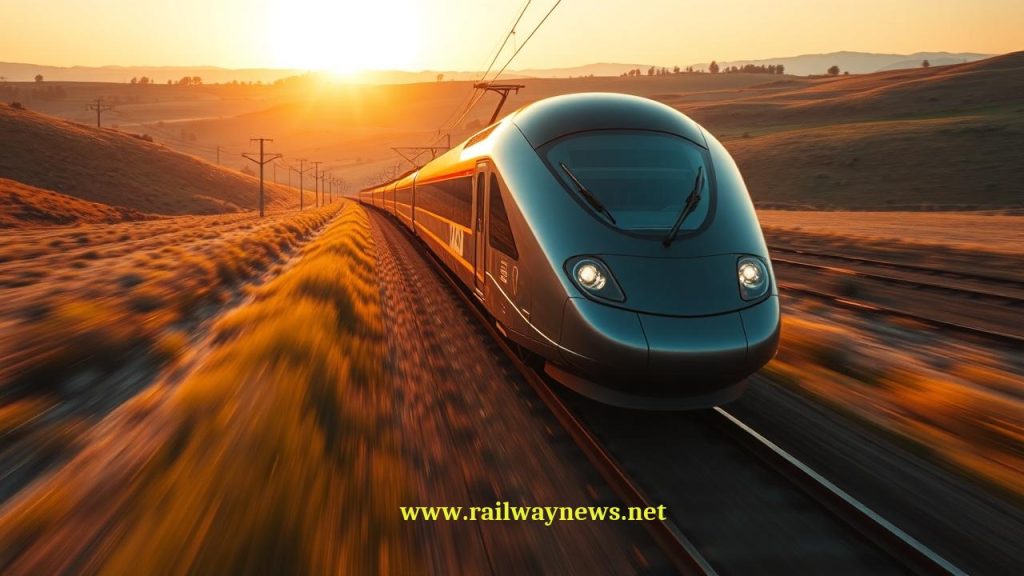
⚡ In Brief: Turkey’s state-owned manufacturer Türasaş has completed its first domestically produced high-speed train, capable of over 225 km/h, with plans to build 14 sets by 2028 to increase the share of locally produced rolling stock in the national fleet.
ANKARA, TURKEY – State railway producer Türasaş has completed the first unit of its national high-speed train, with performance testing scheduled to begin this week. The production is part of a plan to deliver 14 eight-car trainsets between 2026 and 2028. The announcement was attributed to the Minister of Transport and Infrastructure, Abdulkadir Uraloğlu.
What Are the Technical Specifications?
The new trainset is an eight-car electric multiple unit with an aluminium body, designed to operate at speeds exceeding 225 km/h. It has a total capacity of 577 passengers and includes specialized accessibility features such as two compartments for passengers with disabilities and integrated wheelchair lifts. Onboard systems include a train control and monitoring system (TCMS), automatic train stop, fully automated air conditioning, CCTV, and passenger Wi-Fi, alongside a kitchen-restaurant area and vending machines.
Key Technical Data
| Parameter | Value |
|---|---|
| Technology / System Name | National Electric High-Speed Train |
| Total Value | Not disclosed |
| Parties Involved | Türasaş (manufacturer), Ministry of Transport and Infrastructure (client) |
| Timeline / Completion | First unit testing begins now; 14 units to be produced 2026-2028 |
| Country / Corridor | Turkey / National High-Speed Network |
Where Does This Technology Stand in the Market?
The Türasaş train’s operational speed of over 225 km/h positions it as a significant milestone for Turkish domestic manufacturing, though it enters the market below the top speed of established international platforms. For comparison, the Siemens Velaro TR (TCDD HT80000 series) already operating in Turkey has a top operational speed of 300 km/h (Source: Siemens Mobility). Similarly, Alstom’s latest Avelia Horizon platform is designed for speeds of 320 km/h (Source: Alstom). The production scale of 14 trains is a focused domestic effort, in contrast to larger fleet replacement programs like New York’s MTA, which has committed $11 billion through 2029 to replace thousands of subway cars, though these are for urban metro, not high-speed, applications (Source: The New York Times, 2026).
Editor’s Analysis
This project is a clear execution of Turkey’s industrial strategy to reduce import dependency and develop sovereign capabilities in high-value manufacturing. The initiative aligns with a broader trend of strong public infrastructure investment in the country, which has persisted despite cost inflation, particularly in the railway sector (Source: Businesswire, 2026). While the train’s specifications are not at the global performance frontier, successfully developing and deploying this platform provides Türasaş with a critical foundation for future exports and more advanced projects, such as its announced hydrogen train collaboration with the United Kingdom. Note: While the announcement was attributed to Minister Abdulkadir Uraloğlu, independent verification through provided news databases was not possible at the time of publication.
FAQ
Q: How many national high-speed trains is Turkey building?
A: According to the current plan, Türasaş will produce a total of 14 high-speed trainsets between 2026 and 2028. This will represent nearly half of the 31 high-speed trains currently operating on Turkey’s network.
Q: What is the top speed of Turkey’s new train?
A: The train is designed to operate at speeds over 225 km/h. This compares to the 300 km/h operational speed of the Siemens Velaro trains already in service with Turkish State Railways (TCDD).
Q: What is the cost of this project?
A: The total project value and the cost per trainset for the National Electric High-Speed Train project have not been officially disclosed by the Ministry or the manufacturer.

Railway infrastructure, rolling stock and transport technologies specialist focused on global rail industry developments, high-speed rail systems, signaling technologies and freight transportation. Covering railway investments, public transport modernization, rail operations and international mobility projects across Europe, Asia and North America.
RELATED POSTS

October 8, 2026 1:15 pm
Alstom secured a €1bn contract to build 13 automated trains,...

October 1, 2026 7:09 am
United States regulators confirmed a September 30 deadline for the...

October 8, 2026 12:18 pm
Siemens Mobility signed an agreement with VinSpeed to supply 350...

October 4, 2026 5:14 pm
Alstom secured a CA$4.7 billion order from VIA Rail Canada...

October 1, 2026 12:13 am
Illinois approved $1.5 billion annually for the Northern Illinois Transit...

October 1, 2026 6:10 am
Amtrak approved a System Expansion Committee on July 30 to...