
TransPennine Rail Upgrade: £9 Billion Investment, Growth & Challenges
The £9 billion TransPennine Route Upgrade (TRU) in the UK represents a substantial investment that modernizes its northern rail network by electrifying routes, deploying advanced digital signaling technology, and enhancing capacity along key sections, aiming to boost regional connectivity, economic growth, and environmental sustainability.
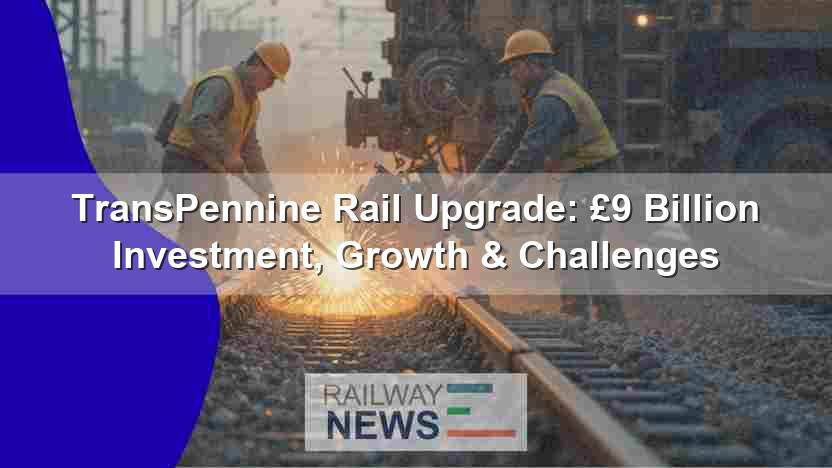
This article examines the significant increase in funding for the TransPennine Route Upgrade (TRU) in the UK, analyzing its implications for infrastructure development, environmental sustainability, and regional economic growth. The £9 billion investment represents a threefold increase from the initial allocation, highlighting the UK government’s commitment to modernizing its northern rail network. This substantial investment goes beyond mere infrastructure improvements; it signifies a strategic move to bolster regional connectivity, stimulate economic activity, and transition towards a more sustainable transportation system. The analysis will delve into the specific projects funded, the anticipated economic and environmental benefits, and the potential challenges associated with such a large-scale undertaking. The overarching goal is to understand the far-reaching consequences of this ambitious rail upgrade on the UK’s transportation landscape and its contribution to national priorities.
Modernizing Rail Infrastructure: Electrification and Digital Signalling
A core component of the TRU’s expansion involves the complete electrification of the TransPennine route. This transition from diesel to electric traction will significantly reduce carbon emissions, aligning with the UK’s broader sustainability goals. The estimated reduction of up to 87,000 tonnes of annual CO2 emissions underscores the environmental benefits. Additionally, electrification enhances operational efficiency, enabling faster and more reliable services. In conjunction with electrification, the upgrade includes the deployment of advanced digital signalling technology. This transition from older systems will enhance network capacity, allowing for more frequent and efficient train operations. This increased operational efficiency translates directly into improved passenger experience and increased freight capacity.
Capacity Enhancements and Network Integration: Addressing Bottlenecks
The increased funding allows for the construction of additional tracks along key sections of the route, particularly between Huddersfield and Dewsbury (Westtown). This crucial capacity enhancement aims to alleviate current bottlenecks, reducing delays and improving overall network resilience. The addition of these tracks directly benefits both passenger and freight services, accommodating increased demand and promoting more efficient goods transportation. The integration of the TRU with the Northern Powerhouse Rail (NPR) initiative is also a major focus. This strategic alignment aims to create a seamless, high-capacity rail network across the north of England, fostering economic growth and improved regional connectivity.
Economic Impact: Job Creation and Regional Growth
The substantial investment in the TRU is anticipated to generate significant economic benefits. The project is expected to create up to 4,000 direct construction jobs, more than doubling the initial projection. Beyond direct employment, the upgrade will stimulate economic activity in the surrounding regions through increased tourism, improved accessibility for businesses, and enhanced opportunities for regional development. The improved connectivity fostered by the TRU and its integration with the NPR is intended to unlock the economic potential of northern England, facilitating trade, investment, and job creation across various sectors.
Challenges and Future Outlook
While the TRU presents numerous opportunities, it also faces potential challenges. Managing such a large-scale project requires meticulous planning, efficient resource allocation, and effective stakeholder engagement. Potential logistical difficulties, such as land acquisition, community relations, and unforeseen technical issues, necessitate proactive mitigation strategies. Additionally, ensuring the project remains on schedule and within budget will require robust oversight and risk management. Successful completion of the TRU will significantly enhance the UK’s rail network, particularly in the north, promoting sustainable transportation, economic growth, and regional development. The project’s success hinges on effective planning, execution, and a commitment to realizing the outlined goals. The ambitious target completion date of 2025 underscores the importance of meticulous project management and collaboration between all stakeholders.
Conclusion
The dramatic increase in funding for the TransPennine Route Upgrade (TRU) from £2.9 billion to over £9 billion signifies a transformative investment in the UK’s railway infrastructure and regional economic development. This project goes beyond simply upgrading existing lines; it represents a strategic overhaul, incorporating electrification, digital signalling, and capacity enhancements to create a “gold standard” rail network. The anticipated benefits are substantial, encompassing reduced carbon emissions (up to 87,000 tonnes annually), improved passenger and freight services, and the creation of thousands of jobs. The integration with Northern Powerhouse Rail (NPR) further amplifies the project’s impact, creating a more interconnected and efficient transport system across the north of England. However, realizing the full potential of the TRU requires effective project management to overcome the inherent challenges associated with such large-scale undertakings. Successful completion will not only modernize the railway but also serve as a catalyst for regional economic growth, solidifying the UK’s commitment to sustainable transportation and improved regional connectivity. The potential for long-term economic and environmental benefits reinforces the importance of ongoing investment in crucial infrastructure projects. The TRU stands as a prime example of how strategic investment in transport can positively transform regions and drive national economic progress, but its success relies on rigorous planning, efficient execution, and continued commitment to the overarching goals.

Railway infrastructure, rolling stock and transport technologies specialist focused on global rail industry developments, high-speed rail systems, signaling technologies and freight transportation. Covering railway investments, public transport modernization, rail operations and international mobility projects across Europe, Asia and North America.
RELATED POSTS

October 8, 2026 1:15 pm
Alstom secured a €1bn contract to build 13 automated trains,...

October 1, 2026 7:09 am
United States regulators confirmed a September 30 deadline for the...

October 8, 2026 12:18 pm
Siemens Mobility signed an agreement with VinSpeed to supply 350...

October 4, 2026 5:14 pm
Alstom secured a CA$4.7 billion order from VIA Rail Canada...

October 5, 2026 6:12 pm
AECOM and Jacobs secured a contract in September 2026 to...

October 4, 2026 11:08 pm
Sound Transit confirmed the September 30 opening of Seattle Pinehurst...