
Thessaloniki’s Driverless Metro: A Greek Tech Marvel
The Thessaloniki driverless metro system inaugurated by Hitachi Rail showcases advanced Intelligent Transportation Systems (ITS) technology, demonstrating global trends towards automated railway systems while significantly reducing carbon emissions and enhancing urban transportation efficiency in Greece.
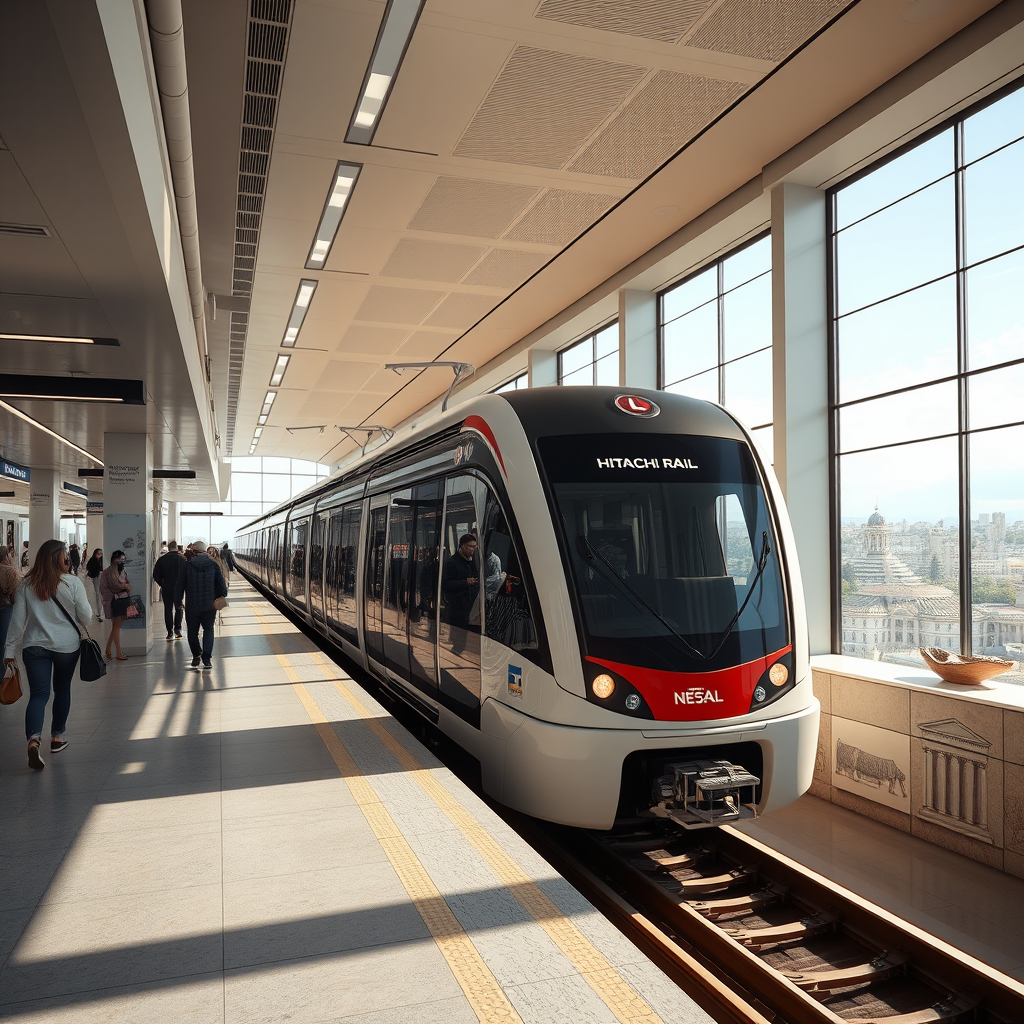
This article explores the recent inauguration of Thessaloniki’s first driverless metro system, a significant advancement in Greece’s urban transportation infrastructure. The project, a collaboration between the Greek government and Hitachi Rail, showcases the capabilities of cutting-edge Intelligent Transportation Systems (ITS) and highlights the global trend towards automated railway systems. We will examine the technological aspects of the driverless system, focusing on the Communication-Based Train Control (CBTC) signaling solution employed, the environmental benefits of the project, and the broader implications for urban planning and sustainable transportation in Greece and beyond. We will also consider the project’s impact on the city’s historical legacy, given the archaeological discoveries unearthed during construction. Finally, we’ll briefly touch upon Hitachi Rail’s expanding role in the global deployment of similar systems.
The Thessaloniki Driverless Metro: A Technological Marvel
The initial phase of the Thessaloniki metro, spanning 9.6 kilometers and encompassing 13 stations, represents a substantial undertaking. Hitachi Rail’s implementation of their CBTC (Communication-Based Train Control) signaling system is central to the driverless operation. CBTC utilizes wireless communication between the trains and the central control system, enabling precise train control and shorter headways (the time interval between trains), thereby increasing overall capacity and efficiency. This technology, honed through projects in cities like Milan, Taipei, Lima, and Copenhagen, ensures safe and reliable automated operation. The 18 initial four-carriage trains, each 51 meters long and with a capacity of 450 passengers, were manufactured in Hitachi Rail’s Reggio Calabria facility in Italy. The system integrates expertise from both France and the US, reflecting a global collaborative effort in advanced rail technology.
Environmental and Social Impact
Beyond technological advancement, the Thessaloniki metro boasts significant environmental and social benefits. Projections indicate a reduction of 56,000 cars daily from the roads, resulting in a substantial decrease of 77,000 tonnes of CO₂ emissions annually. This aligns with global efforts towards sustainable transportation and reducing carbon footprints in urban areas. Additionally, the project’s positive impact extends to the city’s overall livability, easing congestion and improving connectivity. The planned expansion, adding five more stations and 4.8 kilometers of track to connect the city center to the airport, will further amplify these benefits.
Archaeological Discoveries and Urban Integration
The construction of the Thessaloniki metro also yielded significant archaeological discoveries. This unexpected benefit underscores the importance of integrating urban development projects with historical preservation efforts. The unearthed artifacts, a testament to Thessaloniki’s rich history, will now be showcased within the metro stations themselves, enriching the passenger experience and offering a unique glimpse into the city’s past. This successful integration of historical preservation within a modern infrastructure project exemplifies best practices for urban development.
Hitachi Rail’s Global Leadership and Future Expansion
The Thessaloniki project reinforces Hitachi Rail’s position as a leading player in the global deployment of driverless metro systems. The company’s recent contracts, including the installation of European Train Control System (ETCS) digital signaling on Thai railway lines in partnership with LS Electric (a South Korean firm responsible for signaling and telecommunications), further solidify their international presence. The Thessaloniki metro stands as a model for future projects, demonstrating the feasibility and benefits of implementing sophisticated, sustainable, and environmentally conscious urban transportation solutions.
Conclusions
The inauguration of Thessaloniki’s driverless metro marks a significant milestone not only for Greece but also for the global railway industry. This project showcases the successful integration of advanced technology, sustainable practices, and historical preservation. Hitachi Rail’s implementation of CBTC signaling technology has resulted in a highly efficient and environmentally friendly transportation solution, reducing road congestion and carbon emissions significantly. The project’s success hinges on the seamless collaboration between the Greek government and Hitachi Rail, highlighting the importance of international partnerships in advancing infrastructure development. The integration of archaeological finds into the metro stations demonstrates a commitment to preserving historical heritage while embracing modern technological advancements. The planned expansion will further improve connectivity and contribute to the city’s overall economic and social growth. This successful implementation provides a compelling case study for other cities globally considering the adoption of driverless metro systems as a sustainable and efficient solution for urban transportation challenges. The Thessaloniki metro’s success serves as a powerful example of how technological innovation can positively impact urban life, promoting sustainable development while preserving cultural heritage. It represents a significant leap forward for Greece’s infrastructure and sets a high bar for future urban transit projects worldwide.

Railway infrastructure, rolling stock and transport technologies specialist focused on global rail industry developments, high-speed rail systems, signaling technologies and freight transportation. Covering railway investments, public transport modernization, rail operations and international mobility projects across Europe, Asia and North America.
RELATED POSTS

October 8, 2026 1:15 pm
Alstom secured a €1bn contract to build 13 automated trains,...

October 1, 2026 7:09 am
United States regulators confirmed a September 30 deadline for the...

October 4, 2026 5:14 pm
Alstom secured a CA$4.7 billion order from VIA Rail Canada...

October 5, 2026 6:12 pm
AECOM and Jacobs secured a contract in September 2026 to...

October 1, 2026 12:13 am
Illinois approved $1.5 billion annually for the Northern Illinois Transit...

October 4, 2026 11:08 pm
Sound Transit confirmed the September 30 opening of Seattle Pinehurst...