
Thessaloniki ART Light Rail Project: Greece, Urban Rail Development
Thessaloniki’s new automated light rail system is finally operational! This railway sector news highlights the project’s completion after many years of development.
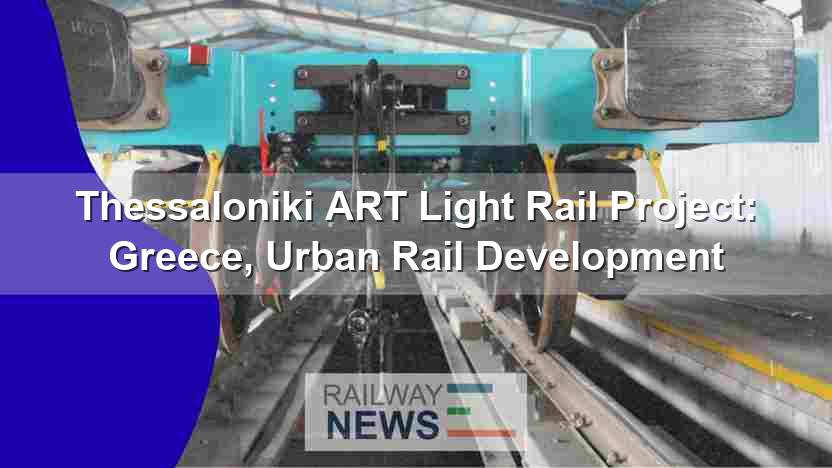
This article examines the Thessaloniki Automated Rapid Transit (ART) Light Railway project in Greece, focusing on its planning, implementation challenges, and ultimate implications for urban transportation. The project, conceived in the early 1990s to address Thessaloniki’s inadequate public transport infrastructure, exemplifies the complexities inherent in large-scale infrastructure projects, particularly those involving international collaborations, complex financing, and significant regulatory hurdles. The analysis will explore the technological choices made, the project’s timeline and cost overruns, and the lessons learned for future urban rail development initiatives. Additionally, we will assess the project’s impact on the city’s overall transportation network and its potential for future expansion, considering the broader context of urban planning and sustainable transportation solutions.
Project Conception and Initial Challenges
The Thessaloniki ART Light Railway project was born out of the city’s increasing reliance on a road network ill-equipped to handle the demands of a growing population. The lack of adequate parking and reliance solely on buses highlighted the urgent need for a modern mass transit system. Initial plans, envisaging a 2006 opening to coincide with (the ultimately unsuccessful bid for) Expo 2008, mirrored the design of the London Docklands Light Railway (DLR), opting for an automated, driverless system. However, the project’s early stages were plagued by setbacks. An initial consortium agreement with Bombardier Transportation was followed by a period of legal challenges and appeals, leading to a suspension in 2003. This initial delay significantly impacted the project timeline and contributed to cost escalations.
Project Resumption and Implementation
Significant progress resumed in 2006 following the awarding of a major tender to an international consortium, led by the Greek construction firm AEGEK. Funding was secured through the Third Community Support Framework (CSF) program and a loan from the European Investment Bank (EIB). The project, overseen by Attiko Metro (the Athens regional transport operator), saw Ansaldobreda (now Hitachi Rail Italy) replace Bombardier as the rolling stock supplier. Construction commenced in July 2006, utilizing tunnel boring machines for the underground sections and cut-and-cover methods for stations and surface sections. Archaeological investigations preceded construction in historically sensitive areas. This phase of the project highlighted the importance of careful planning, stakeholder engagement, and meticulous adherence to regulatory requirements in complex urban environments.
Technological Specifications and Operational Aspects
The Thessaloniki ART system features a 9.6km (5.97-mile) twin-bore underground route with thirteen stations and 60m centre-island platforms equipped with platform screen doors (PSD). The rolling stock comprises 18 two-car, driverless Light Rail Vehicles (LRVs), drawing power from a 750V DC third rail system. The trains incorporate air conditioning, closed-circuit television (CCTV), and advanced passenger information systems. The system is designed for a 90-second headway, although initial operation will start with a three-minute headway. Automated Train Operation (ATO) and Automatic Train Protection (ATP) systems ensure safe and efficient operation, with a central control room enabling communication with trains and passengers. The reduced need for lineside equipment translates into significant maintenance cost savings. This section illustrates the integration of advanced technologies to optimize operational efficiency and enhance passenger safety and experience.
Project Completion and Future Considerations
The initial target completion date of 2012 was not met, reflecting the typical challenges associated with large-scale infrastructure projects. Upon completion, the Thessaloniki ART is expected to provide faster journey times and alleviate road congestion. The project’s long gestation period makes extensions less likely in the short term, but potential future expansions to Macedonia Airport and the suburbs of Stavroupoli and Kalamaria have been identified. These potential extensions require further planning, financing, and environmental assessments. This phase underscores the long-term nature of infrastructure development and the need for continuous evaluation and strategic planning for potential future expansions based on evolving transportation needs.
Conclusions
The Thessaloniki ART Light Railway project stands as a compelling case study in urban rail development, showcasing both the potential benefits and the inherent complexities of such undertakings. While the project faced significant delays and challenges, primarily stemming from protracted legal processes and bureaucratic hurdles, its eventual completion will provide a much-needed upgrade to Thessaloniki’s public transportation infrastructure. The project highlights the importance of meticulous planning, effective stakeholder management, and robust financing mechanisms. The adoption of automated train technology underscores a global trend towards the utilization of advanced technologies to enhance efficiency, safety, and sustainability in urban rail systems. The project’s success serves as a valuable lesson for future endeavors, emphasizing the critical need for realistic timelines, detailed risk assessments, and consistent political and financial support to overcome the numerous obstacles that frequently arise in large-scale infrastructure projects. The potential for future expansion indicates that the Thessaloniki ART will likely play a crucial role in shaping the city’s future transportation network and facilitating its sustainable growth.
| Project Parameter | Value |
|---|---|
| Project Name | Thessaloniki Automated Rapid Transit (ART) Light Railway |
| Project Length | 9.6 km (5.97 miles) |
| Number of Stations | 13 |
| Type of System | Automated, Driverless Light Rail |
| Rolling Stock Supplier | Ansaldobreda SPA (now Hitachi Rail Italy) |
| Power Supply | 750V DC Third Rail |
| Funding Sources | Third Community Support Framework (CSF), European Investment Bank (EIB) |
Company Information:
AEGEK: A major Greek construction company involved in numerous infrastructure projects, including the Athens metro expansion.
Attiko Metro: The Athens regional transport operator, responsible for overseeing the Thessaloniki ART project.
Ansaldobreda SPA (now Hitachi Rail Italy): An Italian rolling stock manufacturer that supplied the trains for the Thessaloniki ART. Hitachi Rail Italy is a subsidiary of Hitachi, a Japanese multinational conglomerate.
Bombardier Transportation: A Canadian multinational company that was initially involved in the project but was later replaced by Ansaldobreda.
European Investment Bank (EIB): A European Union institution that provided a loan for the project.

Railway infrastructure, rolling stock and transport technologies specialist focused on global rail industry developments, high-speed rail systems, signaling technologies and freight transportation. Covering railway investments, public transport modernization, rail operations and international mobility projects across Europe, Asia and North America.