
The Future of Dubai Metro: Rail Innovations & Infrastructure Guide
Dubai’s Blue Line Metro, a new railway line, is set to open in 2029. Spanning 30 km, it will connect key districts.
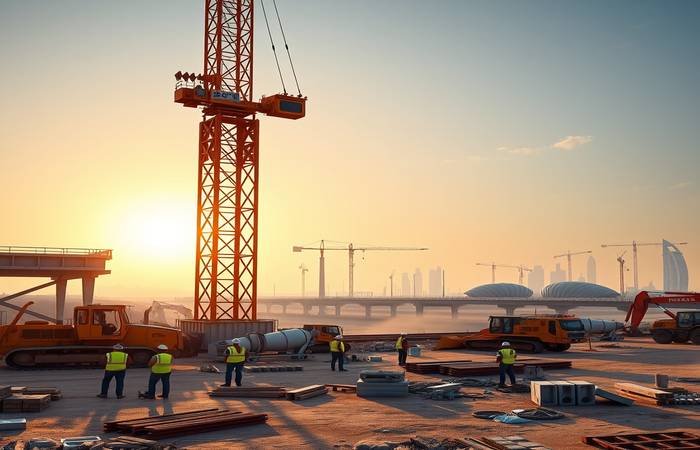
Dubai’s Blue Line Metro: A Foundation Stone Laid for Future Mobility
Dubai is poised to significantly expand its public transportation network with the ambitious Dubai Blue Line project, a critical step in accommodating the city’s rapid growth and evolving mobility demands. On a day marked by progress, His Highness Sheikh Mohammed bin Rashid Al Maktoum, along with Mattar Al Tayer, Director General of the Roads and Transport Authority (RTA), presided over the foundation stone laying ceremony, signaling the commencement of construction. Set to become operational in 2029, the Blue Line will fundamentally reshape connectivity across key districts, offering a high-capacity, efficient, and aesthetically innovative transit solution. This article explores the specifics of the project, exploring its innovative design, engineering feats, and projected impact on Dubai’s transport landscape.
Engineering a Transit Revolution: Route and Infrastructure
The Dubai Blue Line represents a significant expansion of the Dubai Metro network, spanning 30 kilometers with 14 uniquely designed stations. The stations themselves, including three crucial interchange hubs, will be characterized by seashell-inspired architecture, creating a cohesive aesthetic. These stations, each incorporating interior design themes reflecting heritage, earth, air, fire, and water, alongside bespoke elements for the Expo and Emaar Properties stations, promise a world-class experience for passengers. A defining feature of the Blue Line will be its pioneering 1,300-meter-long viaduct, crossing Dubai Creek, marking the first time a Dubai Metro line will traverse this landmark. The line will be split into two distinct routes, each addressing different areas of the city.
Route and Interchange Planning
The primary route of the Blue Line, at 21 km, will commence at the existing Creek interchange station on the Green Line. From there, the line will pass through key hubs like Dubai Festival City, Dubai Creek Harbour, and International City 1, where an underground interchange station will be built. It will continue to Dubai Silicon Oasis and Academic City. The second route, approximately 9 kilometers long, will begin at the Centrepoint interchange station on the Red Line, traversing through Mirdif and Al Warqa before terminating at the International City 1 interchange station. A dedicated depot at Al Ruwayah 3 will be constructed to support operations. This detailed route planning underscores the project’s intention to provide detailed connectivity across diverse areas of the city, serving a broad base of residents and visitors.
Architectural Marvel: The Emaar Properties Station
A particularly notable aspect of the project is the Emaar Properties station. This station, designed by the architectural firm Skidmore, Owings & Merrill (SOM), will be the highest metro station globally, reaching a height of 74 meters. Inspired by the concept of a “crossing gateway,” the station will be integrated seamlessly into the existing urban environment. The station is designed to accommodate up to 160,000 passengers per day, with forecasts predicting over 70,000 daily users by 2040. The architectural design and passenger capacity of the Emaar Properties station reflect Dubai’s ambition to establish itself as a world leader in urban infrastructure.
Capacity, Reach, and Impact
The Dubai Blue Line will enhance the connectivity of nine key districts projected to house over one million residents by 2040. These districts encompass essential economic, academic, tourism, and residential zones. A significant advantage of the new line will be its direct connection to Dubai International Airport, offering a swift 20-minute journey to the airport. The line’s maximum capacity is projected to exceed 850,000 passengers per day. The RTA anticipates 200,000 daily passengers by 2030, with the number growing to 320,000 per day by 2040. Once completed, the Dubai Metro network will extend to a total of 131 kilometers, incorporating 78 stations and 168 trains, marking a transformative milestone in urban transport.
Conclusion
The Dubai Blue Line project is a bold investment in the future of urban mobility, poised to redefine public transport in the city. The project’s scope, incorporating state-of-the-art infrastructure, innovative architectural designs, and substantial capacity, underscores Dubai’s forward-thinking approach to urban planning. The integration of these factors signifies a new era of connectivity and convenience for residents and visitors alike. Additionally, the Dubai Blue Line exemplifies Dubai’s commitment to sustainable and efficient public transportation and its ongoing investment in world-class infrastructure will influence transit projects worldwide. This endeavor is expected to contribute significantly to the city’s economic growth, reduce traffic congestion, and improve the quality of life for Dubai’s expanding population.

Railway infrastructure, rolling stock and transport technologies specialist focused on global rail industry developments, high-speed rail systems, signaling technologies and freight transportation. Covering railway investments, public transport modernization, rail operations and international mobility projects across Europe, Asia and North America.
RELATED POSTS

October 8, 2026 1:15 pm
Alstom secured a €1bn contract to build 13 automated trains,...

October 1, 2026 7:09 am
United States regulators confirmed a September 30 deadline for the...

October 4, 2026 5:14 pm
Alstom secured a CA$4.7 billion order from VIA Rail Canada...

October 1, 2026 12:13 am
Illinois approved $1.5 billion annually for the Northern Illinois Transit...
October 5, 2026 1:13 pm
New York MTA confirmed a late 2026 DEIS release for...
October 6, 2026 9:17 am
Illinois approved $1.1M in state funds to upgrade two McHenry...