
Systra Ardanuy Wins 14 km Camp de Tarragona Tram Contracts
Systra Ardanuy secured two contracts for construction management and systems integration on the 14 km first phase of the Camp de Tarragona tram in Catalonia.
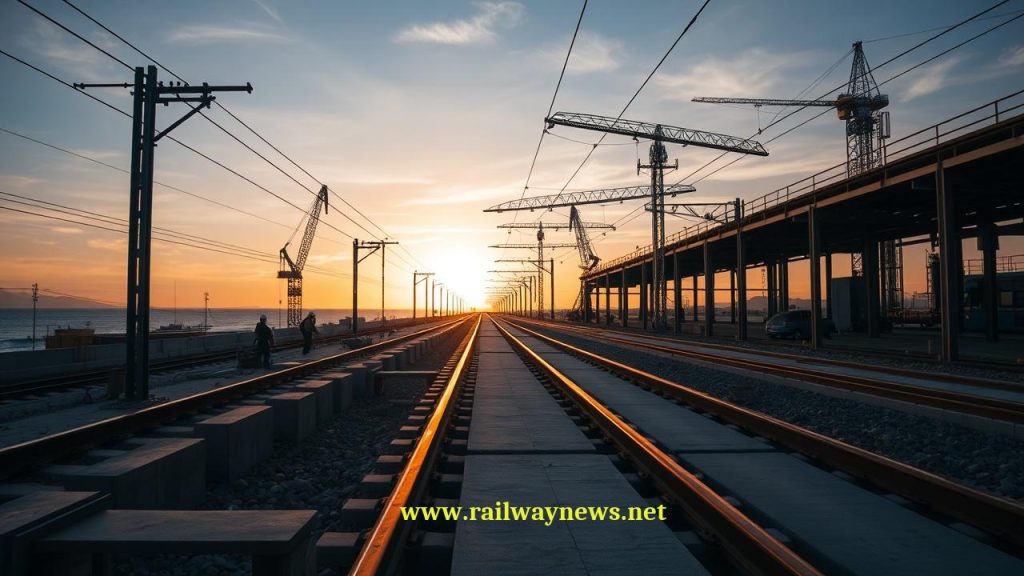
⚡ In Brief: Systra Ardanuy won two contracts for construction management and systems integration on the 14 km first phase of the Camp de Tarragona tram, connecting Cambrils Centre to Vila-seca Estació via Salou in southern Catalonia.
TARRAGONA, Spain – Systra Ardanuy, the Spanish subsidiary of French engineering group Systra, has secured two contracts to deliver construction management and technical assistance for systems integration on the future Camp de Tarragona tram network. The first phase spans approximately 14 km, linking Cambrils Centre to Vila-seca Estació through Salou, partially repurposing a former coastal railway corridor. The contracts were awarded by the Catalan regional government, with Ferrocarrils de la Generalitat de Catalunya (FGC) designated as the future operator.
What Does This Contract Cover?
The first contract covers construction management in consortium with Spanish engineering firm TYPSA, including supervising civil, rail, and tram works, monitoring schedules, and coordinating with infrastructure manager ADIF, municipalities, and utility companies through to testing and final validation. The second contract, delivered in consortium with META (part of the Quadrante Group), provides technical assistance for systems integration—ensuring all subsystems function together before commercial operations begin. These subsystems encompass slab track, electrification, overhead contact lines, signalling, telecommunications, passenger information, surveillance, safety equipment, and operations systems. Construction will require major utility diversions and work beneath the AP-7 highway and existing rail lines.
Key Contract Data
| Parameter | Value |
|---|---|
| Contract Name | Camp de Tarragona Tram – Construction Management & Systems Integration |
| Total Value | Not disclosed by either the awarding authority or Systra Ardanuy |
| Parties Involved | Systra Ardanuy (lead), TYPSA (construction management consortium), META/Quadrante Group (systems integration consortium); FGC (operator); ADIF (infrastructure interface) |
| Timeline / Completion | No completion date publicly disclosed; preliminary studies conducted 2016–2018 |
| Country / Corridor | Spain / Camp de Tarragona, Catalonia – Cambrils Centre to Vila-seca Estació via Salou |
How Does This Compare to Similar Contracts?
The 14 km first phase places the Camp de Tarragona tram at the mid-range of recent Spanish tramway projects. By comparison, the Trambaix network in Barcelona’s western corridor opened with approximately 15 km, while the Murcia tram Line 1 covers 17.5 km. The Alicante metropolitan TRAM network, also operated by FGC’s counterpart FGV, extends over 110 km across multiple lines. Systra Ardanuy’s dual-role involvement—covering both construction oversight and systems integration on a single phase—mirrors the consolidated engineering approach seen on the Granada Metro (16 km, operational since 2017), where a single engineering group managed multiple delivery workstreams. The earlier 2016–2018 preliminary studies by Systra Ardanuy, initially scoped for a tram-train configuration before the shift to a full tram solution, indicate a seven-to-nine-year engagement from planning to delivery—a timeline consistent with Spanish urban rail projects facing corridor conversion complexity. The broader Spanish rail market is seeing increased private-sector engineering involvement, with Madrid’s 2025 high-speed rail investment strategy explicitly targeting private participation to close funding gaps and accelerate timelines (Source: Construction World, 2025). Contract values for the Camp de Tarragona packages were not disclosed, making direct financial comparisons unavailable at time of publication.
Note: A separate £4.2 billion UK construction professional services framework, involving Aecom, Mott MacDonald, AtkinsRéalis, and others, was identified during verification but relates to the UK market and has no connection to the Camp de Tarragona tram procurement. No comparable Spanish framework data was publicly available for cross-reference at time of publication.
Editor’s Analysis
Systra’s deepening footprint on the Camp de Tarragona tram—from feasibility studies in 2016 to construction-phase delivery contracts—signals a strategic bet on Catalonia’s willingness to convert disused rail corridors into urban transit assets rather than pursuing entirely new alignments. That FGC, not ADIF, will operate the system points to a distinctly regional governance model for the line, separating infrastructure management from operations. The project’s evolution from tram-train to full tram solution also reflects a broader European pattern: corridor reuse projects often begin with hybrid vehicle concepts before settling on dedicated tram technology once operational and cost realities clarify during design maturation.
FAQ
Q: When will the Camp de Tarragona tram begin commercial operations?
A: No opening date has been officially disclosed by FGC or the Catalan regional government. The project remains in the construction management and systems integration phase, with Systra Ardanuy’s preliminary studies dating back to 2016–2018.
Q: How much are the Systra Ardanuy contracts worth?
A: The monetary value of both the construction management contract (with TYPSA) and the systems integration contract (with META/Quadrante Group) has not been publicly disclosed by any of the contracting parties.
Q: Will the tram use existing railway tracks?
A: The route will partially reuse the former coastal railway corridor alignment, but the infrastructure will be newly built with slab track, new electrification, and dedicated tram signalling—the original rail corridor is being converted, not simply reopened with existing assets.

Railway infrastructure, rolling stock and transport technologies specialist focused on global rail industry developments, high-speed rail systems, signaling technologies and freight transportation. Covering railway investments, public transport modernization, rail operations and international mobility projects across Europe, Asia and North America.
RELATED POSTS

October 8, 2026 1:15 pm
Alstom secured a €1bn contract to build 13 automated trains,...

October 1, 2026 7:09 am
United States regulators confirmed a September 30 deadline for the...

October 8, 2026 12:18 pm
Siemens Mobility signed an agreement with VinSpeed to supply 350...

October 4, 2026 5:14 pm
Alstom secured a CA$4.7 billion order from VIA Rail Canada...

October 5, 2026 6:12 pm
AECOM and Jacobs secured a contract in September 2026 to...

October 1, 2026 12:13 am
Illinois approved $1.5 billion annually for the Northern Illinois Transit...