
Germany Invests EUR 84B in Rail Infrastructure by 2027-2030
Germany will allocate EUR 84 billion to its national rail infrastructure for 2027–2030, including EUR 20.8 billion in 2027 and EUR 63.4 billion for 2028–2030.
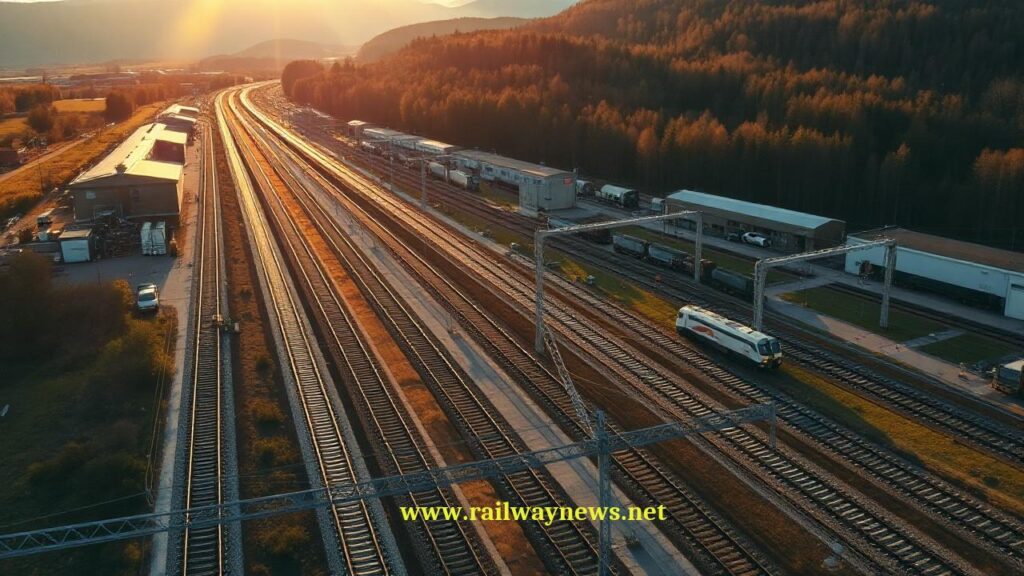
⚡ In Brief: Germany will allocate more than EUR 84 billion to rail infrastructure for 2027–2030, the largest share of a EUR 169 billion federal transport investment programme planned through 2029.
GERMANY – The Federal Government plans to allocate approximately EUR 169 billion for transport infrastructure by 2029, with rail receiving the largest mode-specific investment of more than EUR 84 billion for 2027–2030. In 2026 alone, EUR 16.3 billion from the Special Fund for Infrastructure and Climate Neutrality (SVIK) is allocated to maintain and modernise Germany’s rail infrastructure. The federal budget and the EUR 500 billion SVIK fund will finance the programme.
How Is the Funding Structured?
Germany’s rail infrastructure funding is structured through the federal budget plus a EUR 500 billion Special Fund for Infrastructure and Climate Neutrality (SVIK) with a 12-year spending horizon. The SVIK is divided into EUR 100 billion for federal states and local authorities, EUR 100 billion for the Climate and Transformation Fund, and EUR 300 billion for additional federal investments. A 2026 SVIK allocation of EUR 16.3 billion is designated for maintenance and modernisation of the existing rail network, while EUR 2.45 billion in 2026 targets ERTMS deployment and equipping rolling stock. For rail capital investment, the plan shows EUR 21.9 billion in 2026, EUR 20.8 billion in 2027, and EUR 63.4 billion during 2028–2030, bringing the 2027–2030 total above EUR 84 billion. DB InfraGO and the federal government plan more than EUR 23 billion for rail network and stations in 2026. A breakdown of maintenance versus new-line construction within the rail envelope was not disclosed.
Key Funding Data
| Parameter | Value |
|---|---|
| Fund / Programme Name | Special Fund for Infrastructure and Climate Neutrality (SVIK) + federal budget |
| Total Value | EUR 500 billion SVIK; EUR 169 billion transport infrastructure by 2029 |
| Parties Involved | Federal Government, DB InfraGO, federal states, local authorities |
| Timeline / Completion | 12-year SVIK availability; rail investment period 2027–2030 |
| Country / Corridor | Germany, national rail network |
How Does This Compare to Similar Funding Programs?
Germany’s EUR 84 billion rail allocation for 2027–2030 is large in nominal terms, but the country’s per-capita rail investment has historically lagged behind Austria, Switzerland, Norway, Sweden and Britain. Between 1994 and 2018, Germany invested significantly more in road than rail; only recent years have shifted the balance toward rail, with 2024 per-capita government investment doubling to EUR 198, still below those peer countries (Source: Reuters, 2026). In 2025, Germany’s rail network received a record EUR 22 billion (Source: Reuters, 2026). DB InfraGO reported a 20% reduction in signalling-related delays, though freight rail traffic fell 5.4% because DB Cargo’s performance dropped 20% (Source: Railway-News / DB InfraGO, 2025). The signalling market context reinforces the digital focus: Germany’s railway signalling market is projected to grow from USD 4.99 billion in 2025 to USD 13.33 billion by 2035, a 10% compound annual growth rate (Source: Market Research Future, 2025). Comparable public per-capita rail investment data for other large EU states outside the cited peers was not publicly available at time of publication.
Editor’s Analysis
The shift toward maintenance-first spending and ERTMS deployment concentrates German rail capital where capacity constraints are most acute, but does not by itself address DB Cargo’s 20% freight decline in 2025 (Source: Railway-News / DB InfraGO, 2025). With the German signalling market projected to reach USD 13.33 billion by 2035, suppliers of ETCS and digital interlocking systems will likely see multi-year demand anchored by SVIK allocations (Source: Market Research Future, 2025). The 2027–2030 plan’s nominal rail record must therefore be judged against output metrics—punctuality, freight volume and network availability—rather than spending totals alone.
FAQ
Q: How much will Germany invest in rail infrastructure between 2027 and 2030?
A: More than EUR 84 billion is allocated to Germany’s rail infrastructure for 2027–2030, including EUR 20.8 billion in 2027 and EUR 63.4 billion during 2028–2030, according to the national transport investment plan.
Q: How does Germany’s rail funding compare with Austria or Switzerland?
A: Despite a record EUR 22 billion in 2025 and a doubling of per-capita investment to EUR 198 in 2024, Germany still spends less per capita on rail infrastructure than Austria, Switzerland, Norway, Sweden and Britain, according to Reuters 2026.
Q: What is the ERTMS/ETCS allocation for 2026?
A: Germany allocated EUR 2.45 billion in 2026 through SVIK to equip rail infrastructure and rolling stock with ERTMS, supporting ETCS deployment and European interoperability.

Railway infrastructure, rolling stock and transport technologies specialist focused on global rail industry developments, high-speed rail systems, signaling technologies and freight transportation. Covering railway investments, public transport modernization, rail operations and international mobility projects across Europe, Asia and North America.
RELATED POSTS

October 8, 2026 1:15 pm
Alstom secured a €1bn contract to build 13 automated trains,...

October 1, 2026 7:09 am
United States regulators confirmed a September 30 deadline for the...

October 8, 2026 12:18 pm
Siemens Mobility signed an agreement with VinSpeed to supply 350...

October 4, 2026 5:14 pm
Alstom secured a CA$4.7 billion order from VIA Rail Canada...

October 1, 2026 12:13 am
Illinois approved $1.5 billion annually for the Northern Illinois Transit...

October 5, 2026 6:12 pm
AECOM and Jacobs secured a contract in September 2026 to...