
Sydney Metro: Independent Certification for Success
The SYSTRA-KBR Joint Venture has secured a contract to provide independent certification for the Sydney Metro – Western Sydney Airport Line project, highlighting the growing importance of external expertise in ensuring rigorous compliance and safety standards across large-scale infrastructure projects.
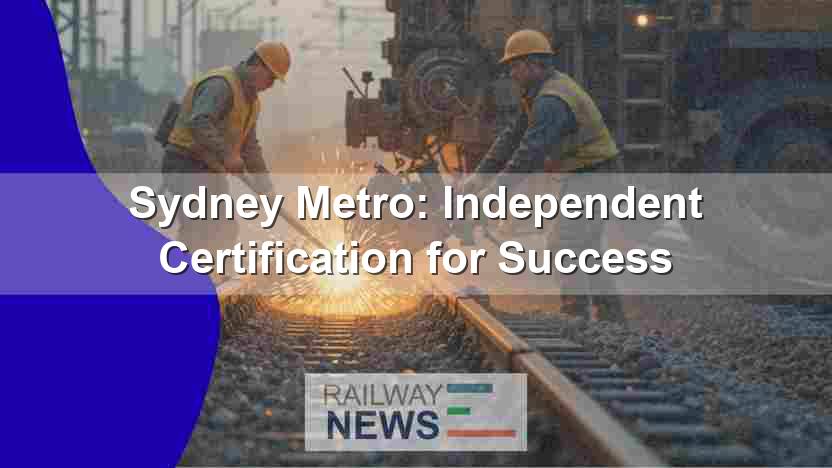
This article explores the significant role of independent certification in large-scale railway infrastructure projects, using the Sydney Metro – Western Sydney Airport Line as a prime example. The project’s complexity, encompassing tunnels, viaducts, at-grade sections, multiple stations, sophisticated signaling systems, and rolling stock, necessitates rigorous independent verification to ensure safety, compliance, and ultimately, the successful delivery of a world-class railway system. The SYSTRA-KBR Joint Venture (JV) has secured a contract to provide this crucial independent certification, highlighting the growing importance of external expertise in mitigating risks and ensuring the highest standards are met throughout the project lifecycle. This article will delve into the specific aspects of the JV’s responsibilities, the challenges involved in such a large-scale undertaking, and the broader implications for future railway projects globally.
Independent Certification: A Cornerstone of Railway Project Success
The Sydney Metro – Western Sydney Airport Line project exemplifies the need for robust independent certification. The project’s scale, involving the construction of 23 kilometers of new railway line, six new stations, twin metro tunnels, viaducts, and at-grade infrastructure, demands a rigorous approach to quality control and risk management. The independent certification provided by the SYSTRA-KBR JV acts as a crucial check and balance, ensuring compliance with design specifications, industry standards (e.g., those set by the Australian Rail Track Corporation (ARTC)), and safety regulations. This independent oversight minimizes the risk of costly rework, delays, and potential safety hazards, ultimately protecting both the project’s budget and the public’s safety.
Scope of the SYSTRA-KBR JV’s Responsibilities
The SYSTRA-KBR JV’s responsibilities extend far beyond simple inspections. Their role encompasses detailed independent certification across various work packages, including:
- Stations: Certification covers all aspects of station construction, from structural integrity to accessibility features and integration with other transport modes.
- Signalling Systems: This involves verifying the safety and reliability of the intricate signalling infrastructure that governs train movements, ensuring seamless and safe train operations.
- Tracks: Certification of track alignment, geometry, ballast quality, and overall structural integrity is crucial for safe and efficient train running.
- Rolling Stock: This covers the certification of the trains themselves, ensuring compliance with safety standards, performance specifications, and maintenance requirements.
- Mechanical and Electrical Systems: This includes the verification of all power supply systems, ventilation systems, escalators, lifts, and other crucial mechanical and electrical infrastructure within the stations and along the alignment.
- Stabling and Maintenance Facility: The JV will also provide full surveillance and design certification for the Orchard Hills stabling and maintenance facility, a crucial element of the line’s ongoing operation.
This detailed scope underscores the JV’s crucial role in assuring the overall safety and operability of the Sydney Metro – Western Sydney Airport Line.
Leveraging Expertise and Local Knowledge
The success of the SYSTRA-KBR JV hinges on the synergistic combination of their respective expertise. SYSTRA brings extensive global experience in railway design, construction, and operation, while KBR contributes significant local knowledge and expertise in the Australian market, particularly in civil engineering, tunnelling and systems integration. This combined expertise is vital in navigating the unique challenges presented by the Australian environment and regulatory landscape. This collaborative approach ensures both international best practices and a deep understanding of local contexts are integrated into the certification process.
The Broader Significance of Independent Certification
The Sydney Metro – Western Sydney Airport Line project serves as a powerful illustration of the increasing importance of independent certification in large-scale infrastructure projects. The complexity and risk associated with such ventures demand rigorous oversight to mitigate potential issues and ensure projects are delivered on time, within budget, and, critically, to the highest safety standards. The SYSTRA-KBR JV’s role highlights the growing trend of outsourcing independent certification to specialized firms, leveraging their deep expertise to provide assurance and enhance project success. The successful completion of this project will provide a valuable case study for future railway projects worldwide, demonstrating the vital role of independent certification in ensuring their long-term success and safety.
Conclusions
The SYSTRA-KBR Joint Venture’s contract for independent certification on the Sydney Metro – Western Sydney Airport Line represents a significant development in the Australian railway sector and sets a precedent for future large-scale infrastructure projects. The JV’s detailed responsibilities, ranging from station construction and signalling systems to rolling stock and maintenance facilities, underscore the crucial role of independent verification in ensuring project safety, efficiency, and compliance. By leveraging both SYSTRA’s international expertise and KBR’s local knowledge, the JV is well-positioned to deliver a high-quality certification service. The project’s scale and complexity demand rigorous oversight, and the JV’s role in providing that oversight is paramount. The successful completion of this project will not only deliver a much-needed transport link for Western Sydney but also provide a valuable blueprint for future railway projects, demonstrating the importance of independent certification in mitigating risks and ensuring successful project delivery. This model of independent certification, with its emphasis on detailed scope and the integration of international best practices and local knowledge, could become a template for railway infrastructure projects around the globe, leading to safer, more efficient, and more reliable rail systems for communities worldwide. The lessons learned from this project will undoubtedly inform future railway developments, solidifying the importance of independent certification as an essential component of modern railway engineering and management.

Railway infrastructure, rolling stock and transport technologies specialist focused on global rail industry developments, high-speed rail systems, signaling technologies and freight transportation. Covering railway investments, public transport modernization, rail operations and international mobility projects across Europe, Asia and North America.
RELATED POSTS

October 8, 2026 1:15 pm
Alstom secured a €1bn contract to build 13 automated trains,...

October 1, 2026 7:09 am
United States regulators confirmed a September 30 deadline for the...

October 8, 2026 12:18 pm
Siemens Mobility signed an agreement with VinSpeed to supply 350...

October 4, 2026 5:14 pm
Alstom secured a CA$4.7 billion order from VIA Rail Canada...

October 5, 2026 6:12 pm
AECOM and Jacobs secured a contract in September 2026 to...

October 4, 2026 11:08 pm
Sound Transit confirmed the September 30 opening of Seattle Pinehurst...